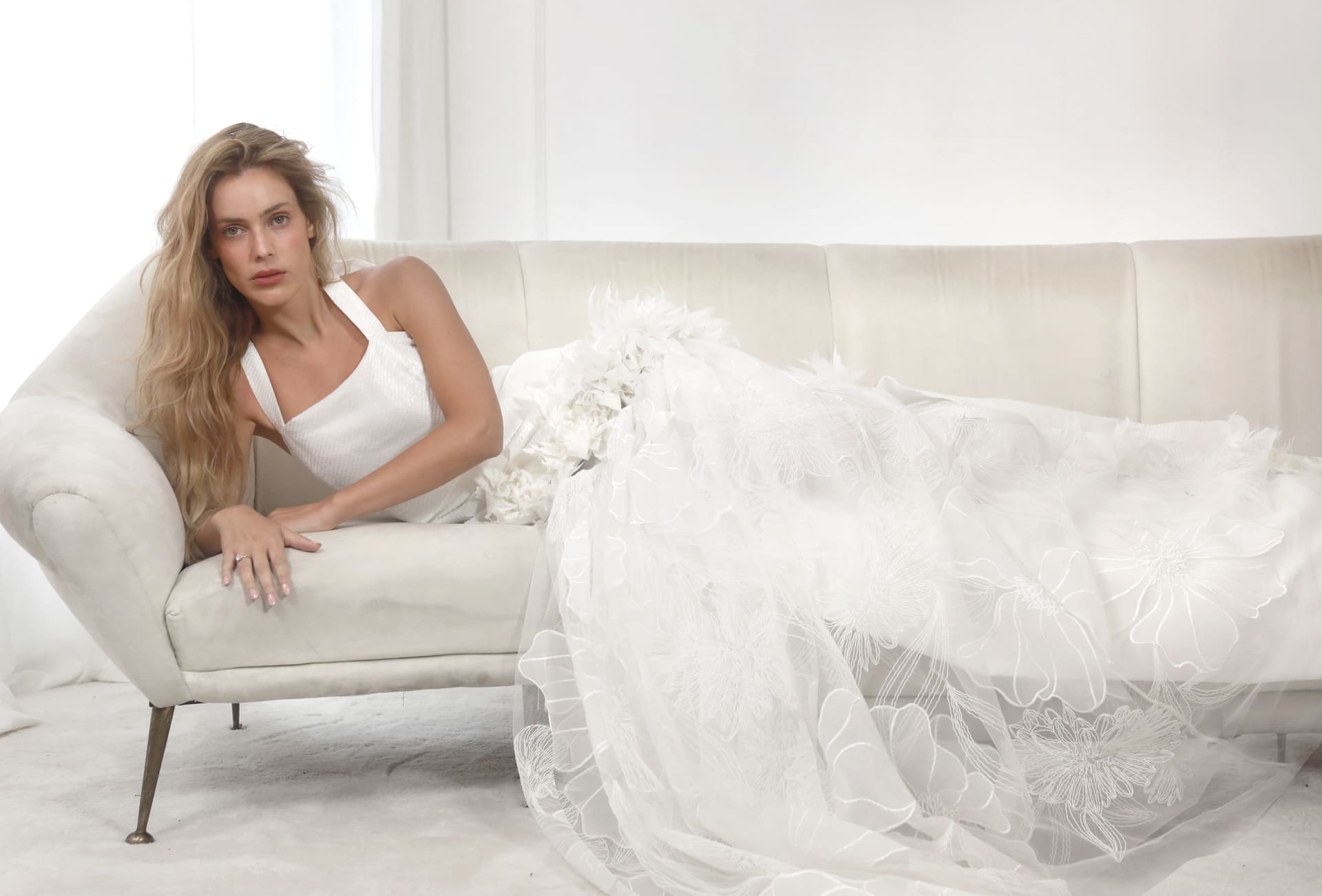
A bride's white is never simply white. It changes with the skin, the light, the texture of the fabric, and the way the dress drapes the body. Between ivory, optic white, or a slightly warm tone, there may be minimal differences at first glance, but they become crucial when the garment begins to take shape.
The profession behind that choice is the focus of our conversation With the designers from Malne: how to find the right white, the role of skin tone and proportions, how color changes when working with layers, transparencies, or volume, and why, sometimes, it's even necessary to dye a fabric until the exact shade is achieved. A look at the wedding dress from one of its most seemingly simple, yet most delicate, details.
When it's said that there are "whites to bore you to death," what differences can a designer find between one shade and another, and what do you look for to know which one belongs to each bride?
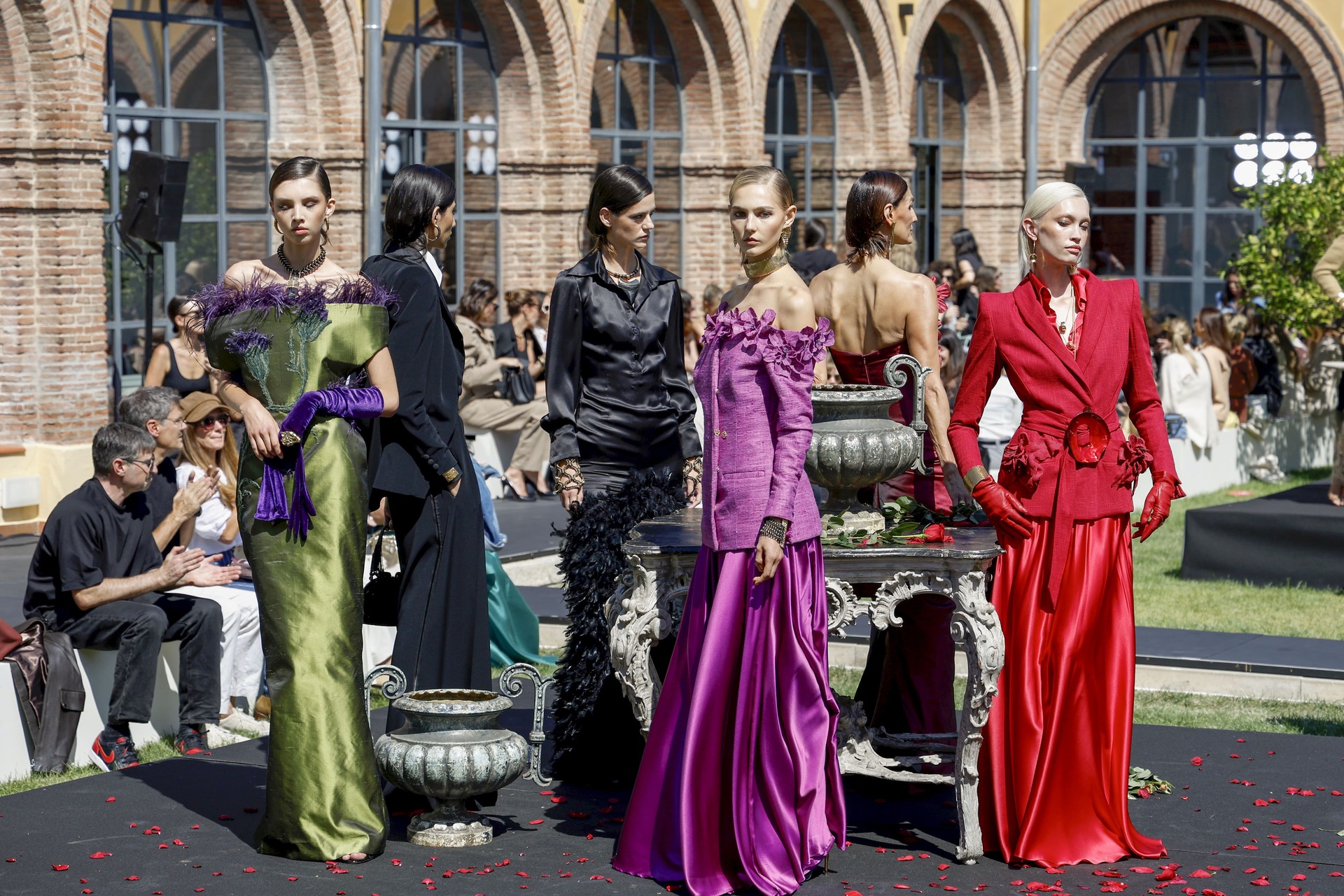
There are many types of white, the white cloud, For example, Malne's Frida XXI parade has been the trend this year. Each white has its undertones, More bluish, cooler, pearly, leaning towards off-white or beige… each one expresses something unique. Based on various criteria, such as the bride's skin undertones and the style of dress she wants (more or less classic), you choose the shade of white.
It's a fascinating world.
What does a woman's skin, hair, or even the way she moves tell you when deciding whether her dress needs a cooler, warmer, brighter, or more muted white?
If a woman has a cool skin undertone, a bluer white will suit her; if her skin undertone is more sallow, off-whites will brighten her skin.
Hair also plays a role. These are colorimetry studies that are part of the profession.
Can a beautiful white fabric swatch lose its appeal when it becomes a finished dress? How do volume, layering, transparencies, or texture influence the final perception of the color?
A wedding dress is not just a color, It's primarily about the drape of the fabric. If the bride desires a flowing or more architectural line, the appropriate material obviously changes. All of this comes from years of experience and expertise.
At Malne, you even work with dyed fabrics to find specific shades of white. At what point does a designer decide that the shade they're looking for doesn't exist as is and needs to be created?
The textile market is well-stocked, but you might not find the desired color in the right material. To achieve this, the art of dyeing is used, which also has a rich history. Each fabric and material requires a different method, a mixture of chemicals or natural dyes that won't damage the material or ruin its drape. Tests are carried out, and results are achieved.
It is one of the possibilities that a brand that works with professional craftspeople can offer, and Malne can do it.
After so many years dressing brides, what mistakes do you see most often when people think that choosing white is a simple or purely aesthetic decision? What part of that choice can only be made with professional expertise?
In high bridal fashion tEvery design decision must be based on talent and professionalism.. As we mentioned, some fabric choices are based on professional criteria. The same applies to choices of whites, which are based on knowledge of colorimetry.
For us it's simple because It is our talent and our profession. That's why we're the perfect brand to guide the bride towards the desired effect.