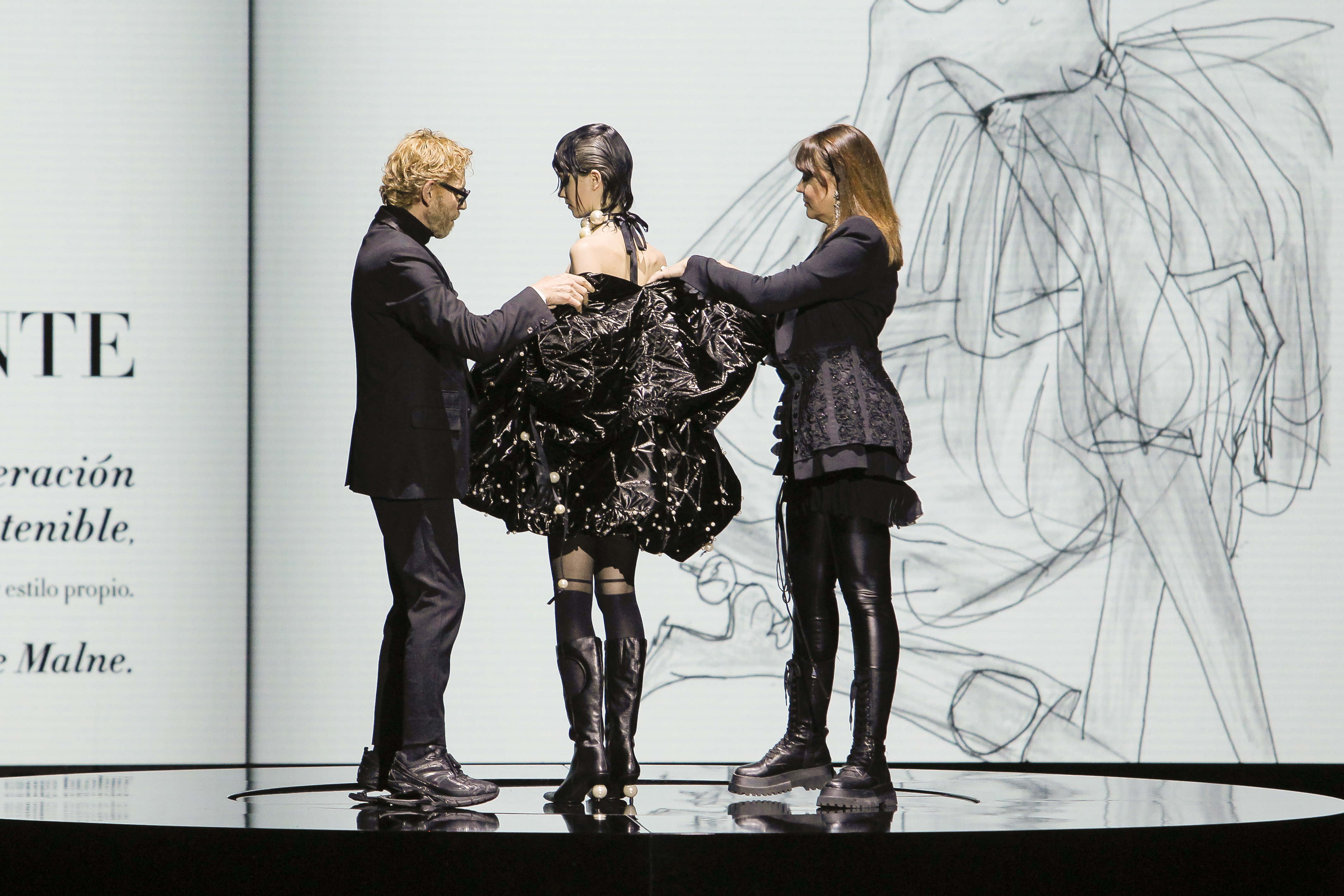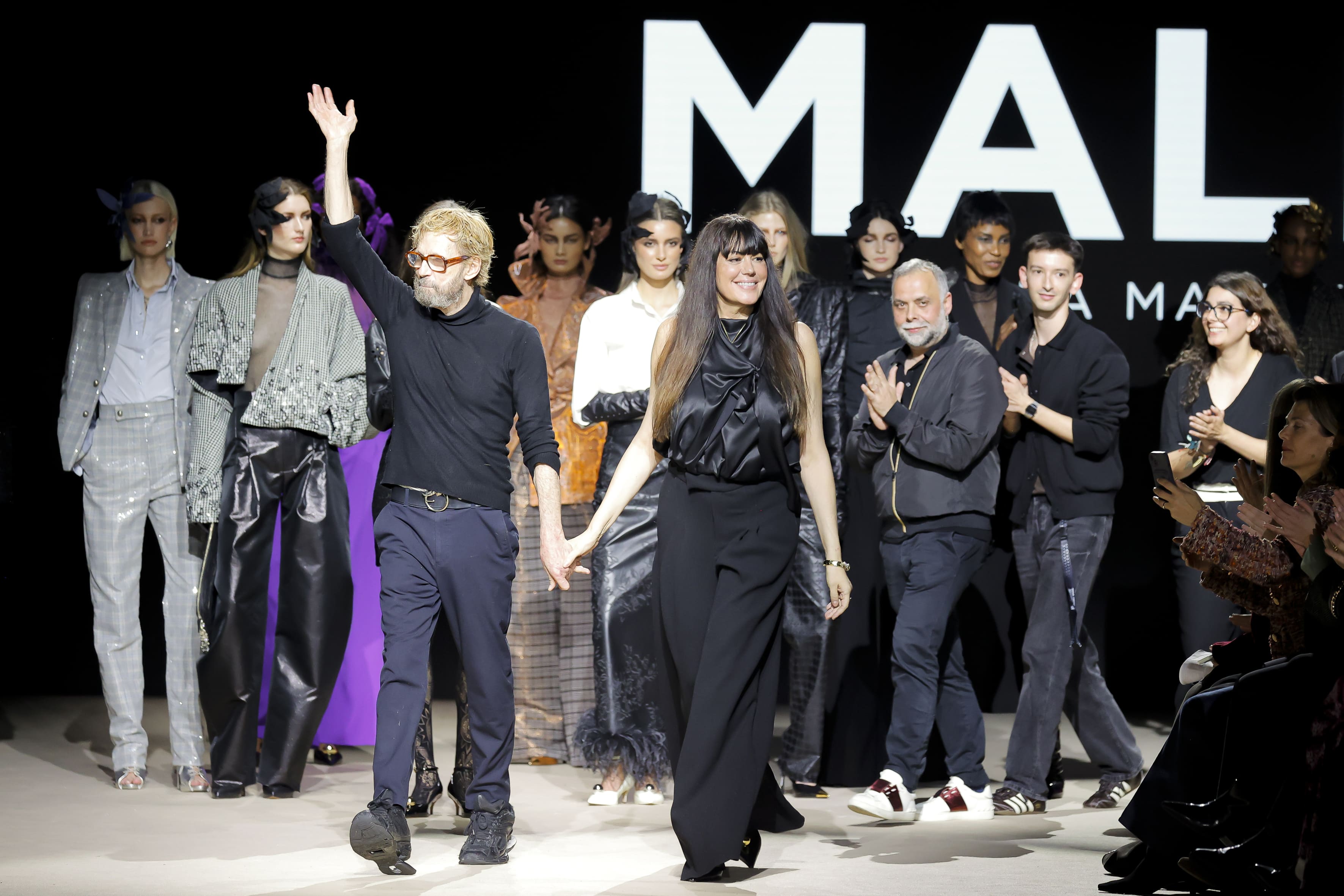
Madrid once again became the stage for Spanish fashion this September. In an edition of the Mercedes-Benz Fashion Week Madrid which extended its parades to different locations throughout the city, Malne presented on September 17th The Woman, her Spring-Summer 2027 collection, at the Communication and Arts Campus of Nebrija University.
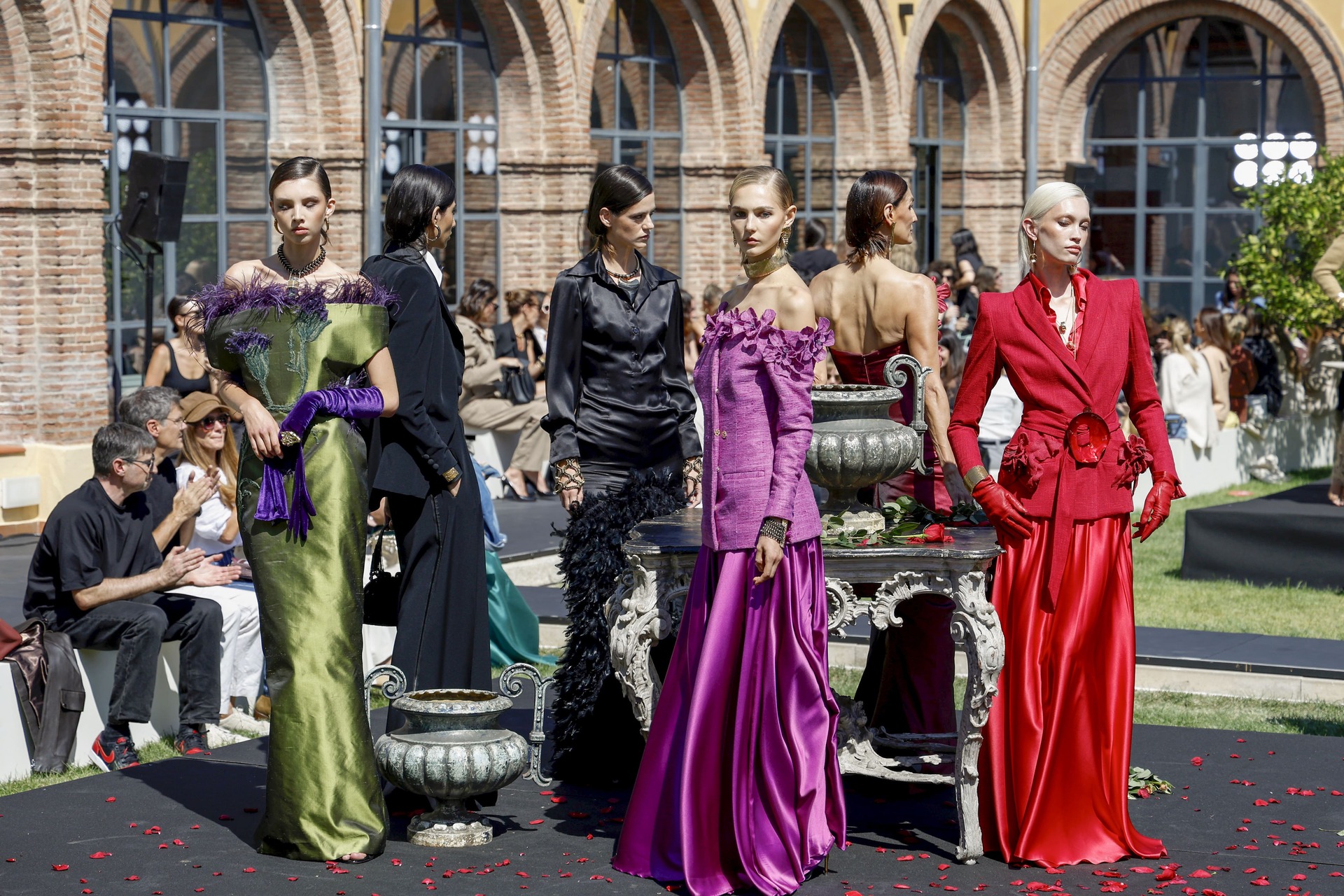
The location was no small detail. Bathed in the cloister's light and nestled within the brick walls of the old convent, the collection found a stage far removed from the usual neutrality of a runway. There appeared the women who inhabit the new universe of Paloma Álvarez and Juanjo Mánez: elegant, theatrical, classic at times, exuberant at others, and, above all else, aware of the expressive power of clothing.
The title of the collection sums up the whole intention: The Woman It is a look at femininity through fashion and, at the same time, a love letter to those women who for decades have been more than just models, actresses or companions of great designers: they have been muses capable of transforming a garment into an attitude and a style into a way of being in the world.
The muses as a starting point
The Parisian muses Inès de La Fressange, Loulou de La Falaise, Françoise Hardy, Audrey Tautou and Marion Cotillard They appear at the origin of the collection. Five names belonging to different generations, united by a relationship with fashion that has never depended solely on following a trend. La Femme is a a manifesto of love for fashion and its muses, built around that encounter between timeless classicism and a freer, bolder elegance.
However, it's not about replicating any of their wardrobes. The reference becomes much more interesting when understood as a reflection on what makes a woman a style icon.
That idea runs through much of Malne's work. Fashion appears here as a tool for constructing identity, not as a series of codes to be obeyed. In fact, Paloma Álvarez She explained after the show that the collection features very different women because femininity allows for "many possibilities," from romantic or classic profiles to others that are deliberately more groundbreaking.
Paris, beyond the cliché
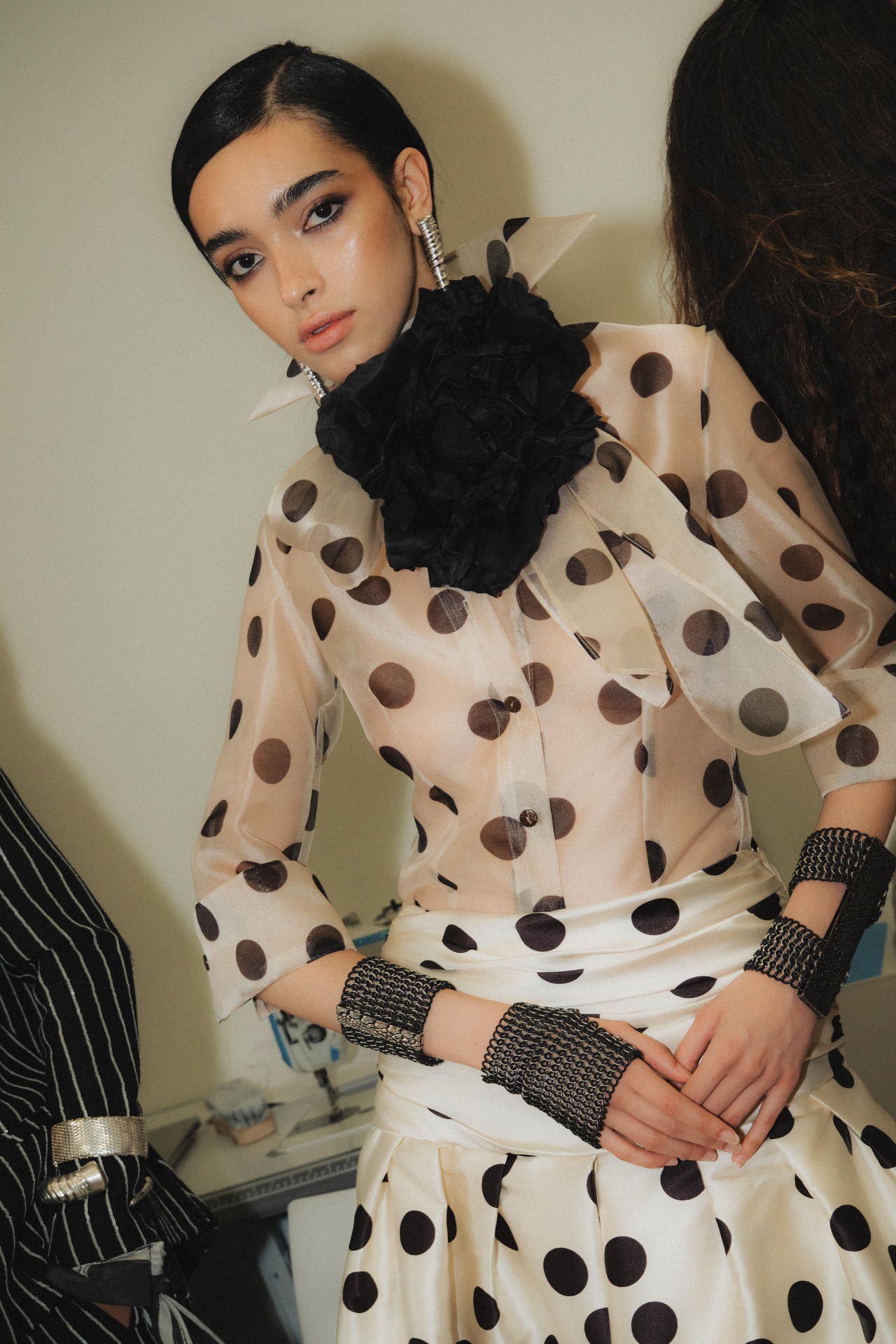
The Parisian reference runs The Woman without turning it into a nostalgic exercise. Paris appears as a fashion culture: the ateliers, the great houses, the tailoring, the muses and that tradition according to which the designer did not only dress a body, but built an image together with it.
The parade began with the voice of Brigitte Bardot and the main theme of “And God created woman” (Et Dieu… créa la femme, 1956), From the very first seconds, the collection established its territory. From there, echoes of French influences emerged: polka dots, animal prints, floral motifs, and a certain French theatricality that Malne channeled into her own unique style.
The difference lies precisely there. The Woman It doesn't try to turn Madrid into Paris. It takes some of the great codes of French fashion history and applies them to a house that has spent a decade developing its own proportions, shoulders, waists, and volumes.
From black to a particularly chromatic collection
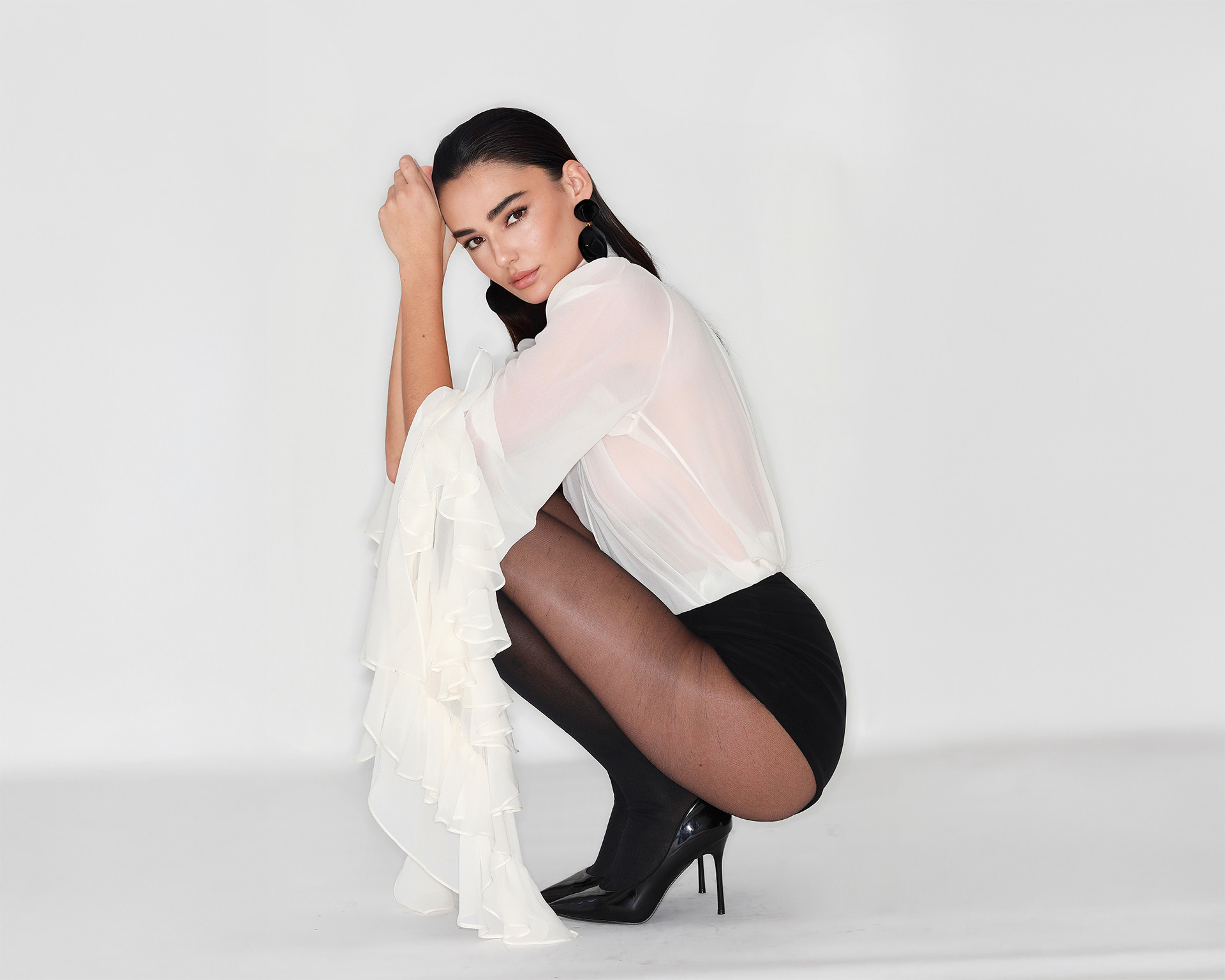
Some of Malne's most recognizable elements appeared on the catwalk: Strong shoulders, vertical tailoring, jackets fitted at the back, shirt dresses worn as light coats, and a Malne-inspired version of the tuxedo. The garments alternately constructed precise silhouettes and moments of greater fluidity, allowing each fabric to claim a different form.
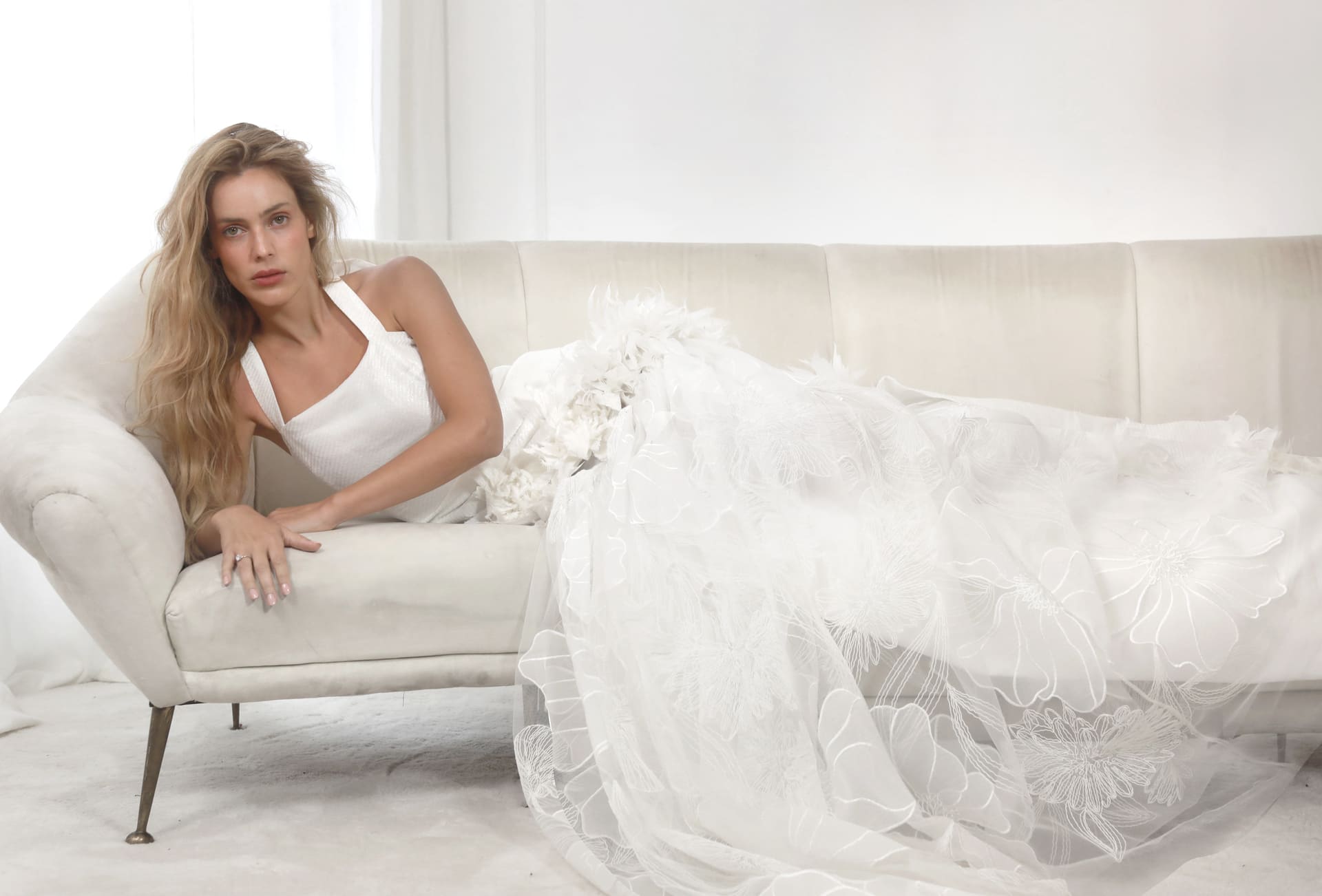
Color also introduced a change of register. Black, inseparable from this house's visual vocabulary, coexisted this time with golds, earth tones, reds, pinks, and purples. The result was one of Malne's most chromatic collections, an opening that accompanied the argument itself of The WomanIf there is no single way to understand femininity, then there could not be a single woman around whom to organize the entire parade.
When parading means interpreting
The cloister of Nebrija University It ended up adding another fundamental element to the story. Its four platforms allowed the experience to be presented as something closer to a photo shoot than a conventional catwalk.
The models stopped, posed, and gave each look time to acquire a distinct presence.. Paloma Álvarez and Juanjo Mánez later explained that this decision was directly related to the muses who inspired the collection: women belonging to a fashion culture in which posing involved interpreting, playing with the garment and building a character in front of the camera or the public.
The catwalk thus recovered something that the contemporary speed of images sometimes leaves in the background: the pleasure of looking at a garment for a few more seconds.
Ten years later, the Malne personality remains at the center
The Woman It also arrives in the year that Malne celebrates a decade since its birth in 2016. It is interesting to observe the extent to which ten years of work have ended up building a recognizable vocabulary.
The evolution is also evident in the women the brand targets. Paloma Álvarez noted after the show that Malne is considered today a mature house And that, over time, its universe has expanded from a clientele closely related to social life to women who use fashion, above all, to reinforce their personality.
Perhaps therein lies one of the most interesting keys to The Woman. Talking about femininity in 2027 can hardly mean imposing a single silhouette, age, or way of presenting oneself to others. The collection chooses to explore various possibilities, allowing the rigor of a tuxedo, the sensuality of a dress, the lightness of chiffon, the architecture of a shoulder, or the deliberate excess of a flower, a feather, or a print to coexist.
A declaration of love for fashion
After ten years, The Woman It does not seek to summarize Malne's story. It does something simpler and probably more meaningful: it returns to what lies at the origin of an author's signature.
In a fashion week particularly focused on bringing Spanish design to different corners of Madrid, Malne chose to remind us that a collection can also be a space of memory. A memory of the great designers, their muses, a particular way of showing their work, and above all, a way of understanding the profession that continues to make sense today.
Because fashions change. Style begins precisely where a woman stops obeying them and starts making them her own.