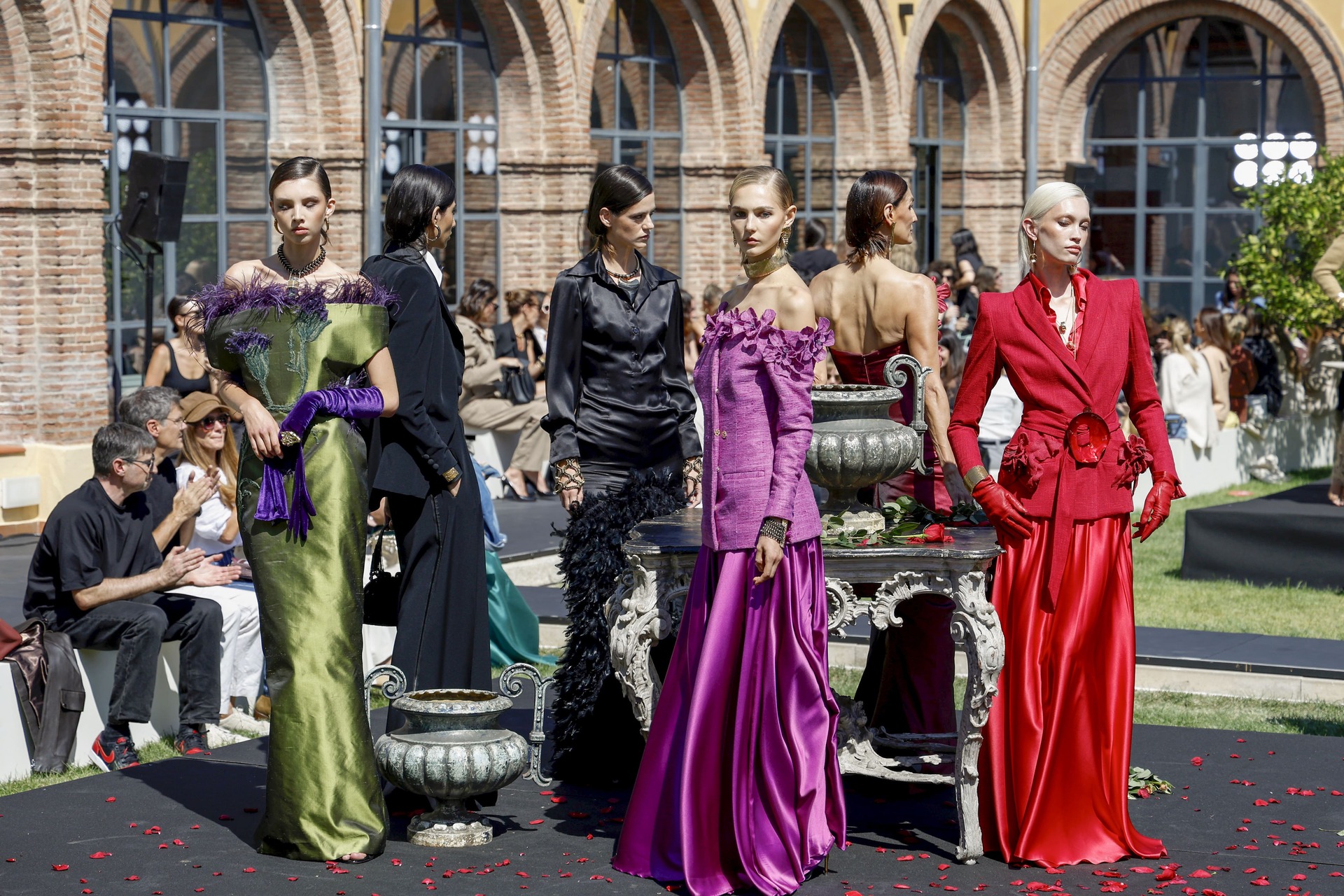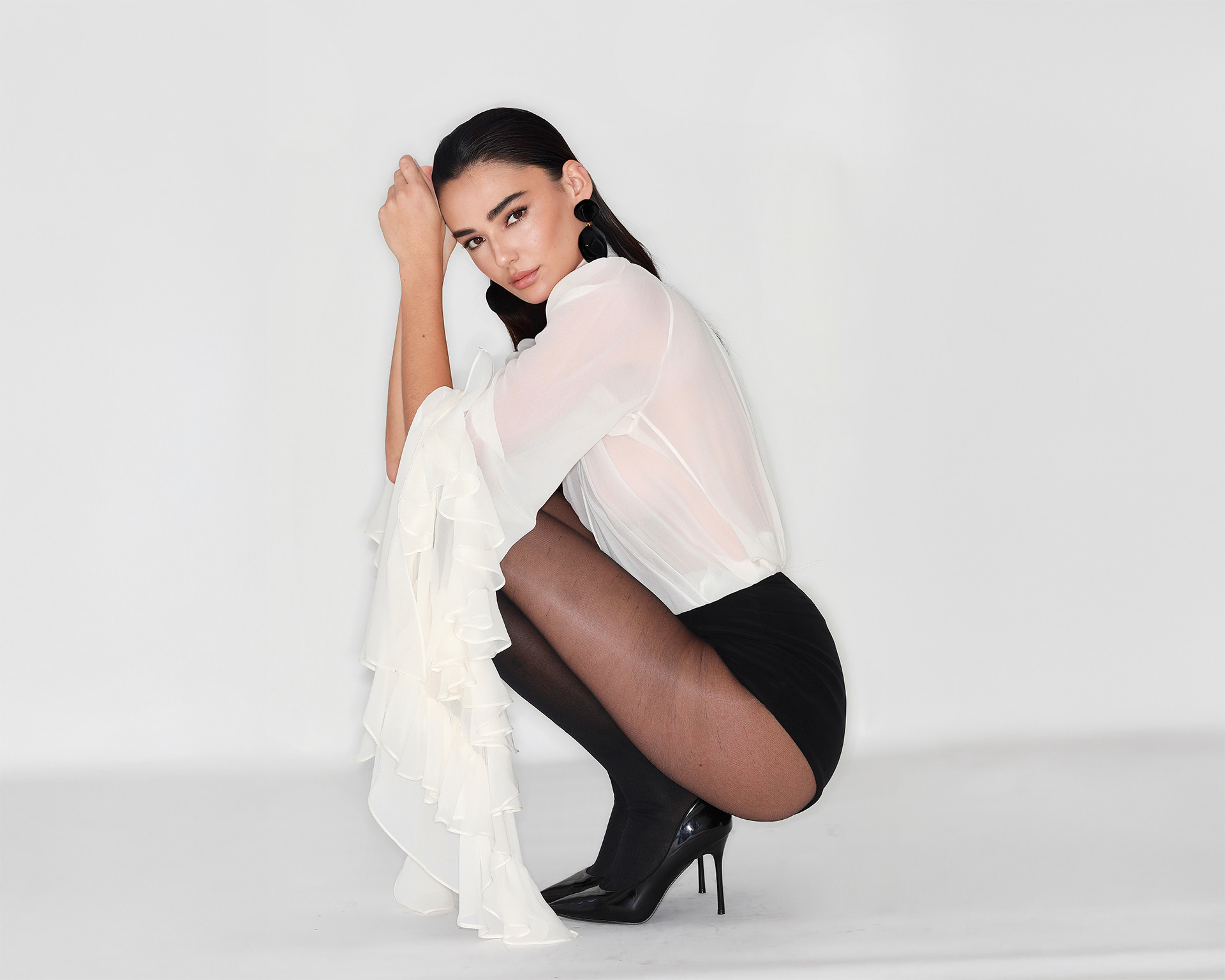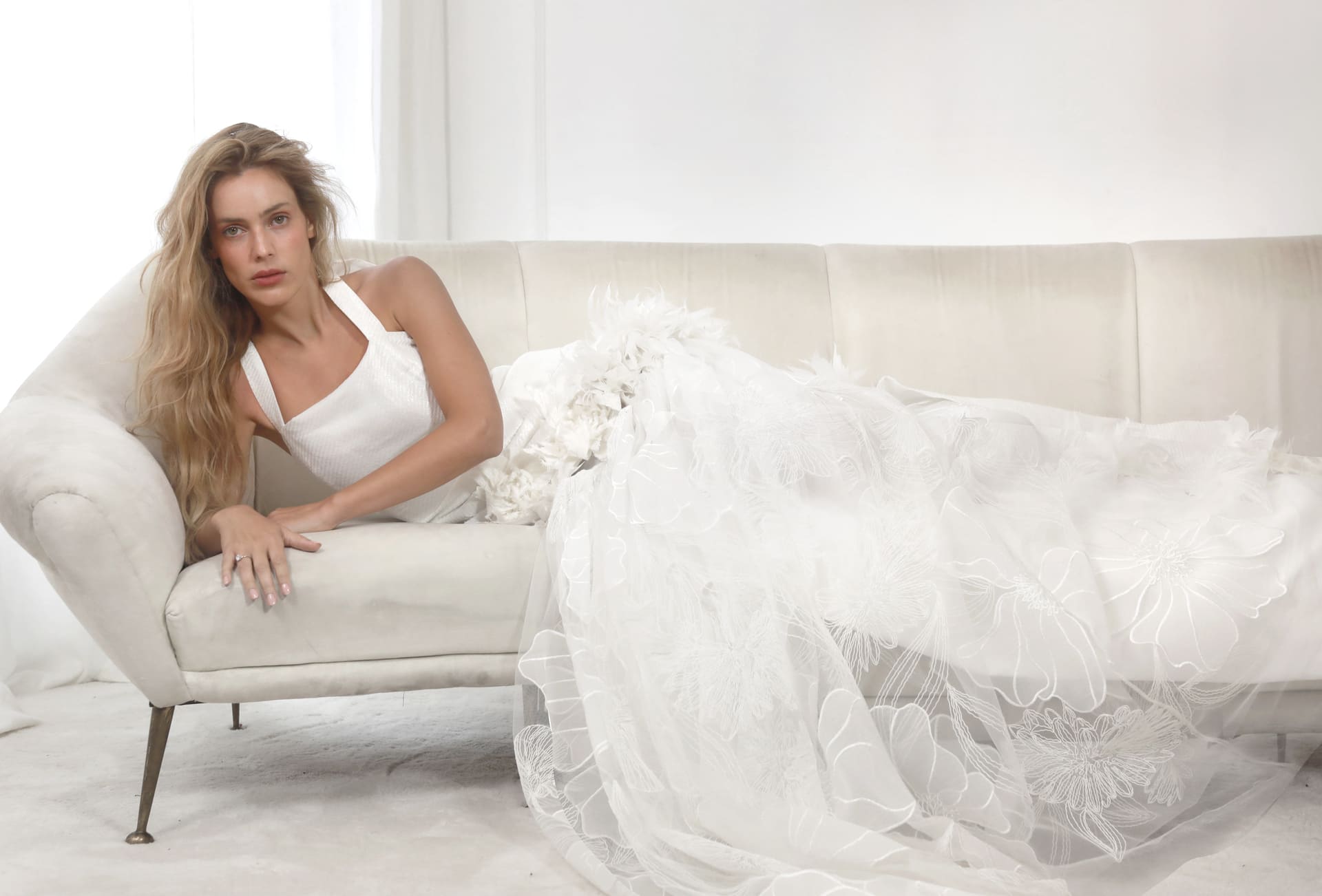
Dressing has never been a completely neutral act. A silhouette, a proportion, the way the shoulder is constructed or how it accompanies movement can speak of an era, a sensibility, and also of the person wearing the garment. When there is a personal vision behind it, design ceases to be limited to clothing the body and begins to construct a language.
The difference between clothes and fashion center Our conversation with Paloma Álvarez and Juanjo MánezAuthorship, the link between design and art, the relationship with the female body, and a garment's capacity to express identity. A reflection on the meaning of clothing and on what transforms a well-executed creation into a piece with intention, character, and a recognizable signature.
There's a lot of talk about well-made garments, good fabrics, and excellent finishes. But, in your opinion, at what point does a garment stop being just clothing and start becoming fashion?
From the moment the meaning of a garment becomes an artistic expression of its creators, we, the designers of the world around us, become art. If someone thinks, for example, of the 1970s, images immediately come to mind of a certain type of clothing—more casual, hippie-inspired, bell-bottoms—a certain style of clothing, art, and music. Fashion, understood as a creative expression of artists, is art.
What role does authorship play in that difference? Can true fashion exist without a personal and recognizable vision behind the design?
Just as there's à la carte food in a bar or a specialty restaurant, there's haute cuisine, which is more than just food. It's an artistic exercise by a culinary master. There are ships, and then there's the clipper, There are chairs and tables, but then there are the masters of furniture design who even run design schools. Fashion is similar. There's "clothing," what we wear to cover ourselves, and then there's fashion, which is an artistic expression and, for oneself, a style, an evolution in the way you present yourself to others.
What role does the body play in your design process? How can a garment help a woman express who she is, beyond simply dressing or flattering her?
We always focus on the person's energy and work to bring it out. Then, technically, with the pattern maker, we determine if a size will fit better higher or lower, but the client never feels reprimanded for her physique. On the contrary, she learns that her body doesn't have to be perfect; the garment is what it should be.
For a long time, fashion was closely linked to art and culture. Do you think we are recovering that dimension today, or has the speed of trends and consumption changed our understanding of it?
I agree that there's a voracious appetite for consumption and constant self-promotion on social media that culminates in the erosion of meaning. But this step, which we saw coming, also brings with it another: the person who appreciates the exquisite. It's like someone who, in a world where the phone is the watch, acquires a magnificent timepiece from a master watchmaker.
Do you think clothing is still a form of language? What can a person reveal about themselves through their clothes before even uttering a word?
For us, the most important thing is that the person feels like themselves, comfortable, and confident. That's when the best in a woman emerges, and through the clothes, she exudes a mood and style that permeates everything and becomes unforgettable.