“True luxury is not shown: it is lived. It is sensed in the silence of an atelier, in the time spent listening, in the precision of a hand that sews without haste”.”
There are materials that not only clothe the body, but also make it accompany in time. Fabrics that absorb gestures, celebrations, silences. In handmade fashion, the choice of fabrics and the fabrics and materials is the starting point of a lasting relationship between the garment and the person who lives in it.
Talking about fabric for women's dresses is to talk about memory. How a textile fibre can become an intimate archive, a sensory heritage, a history that is not written with words, but with use.
The fabric as a living archive
In the garments constructed from the craft, the fabric never remains static. It evolves. It changes with the body. It adapts to the rhythm of life. That is why, in haute couture and in artisanal fashion, caring for a garment is also nurturing a story.
The marks of use, the creases softened by time or the natural patina that a noble material acquires make each piece unrepeatable. These garments do not belong only to the present: they are transformed in aesthetic and emotional memory, capable of accompanying several generations.
The textile fibre, When it is natural and of high quality, it is not exhausted; it expresses itself.
The sensory basis of handcrafted luxury
Luxury begins before form. It begins in the touch, in the weight, in the fabric's response to movement. Noble materials have a pulse of their own, a unique way of dialoguing with the body.
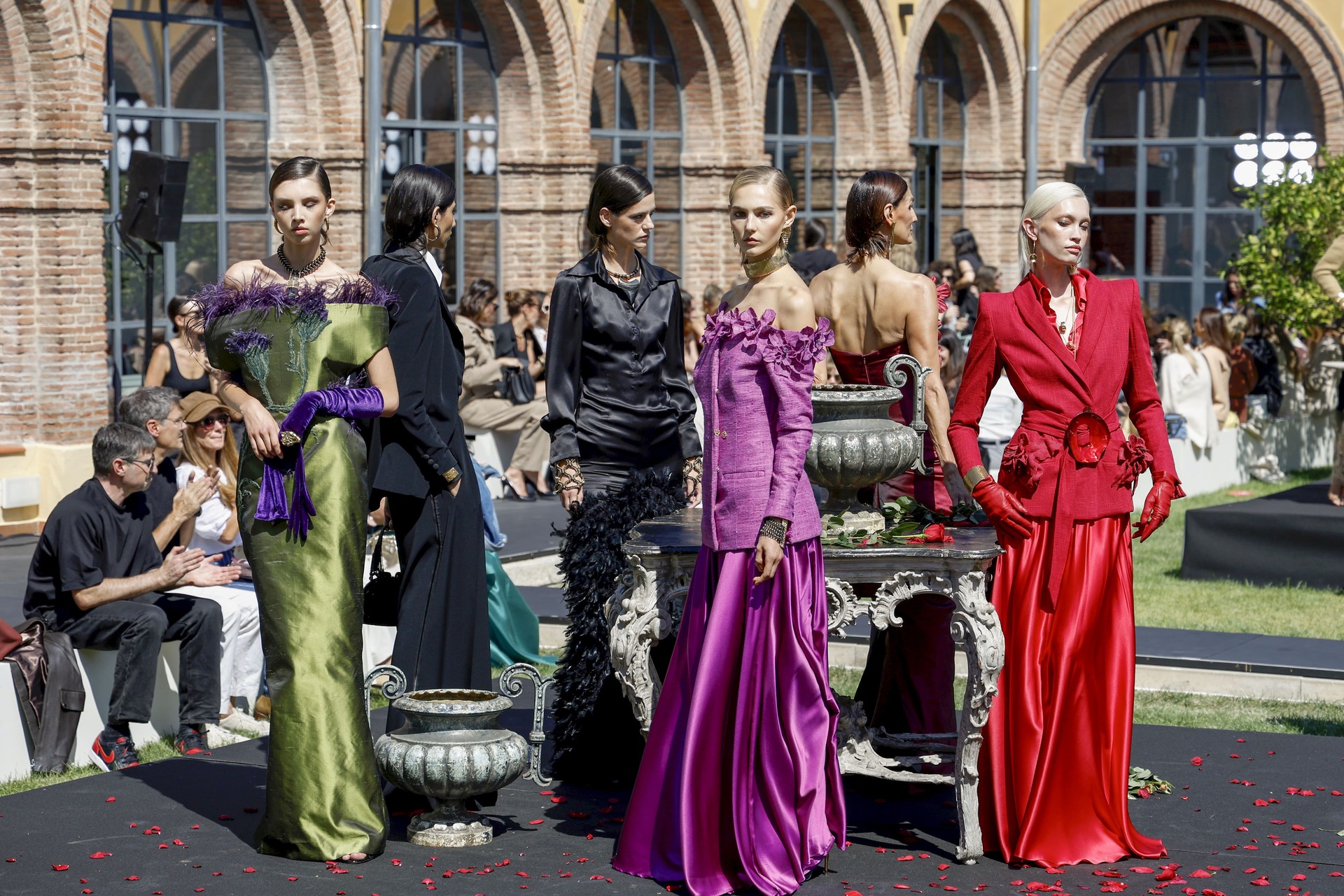
- Silk is the beginning and the end of luxury. Its shine does not reflect the light, it contains it. Its fall is fluid, its sound almost musical as it brushes against the skin.
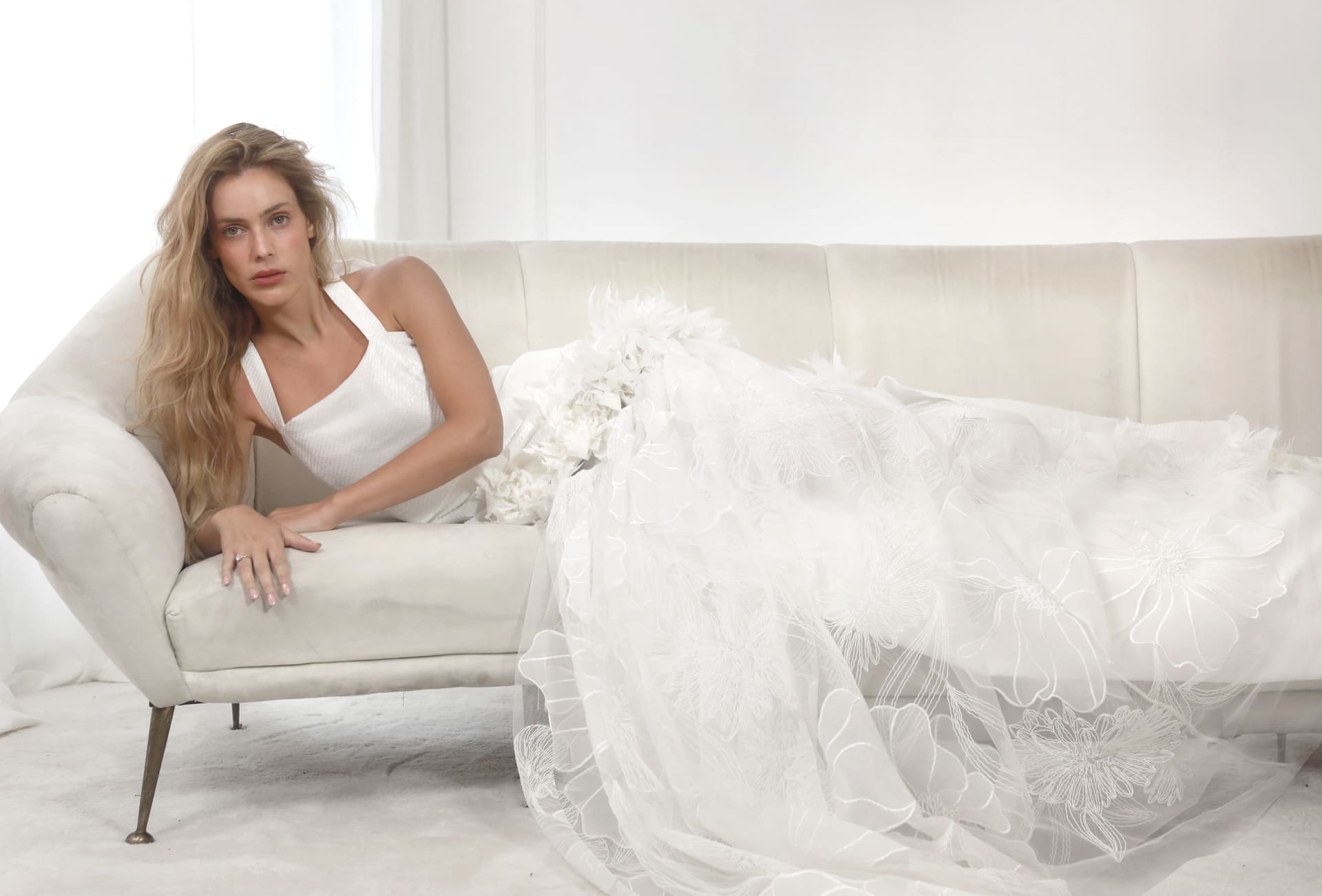
- The mikado provides structure and precision. It is a fabric for women's dresses that allows the construction of architectural volumes without rigidity.
- The gazar supports the shape with lightness, ideal for silhouettes that seek presence without visual weight.
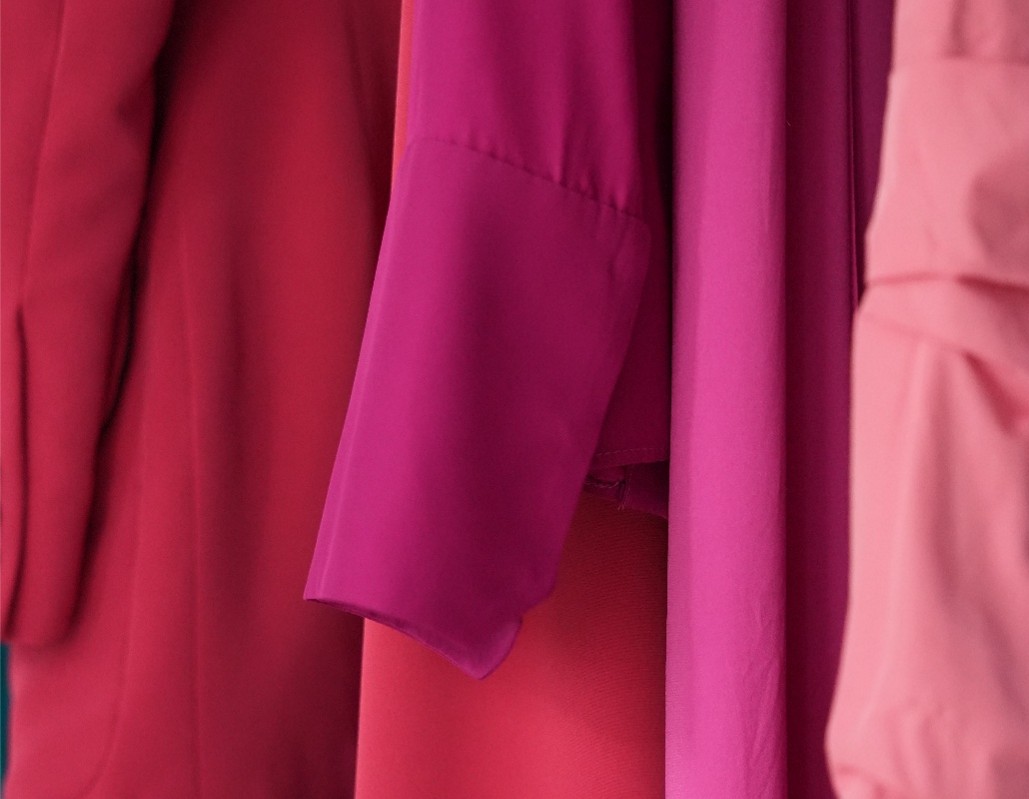
- The crepe introduces contained movement: it falls, accompanies, softens the silhouette without imposing itself.
Each of these types of fabrics not only defines an aesthetic, but a way of being in the world.
Choosing noble materials as an ethical gesture
Opt for natural fibres -quality silks, wools, cottons - is also a conscious decision. It does not respond to urgency, but to respect for the material and the processes that transform it.
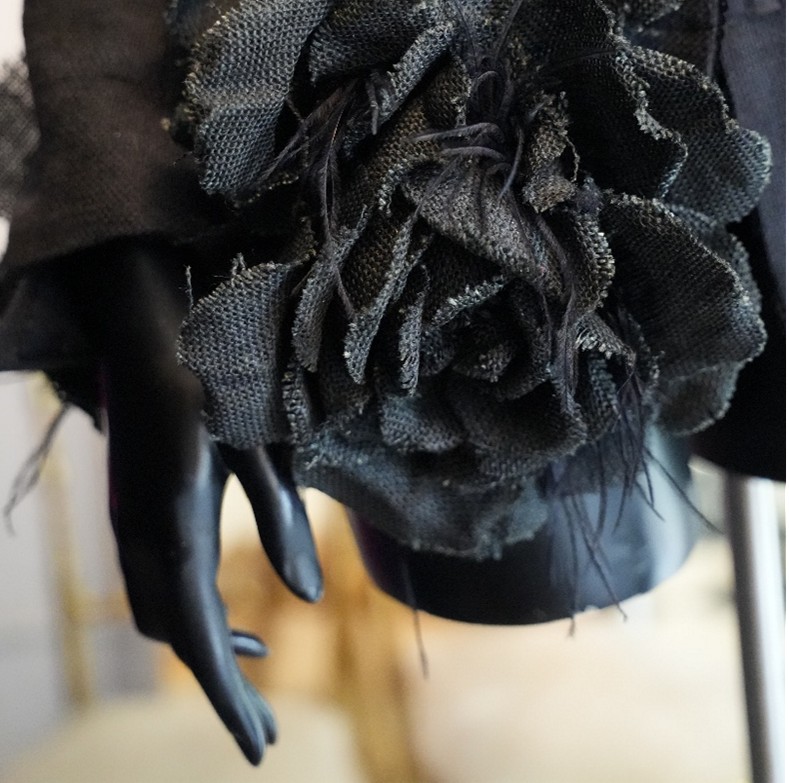
In a context where fast fashion depletes fabrics and meanings, handcrafted luxury is betting on the durability, The materials used to make the garments stand the test of time without losing their beauty. Embroideries made in the atelier, hand-painted fabrics or careful textile manipulations turn each garment into a work of art that does not need to be repeated to exist.
Textile heritage and collective memory
Every weaving keeps a memory of manufacture. A way of making passed down from generation to generation. Recovering textile archives, working with traditional materials or reinterpreting historical techniques makes it possible to activating the past in a contemporary key.
This conservation is alive. The noble fabric becomes a bridge between tradition and modern creativity, strengthening the identity of a garment and of the person who chooses it.
Growing old gracefully
In contrast to synthetic materials, fine fabrics, which are age with dignity. The marks of time do not detract from value: they amplify it. A well-made patch, a reinforced seam, a texture softened by the years add layers of meaning.
To wear a garment made of noble materials is to prolong the memory of the body, of art and of time. It is to accept that true luxury does not remain untouched, but rather that it transforms with you.