In the collective imagination, the bridal gown It seems to inhabit a single idea of white. However, in the atelier, we discover that white is a vast territory, full of nuances, intentions, and sensitivity. Choosing the right tone is an exercise in deep understanding of the body, light, and identity.
Talking about colorimetry applied to wedding dresses means going beyond trends or visual references. It involves understanding how skin breathes with fabric, how natural light transforms every hue, and how a seemingly subtle choice can define the elegance of an entire bridal look. Malne, This process is not technical: it is almost intimate, a conversation between the woman and her most authentic reflection.
The skin as a starting point
Every bride arrives at the atelier with a story, but also with her own unique light. That light is what guides the choice of white. Not all whites illuminate in the same way, nor do they interact equally with skin undertones.
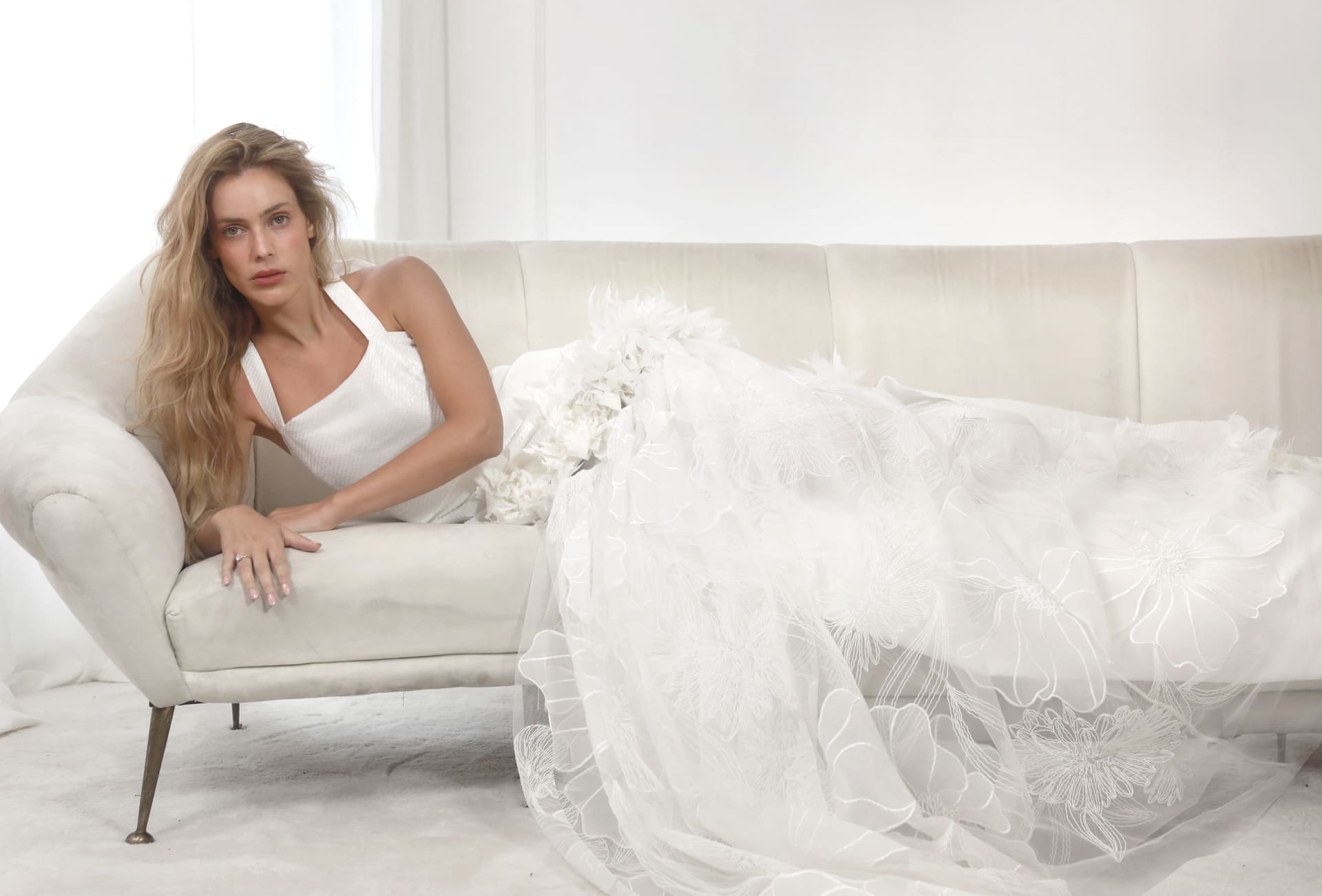
Some skin tones find harmony in warm whites, with subtle ivory or vanilla undertones, which add softness and depth. Others, however, are enhanced by cooler, almost optical whites, which create contrast and a more defined presence. Sometimes, the balance is found in intermediate tones, those that seem to blend in but envelop the skin naturally.
This exercise cannot be solved with a tissue sample lying on a table. It requires testing, observation, and a certain amount of patience.
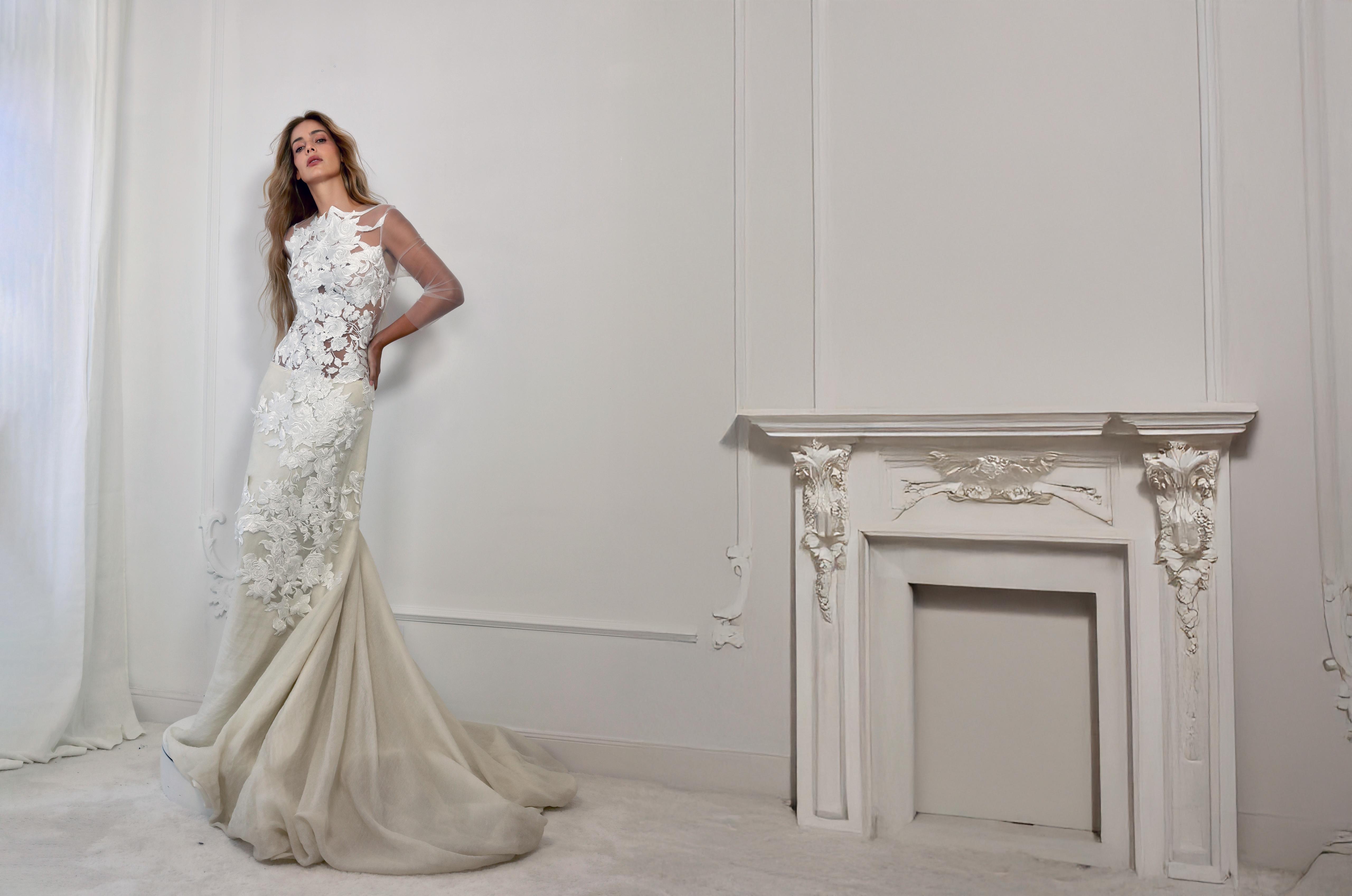
Light and context: white is never static
A A wedding dress doesn't exist in the abstract.. It exists in a specific place, at a specific time, surrounded by architecture, landscape, and emotion. And all of this transforms white.
A wedding in a stone church, where the light filters softly, is not the same as an outdoor ceremony where the sun defines every space. Nor does white appear the same under warm lighting as it does under cold or artificial light.
That's why, when we approach a wedding design, we integrate variables that go beyond the dress:
- The link environment, which influences how tones are perceived
- The time of day, which modifies the intensity and temperature of the light
- The texture of the fabric, capable of reflecting or absorbing light
- The bride's aesthetic narrative, which gives coherence to the whole
At this point, white ceases to be a color and becomes an atmosphere.
Building Balance
A bridal look It's not just the dress that makes it stand out. The chosen white color interacts with all the surrounding elements: the veil, the accessories, the makeup, even the hairstyle. Every decision either adds to or detracts from the overall effect.
In the atelier, we strive for everything to flow in the same direction. We want the dress's color to complement the skin, the light, and the surroundings. We want the whole ensemble to exude coherence.
This balance is built through small gestures which, when accumulated, generate a feeling of harmony that is difficult to explain but immediately perceptible:
- The choice of lace or embroidery that respect the temperature of the white
- The inner linings, invisible, which nuance the final result
- The handcrafted details —buttons, buttonholes, finishes— that add depth
- Adapting the design to actual body movement
Because Perfect white doesn't stand out on its own: it complements, envelops, and elevates..
Beyond traditional white
In recent years, we have observed an opening towards new interpretations of white in bridal fashion. Slightly powdery tones, barely perceptible pinkish nuances, even glazes that transform the reading of the color without breaking its essence.
Far from being a break, it's a natural evolution. The contemporary bride seeks her own language, a way of expressing herself that doesn't depend on what's established, but on what truly represents her.
At Malne, we understand this search as part of the creative process. Each dress is a unique response. And in that singularity, white becomes a vehicle of identity.
When the dress begins to take shape and the idea ceases to be intuition and becomes certainty, we understand that it all begins with a conversation.
It all starts with a conversation.
Keys to understanding colorimetry in a wedding dress
For those approaching this universe for the first time, there are certain ideas that help to understand the importance of the choice of target:
- There is no universal target.Each skin tone and each context requires a different nuance
- Light transforms colorWhat works indoors may change outdoors
- The fabric matters as much as the tone.Texture modifies perception
- The set defines the resultThe dress, accessories, and setting should all work together.
These keys are not hard and fast rules, but starting points for deeper exploration.
The final gesture
There is a moment, during the tests, when everything falls into place.
That moment is rarely about spectacle. It's about precision. About finding the exact tone, the exact fall, the exact proportion.
At that moment, white ceases to be a color and becomes future memory.
And it is at that moment, when the bride recognizes herself in the mirror for the first time, that something more than a dress is born: your story begins with an encounter.