
"In fashion, as in life, what lasts is what you take care of. Sustainability is the art of dressing without leaving scars".
In the history of fashion there are moments that mark a before and an after. The arrival of sustainability in the fashion industry was not a passing trend, but a profound change of outlook. It meant a rethinking of what it means to create, wear and care - of the planet, of the people, of the crafts that shape each garment.
An awakening to the problems of fast fashion
For decades, fashion accelerated its pulse. The fast fashion flooded shop windows and wardrobes, multiplying collections at a pace that respected neither the design time nor the lifespan of a garment. This speed came at a cost: the fashion pollution emissions grew to account for about 10% of global emissions and 20% of freshwater pollution.
The collapse of the Rana Plaza building in 2013 tragically showed that behind a cheap dress there could be undignified working conditions, unfair wages and lack of safety. It was then that the ethical and sustainable fashion became visible all over the world.
Sustainability in the fashion industry: A new way to create
The sustainable fashion was born to reduce that impact. It opted for natural fibres grown without chemicals, less aggressive dyeing processes and technologies that eliminate the use of water or toxins in critical phases of production. He proposed exchanging quantity for quality, thinking about the entire life cycle of a garment and understanding that durability is also a form of beauty.
It is a path that demands respectThe issue is not only for the resources, for those who work in the garment industry, for those who inherit the effects of what we are producing today.
Ethical and sustainable fashion: dignity and transparency
The ethical fashion don't just look at the planet; look at the hands that create. It demands living wages, safe environments and traceability throughout the value chain. It reclaims the idea that clothing is a conscious act and that every label should tell the story of where, how and by whom that garment was made.
Here, craftsmanship takes on a new meaning. The care of hand embroidery, the choice of a local fabric, the precision of a well-made seam are also acts of sustainability.
Benefits of sustainable fashion: beyond the garment
The benefits of sustainable fashion are tangible and emotional:
- Garments with higher quality and durabilitywhich reduce waste.
- Consumption reflecting ethical values and cultural.
- Innovation in materials and eco-responsible processes.
- Reconnecting with craftsmanship and the value of the handmade.
It is a change that transforms the relationship between who wears and what we wear.
Malne: tradition and sustainability as one language
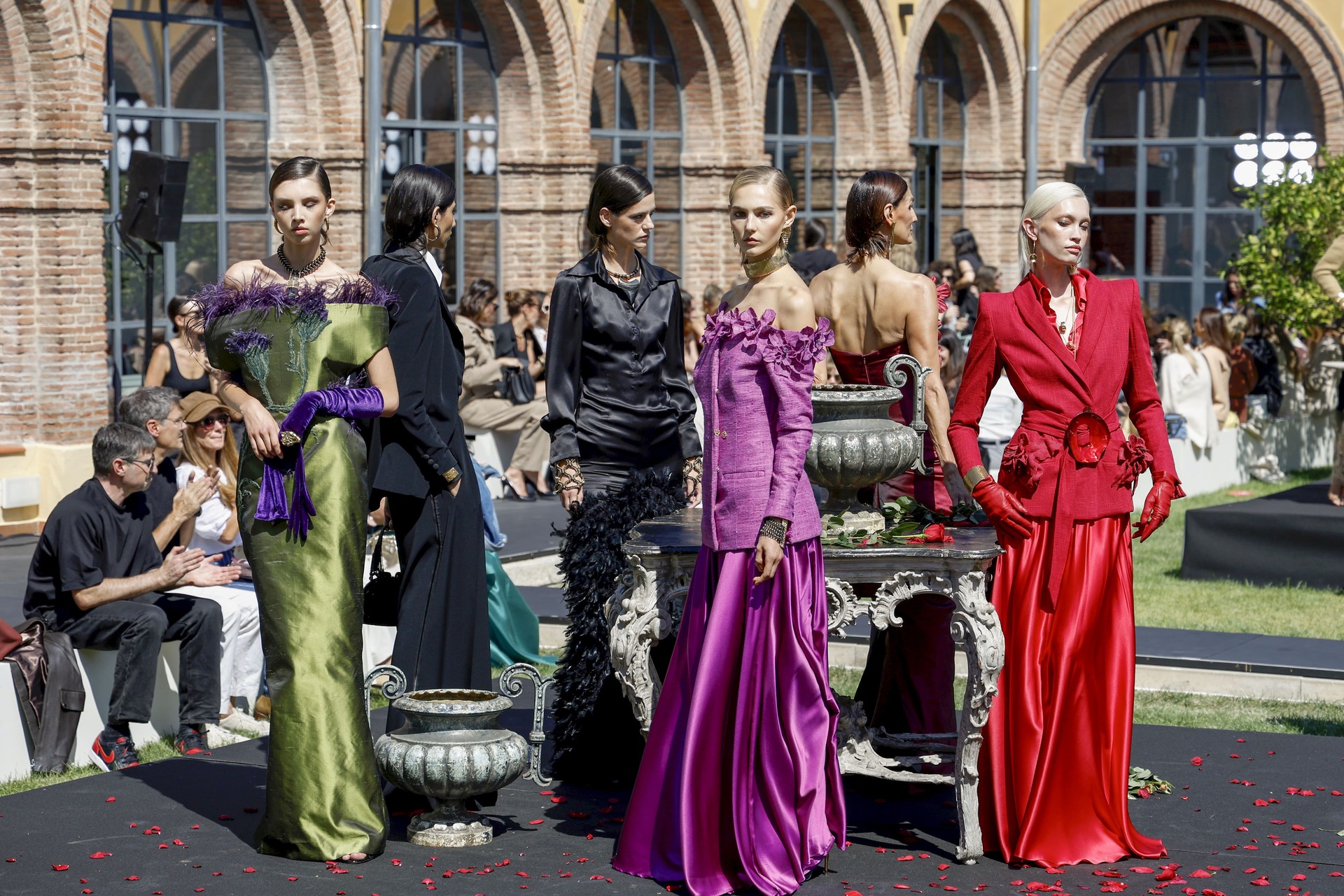
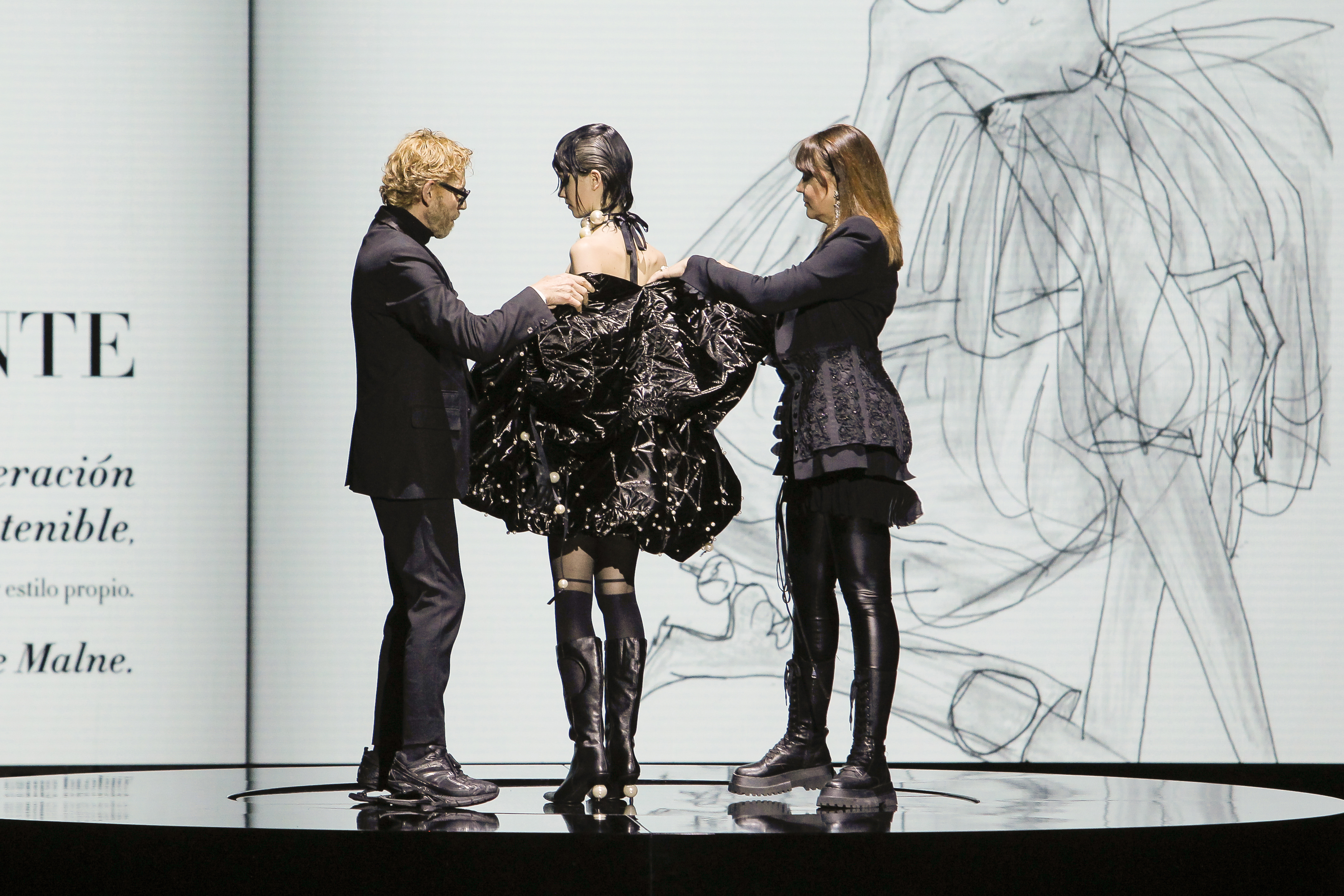
In this context, Malne represents a natural synthesis between the heritage of Spanish haute couture and the vision of a ethical and sustainable fashion. In his atelier in Madrid, each pattern is drawn by hand, each finish is made using traditional techniques, and each garment is made in close collaboration with local artisans. There is no mass production, but unique creations, designed to last and to tell a story.
For Malne, sustainability is not an add-on, it is part of its DNA: preserving crafts, reducing impact, raising quality and offering pieces that transcend seasons.
A future woven with respect
The sustainable fashion still faces challenges -initial cost, lower availability vs. fast fashionIt has already transformed the conversation. It has brought back to the centre the idea that luxury is not about quantity, but about time, quality and respect.
In this new chapter of fashion history, sustainability is not a trend: it is an invisible thread linking past and future. And in the hands of houses like Malnethat thread becomes a fabric that dresses with beauty and awareness.