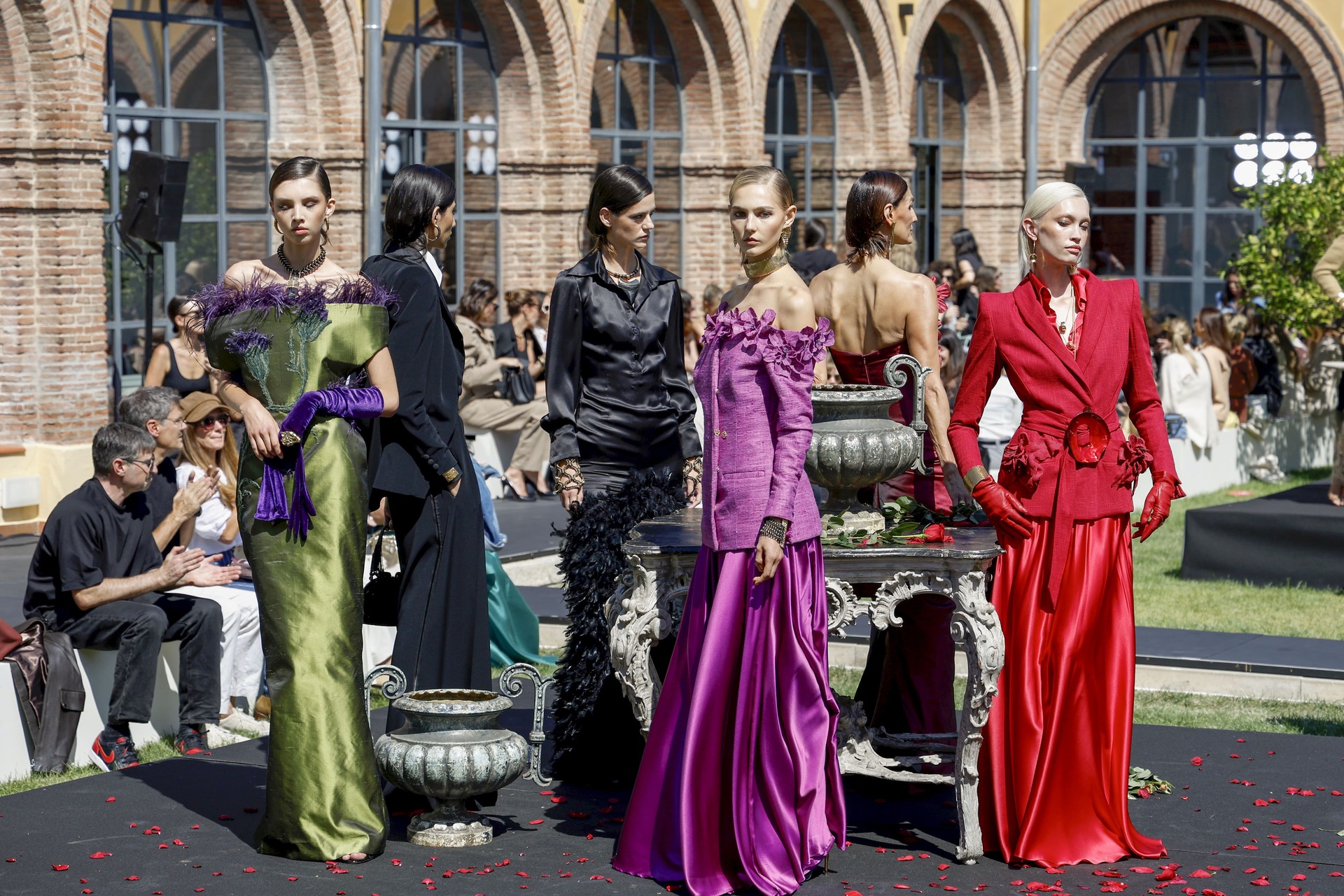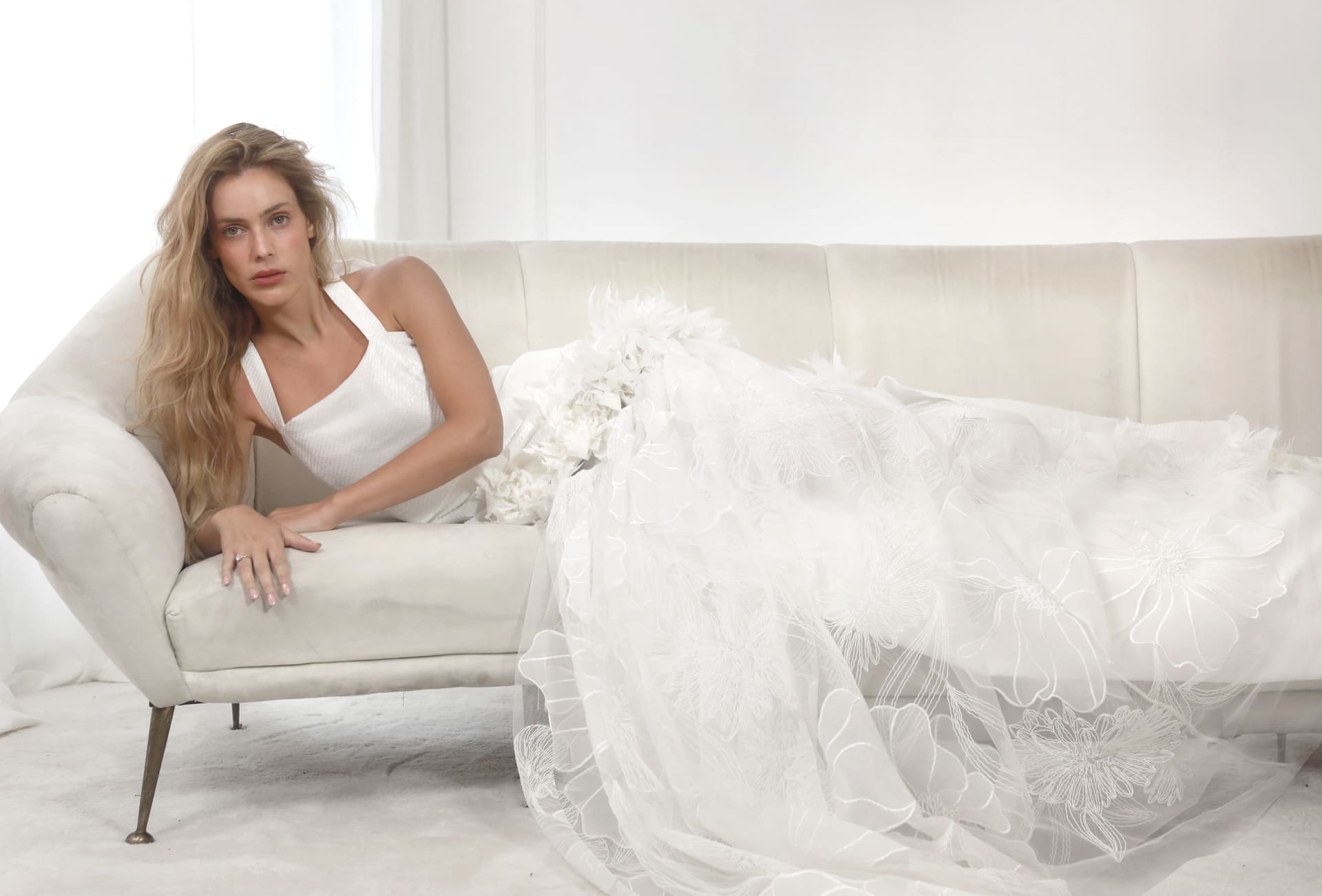
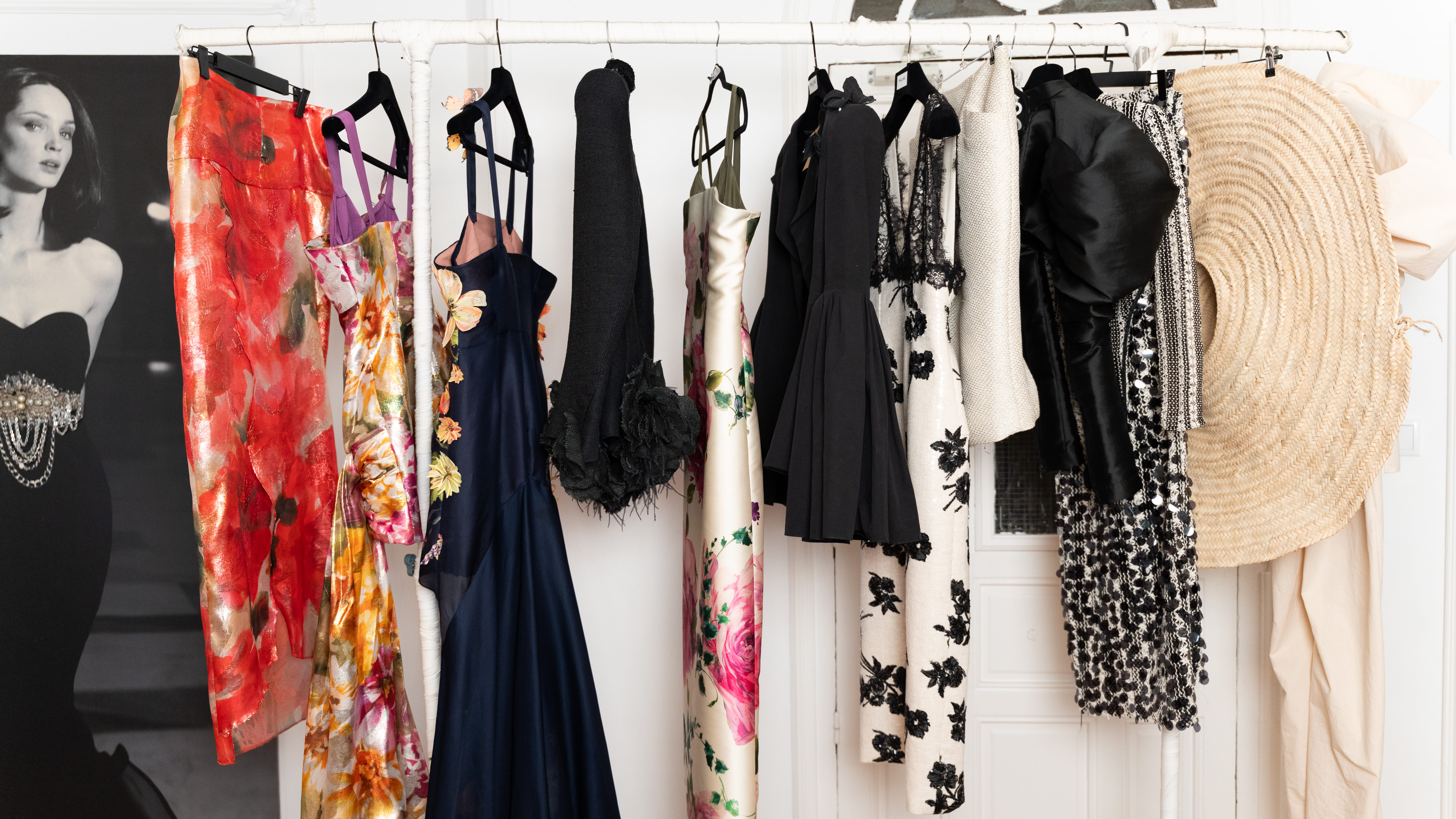
The material sometimes precedes the drawing: it already contains a way of falling, of shining, and of remaining in memory
Before the cut, before the pattern, even before the first idea made runway, there is a decision that defines everything that will follow: what fabric will touch the body. In the prêt à couture, That decision is never neutral. It is the first act of authorship, the moment when a material chosen with meticulous precision begins to dictate the silhouette, the drape, the presence. The rest of the process—the design, the tailoring, the finishing—is, in many ways, a conversation with that initial choice.
There's an idea circulating in the great European ateliers that's worth remembering: a pattern is learned, a technique is mastered, and a fabric is chosen. And choosing it well is the hardest part of all.
What really is prêt à couture
Between industrial prêt-à-porter and strict haute couture—that universe of unique pieces regulated in Paris by the Chambre Syndicale—lies an intermediate territory that has gained strength in recent decades. It is prêt-à-couture: garments of contemporary haute couture produced in limited editions, with the level of finish and materials typical of haute couture, but designed to be lived in.
It's not a compromise. It's a different way of understanding luxury:
- No bulk stock, without repeated collections, without standardized sizes.
- With local production, in the atelier, tailored to each client.
- With fabrics selected piece by piece., not bought in bulk.
- With a real margin for customizationThe design exists, but it adapts, it is modified, it is interpreted.
This is handcrafted fashion in its most demanding sense. And within that framework, the fabric is not a detail: it is the main protagonist.
The fabric chooses the piece, not the other way around.
Those who have worked in an atelier know that Many design decisions are reversed The moment you try a fabric on your body, an idea conceived in mikado can look absurd in crepe. A skirt imagined in gazar can be transformed, almost effortlessly, when tried on in silk mousseline. The sketch proposes; the fabric disposes.
This is due to a very simple and rarely mentioned truth.Each material has its own intelligence.
- The mikado —compact, slightly stiff silk— builds architecture. It supports volumes, draws clean lines, and doesn't give up easily. It demands sculptural designs.
- Silk crepe She surrenders to the movement. She falls onto her hip, she engages with each step, she is almost imperceptible, and yet she completely transforms how a body in motion is perceived.
- The gazar, That densely woven silk that Cristóbal Balenciaga brought to its technical maturity offers something almost paradoxical: weightless structure. It allows for volumes that seem to float.
- Silk velvet It introduces density, seclusion, intimacy. The light doesn't bounce off: it sinks in. It's a fabric that communicates even before it's fully seen.
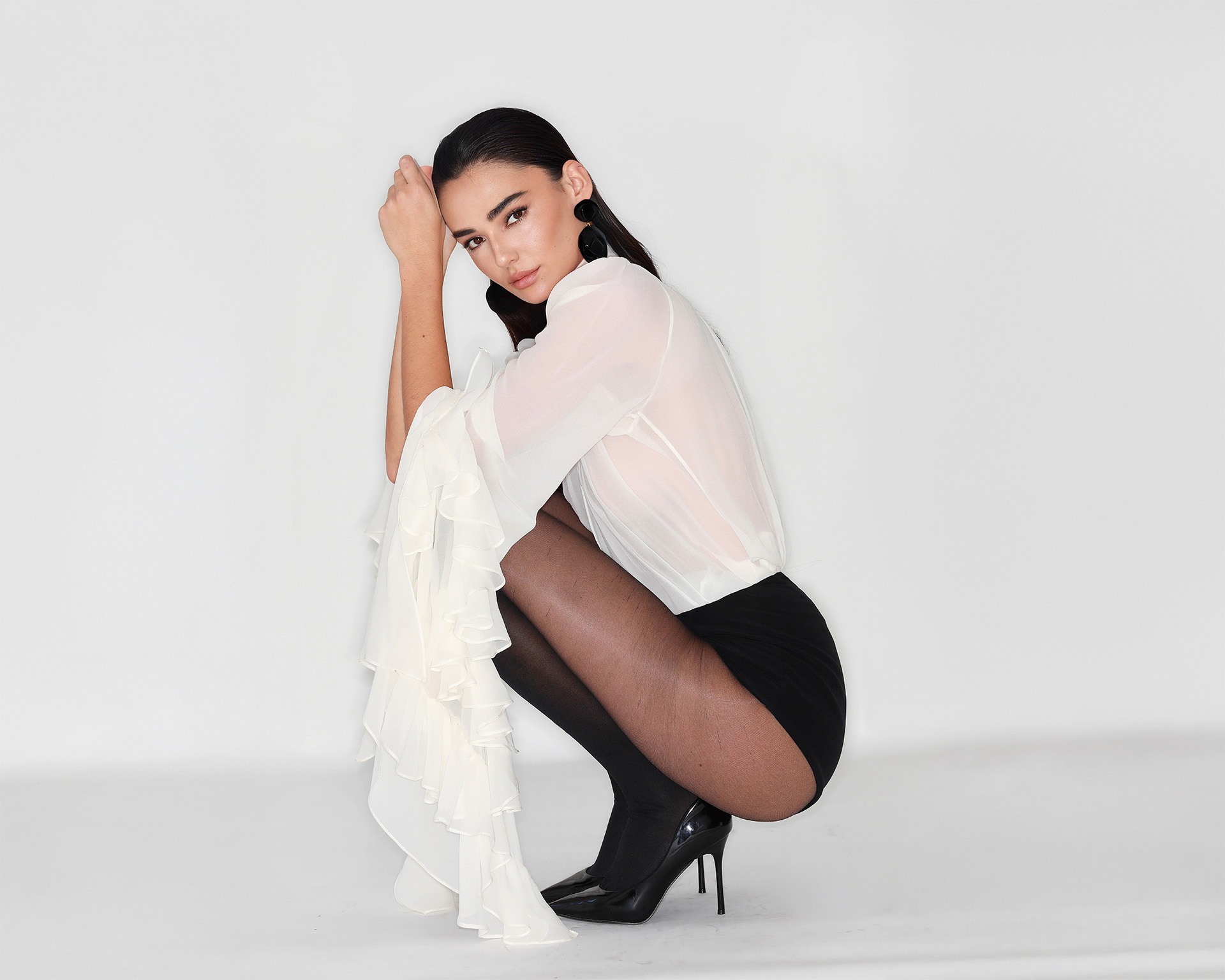
- Chantilly or Calais lace, Woven on the historic looms of northern France, it plays with the boundary between the visible and the suggested. It doesn't cover: it filters.
Working with these materials isn't decorative: it's structural. It defines how the garment will fit, how it will react to light, how it will move when walking, how it will age over the years.
Touch as decisive evidence
In industrial fashion, fabrics are specified in technical data sheets. handcrafted fashion, They are recognized by touch. There is a tactile memory in those who have worked with fine materials for years: they can identify Chinese silk from Italian silk before looking at the label, distinguish Mongolian cashmere from a crossbred one, and know if a wool has been combed or carded by how it slides between their fingers.
That knowledge is not eccentric: it is the technical basis of any serious decision about luxury fabrics. Between two seemingly identical silks, there can be enormous differences in drape, durability, ability to hold embroidery, or withstand gathering without breaking. These differences are discovered by touching, not reading.
And that's also one of the reasons why the first appointment at an atelier is never just a conversation: it's also a first contact with the actual materials. A prêt-à-couture client doesn't choose from a digital catalog; she chooses on fabric, in her hand, against the light, against her skin.
Where do precious materials come from?
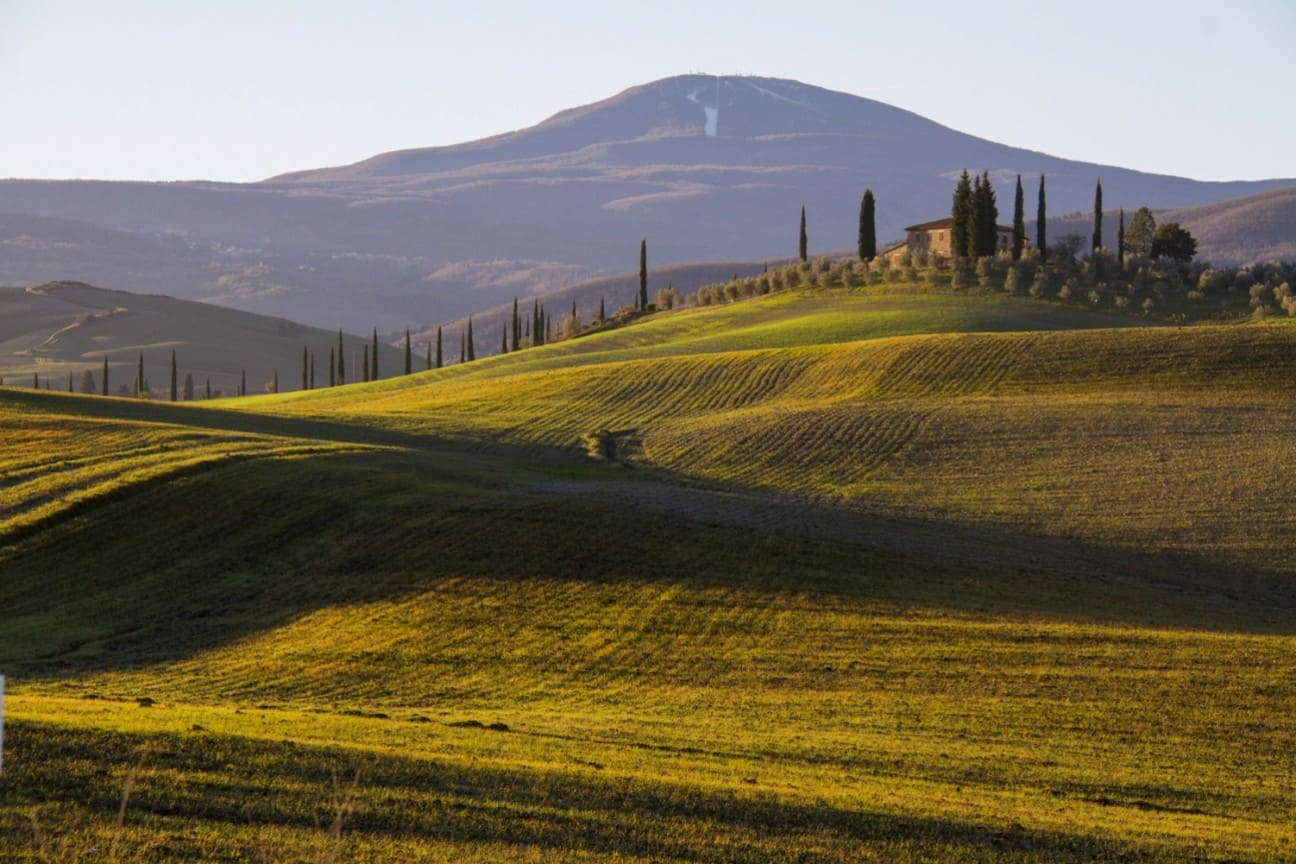
Talking about fine materials in fashion It's about geography and craftsmanship. Cartography hasn't changed much in a hundred years, and that, in an industry obsessed with novelty, says a lot.
- Italy It is home to some of the most prestigious looms on the continent: As it remains the European capital of silk, Biella offers the finest wools and cashmeres in the world, and Prato maintains a tradition of creative and experimental fabrics that supplies much of the international haute couture.
- France It retains the supremacy of lace —in Caudry and Calais there are still factories that have been perfecting a single technique for two centuries— and of hand embroidery, linked to the historic workshops of the Lyon region and Paris.
- Swiss, The St. Gallen area, in particular, is home to some of the world's most sophisticated looms for technical lace and complex embroidery, heirs to an industry that dressed the great Parisian houses throughout the 20th century.
- Spain It keeps textile traditions alive and preserves artisans who work for the great European ateliers without ever appearing on their labels.
This network of workshops and manufacturing facilities This is what sustains contemporary prêt à couture. It's not about labels, but about suppliers, about relationships cultivated over decades, about knowing that a particular fabric is only made by a specific family in a specific town. It is, ultimately, a secret geography of true luxury.
The body as a second author
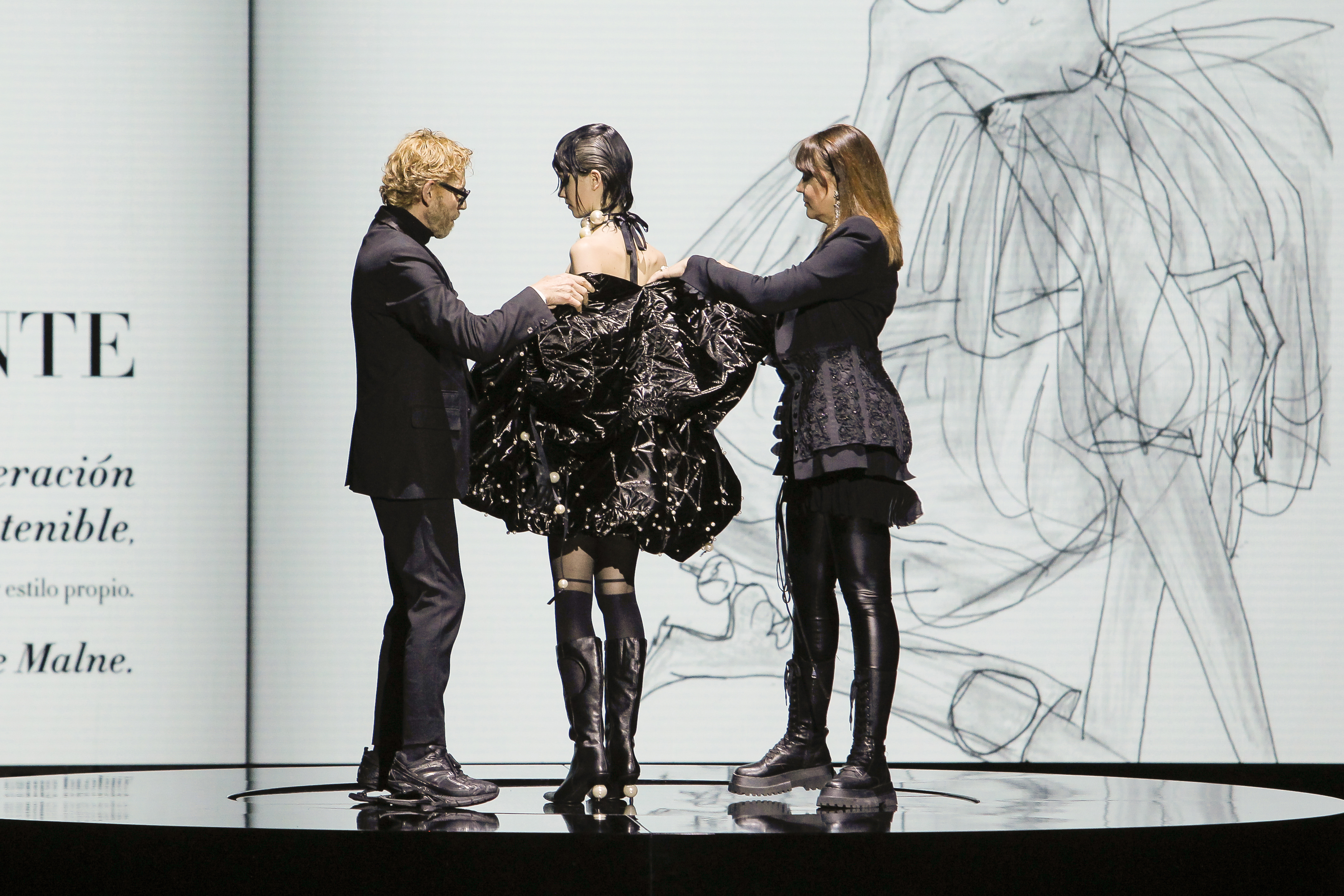
There is one last reason why Fabric is everything in this territoryBecause only a truly noble material can adapt to a real body. Industrial fabrics, designed to fit any standard pattern, sacrifice personality for uniformity. luxury fabrics They do the opposite: they have character, they yield or resist, they engage with each individual's anatomy. That's why no sketch is truly considered finished until it has been tested on raw fabric on the client.
When a woman leaves an atelier with a ready-to-wear piece, she's not just taking home a design. She's taking home a choice made over time: the designer's choice of fabric, the loom's weaving technique, and the pattern maker's understanding of how it would drape on her body. This invisible chain is ultimately what distinguishes a well-made garment from a mere piece of clothing. contemporary haute couture.
And it is also the reason why every conversation in the atelier always begins, before anything else, with the feel of the materials.