"There are threads that cannot be cut. The tradition of Spanish fashion is one of them."
There are countries whose fashion history is lived in shop windows, and others where it is woven patiently, stitch by stitch, as if each thread holds the memory of generations. The Spanish fashion was born out of the latter spirit, uniting aesthetics, heritage, art and craft in a single tradition. In its ateliers, since the dawn of the 20th century, a unique way of understanding Haute Couture was forged, where exclusivity was not a whim, but the natural consequence of the dedication and perfection.
The historical splendour of Spanish Haute Couture fashion
The 1950s and 1960s were a time of real Golden Age for fashion in Spain. At that time, the national Haute Couture was on a par with the great houses of Paris, attracting clients from all over the world and projecting an image of excellence that still reverberates today.
The great Spanish fashion designers and their living legacy
Cristóbal Balenciagathe "master of us all" in the words of Christian Dior, elevated Spanish fashion to a sculptural dimension. Inspired by the art and clothing of his homeland, he created shapes and volumes that still seem ahead of their time. Pedro Rodrígueza pioneer of fashion shows in Spain, turned the fabric into the protagonist, letting the fabric dictate the design. Manuel PertegazWith his understated elegance, he even refused to succeed Dior in order to remain faithful to his own vision.
Elio BerhanyerThe geometric and emphatic design translated Spanish dramatic aesthetics into textile architecture. Asunción Bastida y Pedro Rovira complete this pantheon of creators, each with an unmistakable stamp and a contribution that still inspires Spanish fashion firms.
They all shared the same faith: that fashion was an art and craftsmanship its highest language.
Craft traditions: the soul of Spanish fashion
At the heart of this Spanish fashion tradition are trades that have stood the test of time:
- Tailor-made tailoringwhere each suit is a dialogue between customer and craftsman, the result of dozens of hours of precise work.
- Crochet and bobbin laceThe delicate filigree of the work is the result of patience and mastery.
- Handmade embroiderywhich in the hands of Balenciaga or Rodríguez was transformed into textile jewellery.
- The philosophy of making the most of the fabricHe considered each fibre to be valuable, integrating techniques such as patchwork and tracing.
This knowledge, passed down from generation to generation, was not merely technical resources, but part of an aesthetic and ethical vision: fashion as a unique piece, with a soul of its own.
Challenges and transformations in Fashion Spain
The continuity of this tradition was not without its obstacles. The lack of institutional support, the fiscal pressure of the so-called Luxury Tax and the irruption of prêt-à-porter altered the ecosystem of Spanish Haute Couture. Many houses closed, and globalised fashion, faster and less personalised, began to occupy the space previously inhabited by bespoke creations. However, the spirit of craftsmanship and excellence did not disappear: it remained dormant, waiting for new hands to reactivate it.
The history of fashion in Spain and Malne: heirs to the spirit of craftsmanship
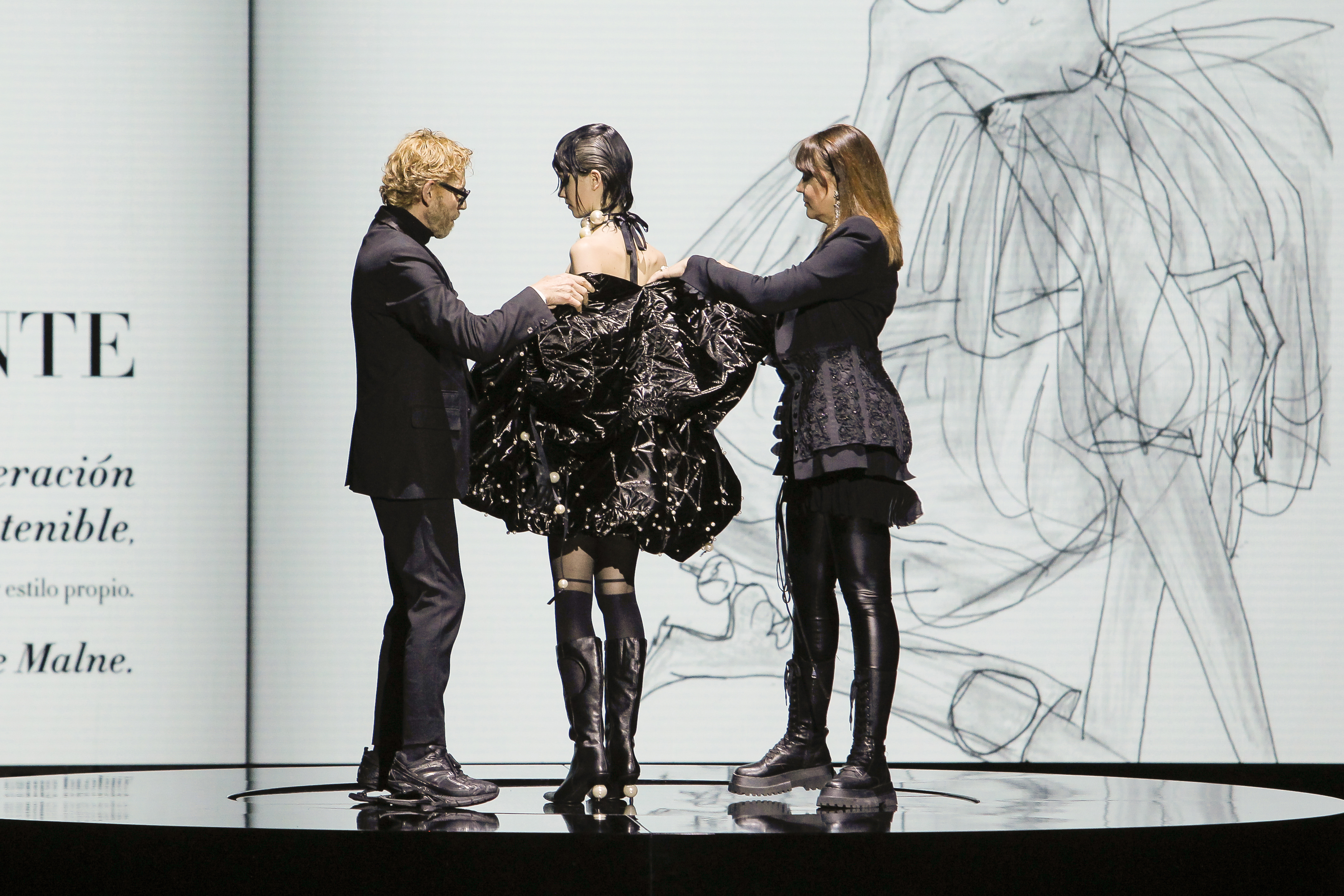
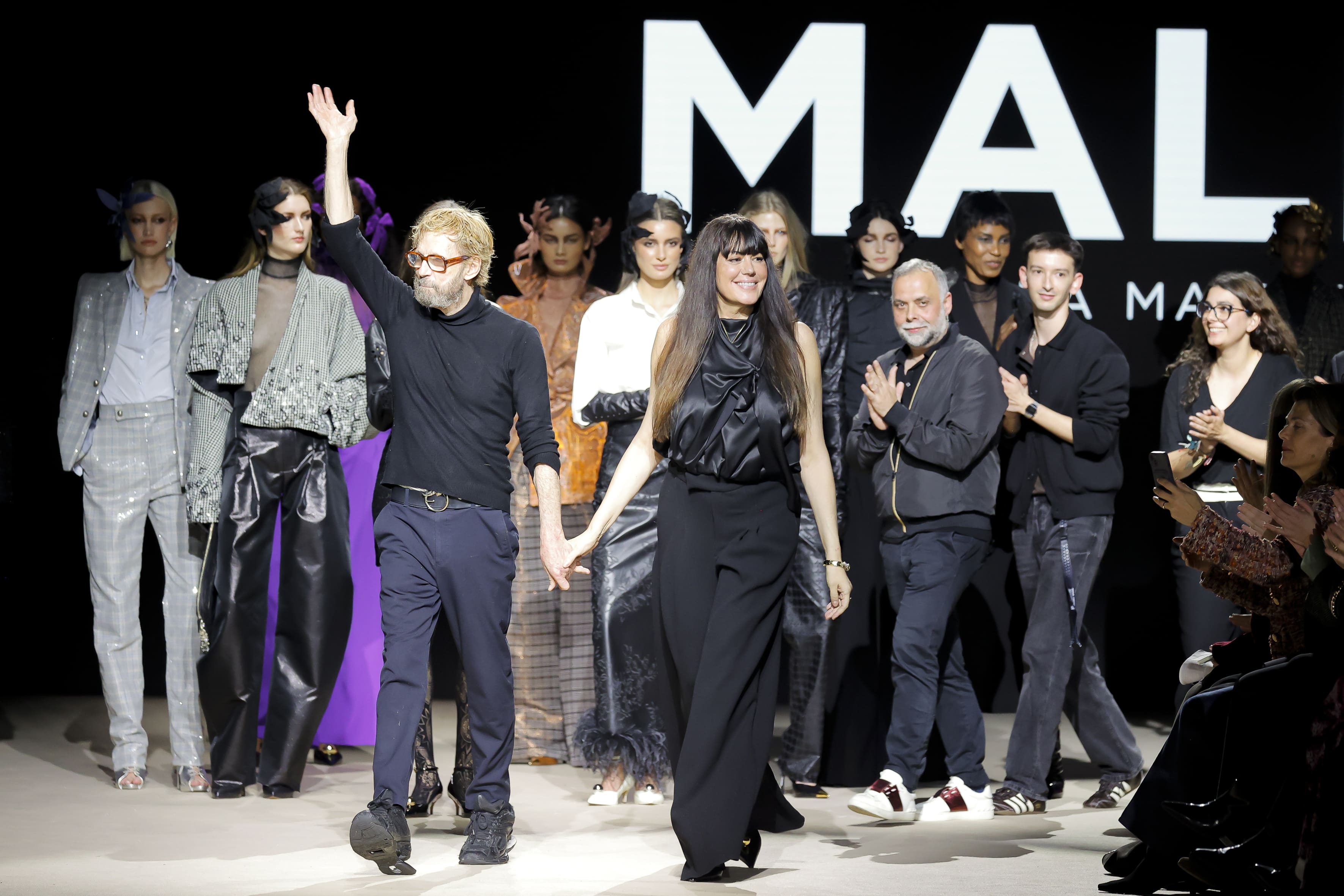
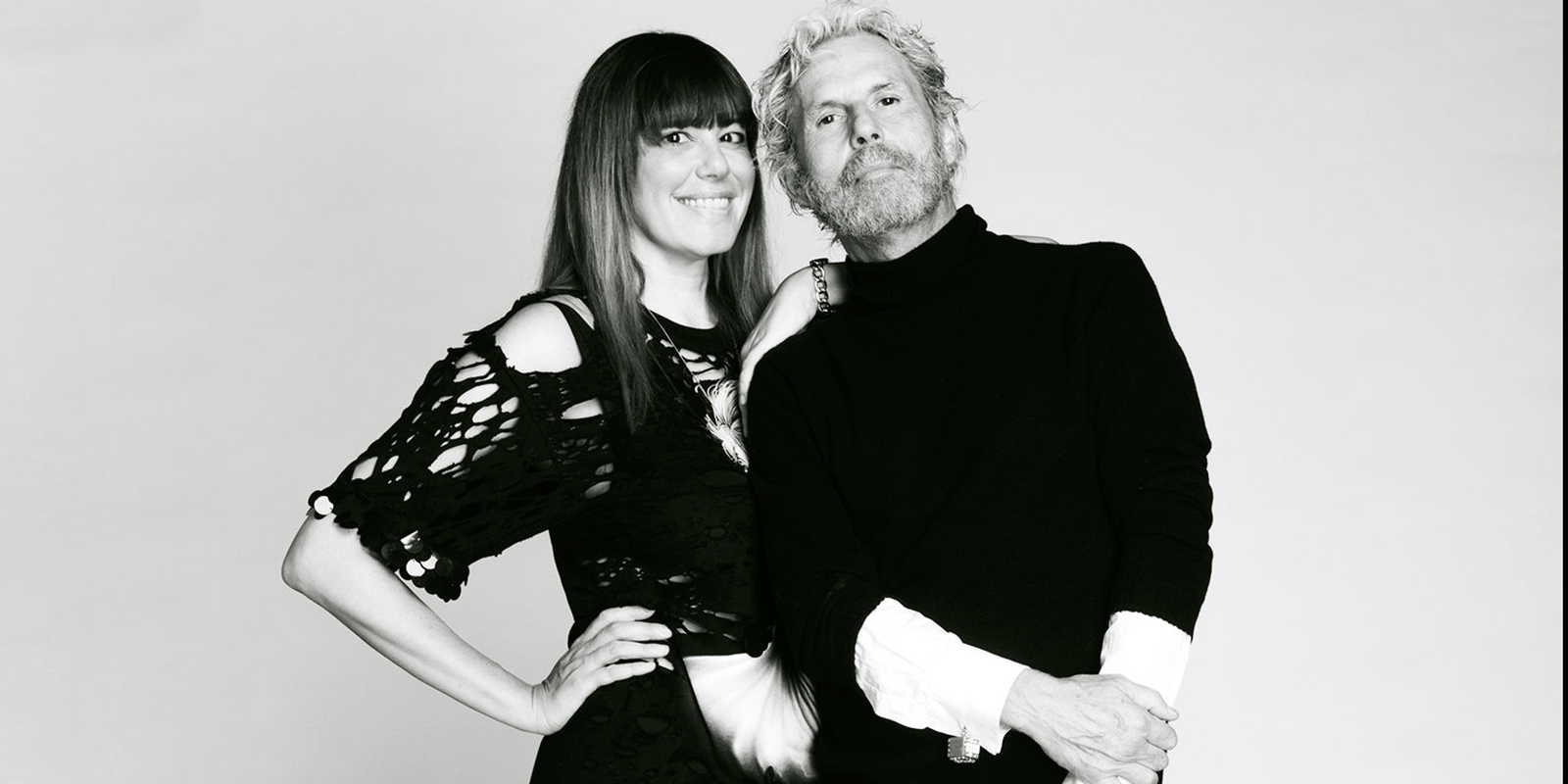
In 2015, Paloma Álvarez and Juanjo Mánez founded Malne La Maison with a clear premise: to rescue the essence of Spanish Haute Couture and adapt it to the 21st century. His proposal is situated in the heart of the slow fashion and designer fashionThe company is committed to handcrafted production, exclusivity and respect for the human rhythm of creation.
In Malne's atelier in Madrid, each garment is the result of a deeply artisanal process:
- Handmade patternsThe reason for this is that no machine can imitate the hand's stroke.
- Always manual finishingwithout resorting to quick methods such as overlocking, using French seams, handkerchief finishing or bias binding, depending on the design and the way the fabric is to be displayed.
- Hand embroidered with high quality crystals that add light and character to each piece.
- Shoulder pads and pads sculpted in our own ateliernever prefabricated.
The total absence of mass production allows each design to be customised down to the last detail, refining patterns to suit each customer's silhouette and adding unique touches such as antique buttons or special linings.
Craft collaboration and Spanish fashion brands
Malne cultivates a close link with the traditional trades that have shaped Spanish fashion for decadesThe company collaborates with embroiderers and craftswomen who make flowers petal by petal, a gesture that is reminiscent of the meticulousness of the historic ateliers.
Each piece is born of a process that respects and updates these practiceshand-drawn patterns, without digital mediation, as was done in the Haute Couture workshops; handmade finishes that replace quick methods of finishing off garments, such as overlocking, with French seams, bias binding, handkerchief or handkerchief-like finishes; and the use of the same handmade finishing as in the Haute Couture workshops. unfini deflecting. Techniques handed down from generation to generation.Most of the embroidery is handmade, with high quality crystals, and the shoulder pads and pads are sculpted in the atelier itself, maintaining the tradition of building the garment from its structure.
The firm no mass productionThis makes it possible to personalise each creation and provide it with unique details such as antique buttons or special linings, in keeping with the spirit of signature fashion that has always characterised the Spanish fashion companies. This commitment to local production, exclusivity and craftsmanship makes Malne a living link in the continuity of this heritage.
Luxury fashion in Madrid with ethical commitment
This way of working is also embedded in an ethical vision that connects with the deepest values of the handicraft traditionRespect for the time of creation, for the hands that make them and for the environment that provides the materials.
Malne is part of the movementslow fashion and designer fashionwhose relevance grew in 2013 after the tragic collapse of the Rana Plaza factory in Bangladesh, where sweatshop workers lost their lives. That event acted as a global wake-up call and reinforced the need to preserve production models based on proximity and the dignity of the craft.
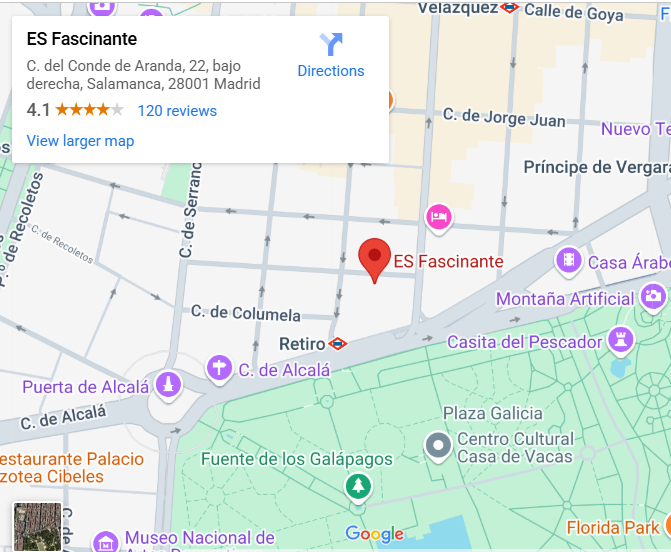
Since its foundation, the company has been making all of its garments in his own atelier in Madrid or in specialised external workshops also in the capital, relying on local craftsmen and workers who master the techniques of Spanish haute couture. Each pattern is made by hand; the finishes are always handmade, adapting the technique to the nature of the fabric and the desired effect. Following the methods that are part of the DNA of haute couture.
A tradition projected into the future
In a fast-paced context, Malne advocates a pace of work that allows each garment to be thought about, imagined and executed with the calm that perfection demands. This approach is not only in keeping with the heritage of the great masters of the Spanish fashionIt updates it, offering a model where artisan know-how coexists with contemporary sensibility.
The history of fashion in Spain is a golden thread that spans decades. Malne, as heiress, takes that thread and weaves it in each collection, keeping the Haute Couture legacy alive and projecting it towards a tomorrow that respects art, expert hands and who will carry each creation.