“A wedding dress is not finished when it is sewn; it is finished when it breathes with the wearer.”
There is a moment before the “I do” that almost nobody sees and yet it underpins everything. It doesn't happen in front of the guests or at the altar. It happens long before, when a woman looks in the mirror and discovers that that dress -still in process- already begins to tell who she is.
We are talking about the atelier tests for a bridal gownThe bride and groom: they happen with emotion, with laughter, with that nervous joy that accompanies great days. A bride comes out of every appointment more confident, more luminous, more her.
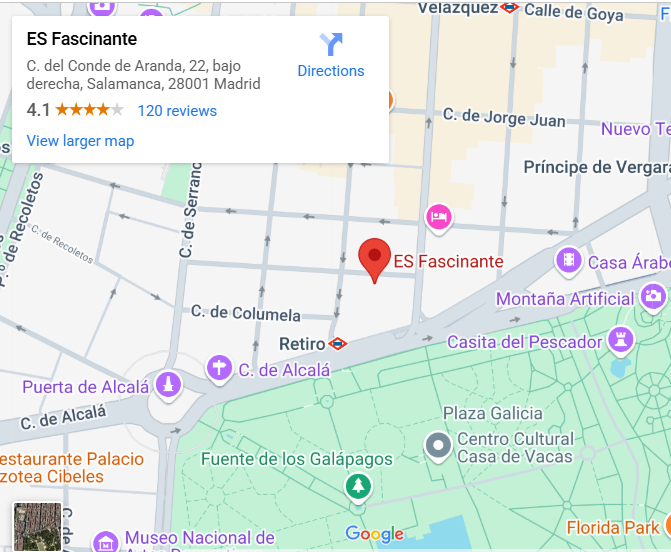
In our atelier in Madrid, the fitting is not a formality. It is a ritual of precision and confidence. And at Malne, that ritual begins where it almost never begins in other luxury brands: in a face-to-face meeting with the designers.
The first date: when the bride sits down with the designers
Most luxury experiences, even the most thoughtful, rarely include an actual meeting with the designer(s). In our case, it is the natural beginning of the process. We sit, we listen, we observe. Because a wedding dress is decided by movement, by character, by what a woman wants to express without saying a word.
On that first date, something very specific happens:
- We teach fabrics with different weight, drop and light.
- Introducing ready-made models to test, because the body understands before the mind.
- We start to read how the bride walks, how she breathes, what posture she has when she gets excited, what gestures give her away.
From then on, the process is strictly ordered. After this first conversation, we present various designs and limited fabrics to what is spoken. The choice is not an infinite catalogue or a letter of instructions: it is a curated, coherent selection, with creative direction. The bride chooses and that is where the magic comes in: freedom within an author's language.
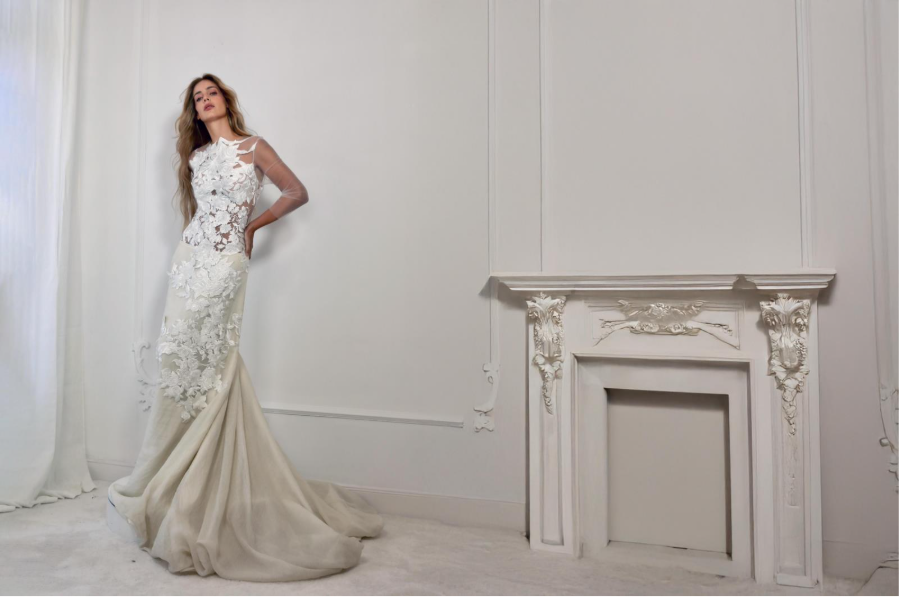
La toile: architecture before beauty
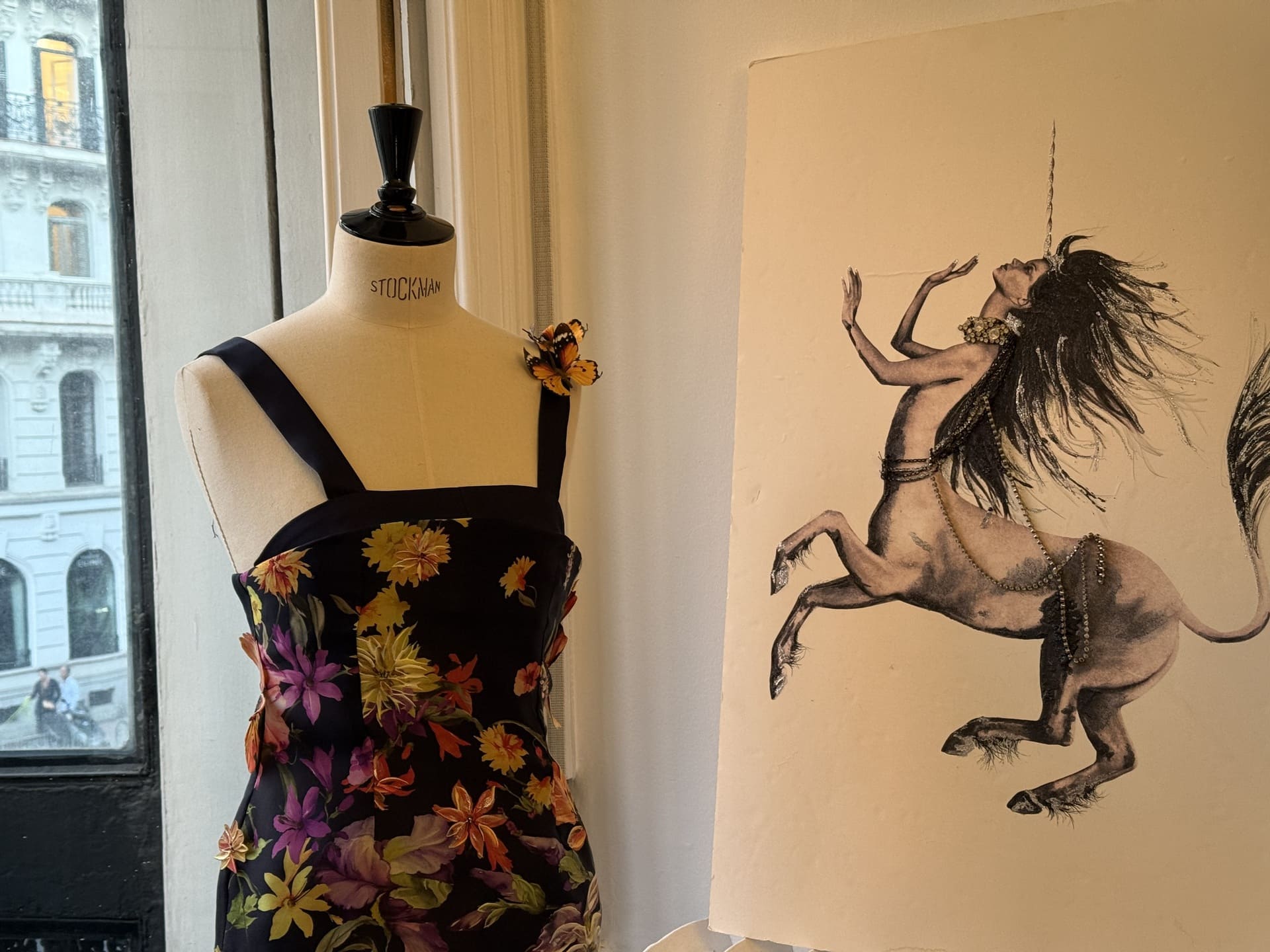
Before we cut the final fabric, we usually make a toile. And this step, which some imagine as a minor one, is in fact one of the highlights of the process.
The toile is where the pattern becomes decisions that change a dress completely, especially those that affect proportions:
- How long a line is.
- How to hold a neckline,
- What balance the silhouette needs to flatter that real body.
A huge part of the trade lives here: years of experience in silhouette types, in construction, in proportion. Years of looking at different women and understanding what makes them feel powerful without disguising them. And we haven't even started sewing yet the ultimate dress.
The evidence: a lively, lively, confident space
A test appointment at the atelier is not an examination, it is a celebration of the process. Appointments have to be joyful. You test, you adjust, you decide; yes. But you also laugh, breathe, comment, imagine. It is the big moment of a person's life and the bride leaves knowing that she will be impeccable. Unique.
The fitting is also the place where the dress learns from the body:
- The actual movement: walking, sitting, turning, hugging.
- The internal structure to support without imposing itself.
- They fit volumes and lines to make the silhouette breathe.
- Details that change the whole perception are reviewed: sleeves, back, neckline, drape, veil.
Each appointment brings the dress closer to its truth. Not to an abstract perfection, but to an intimate precision: that the bride recognises herself, elevated.
White: a world of nuances that calls for experience
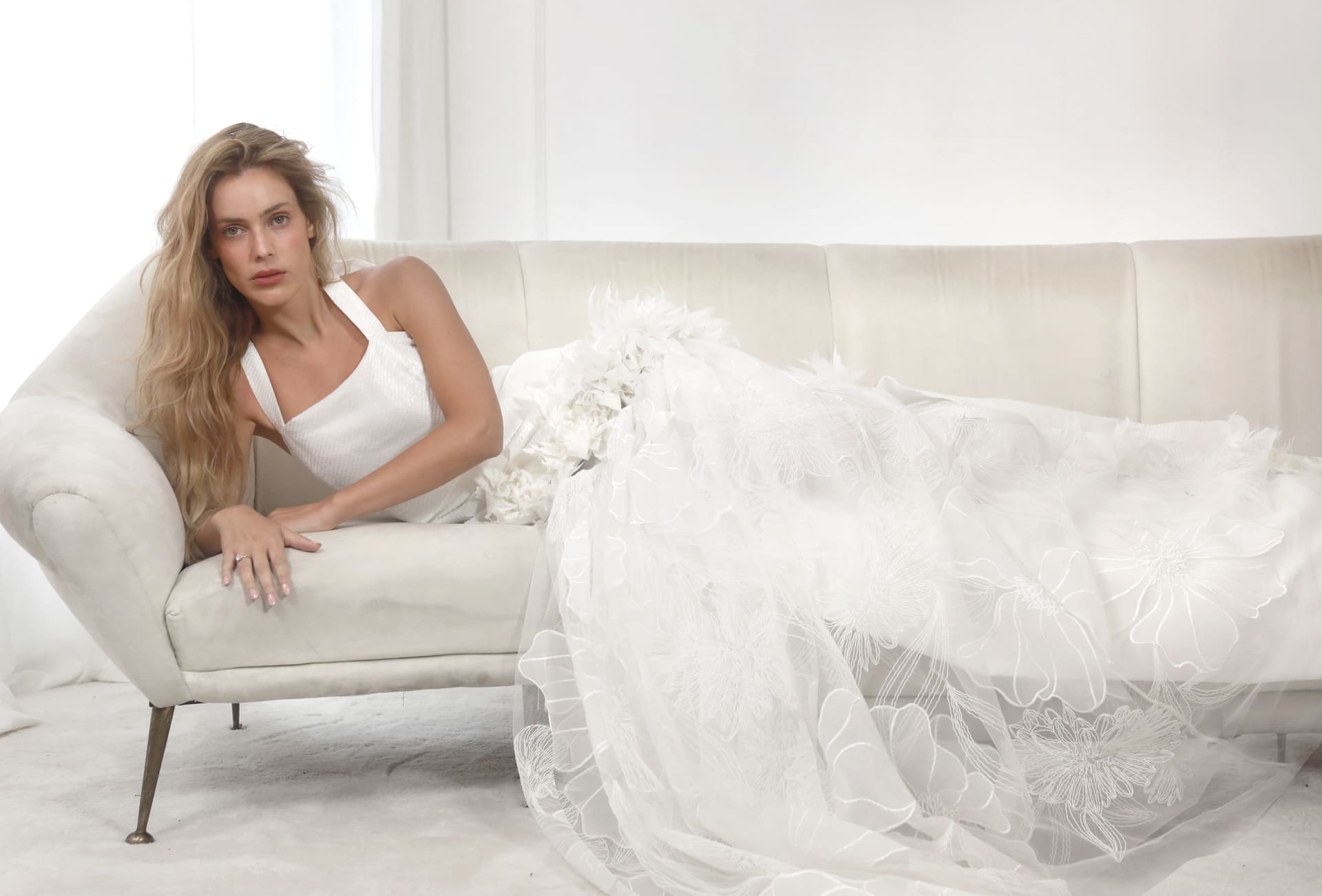
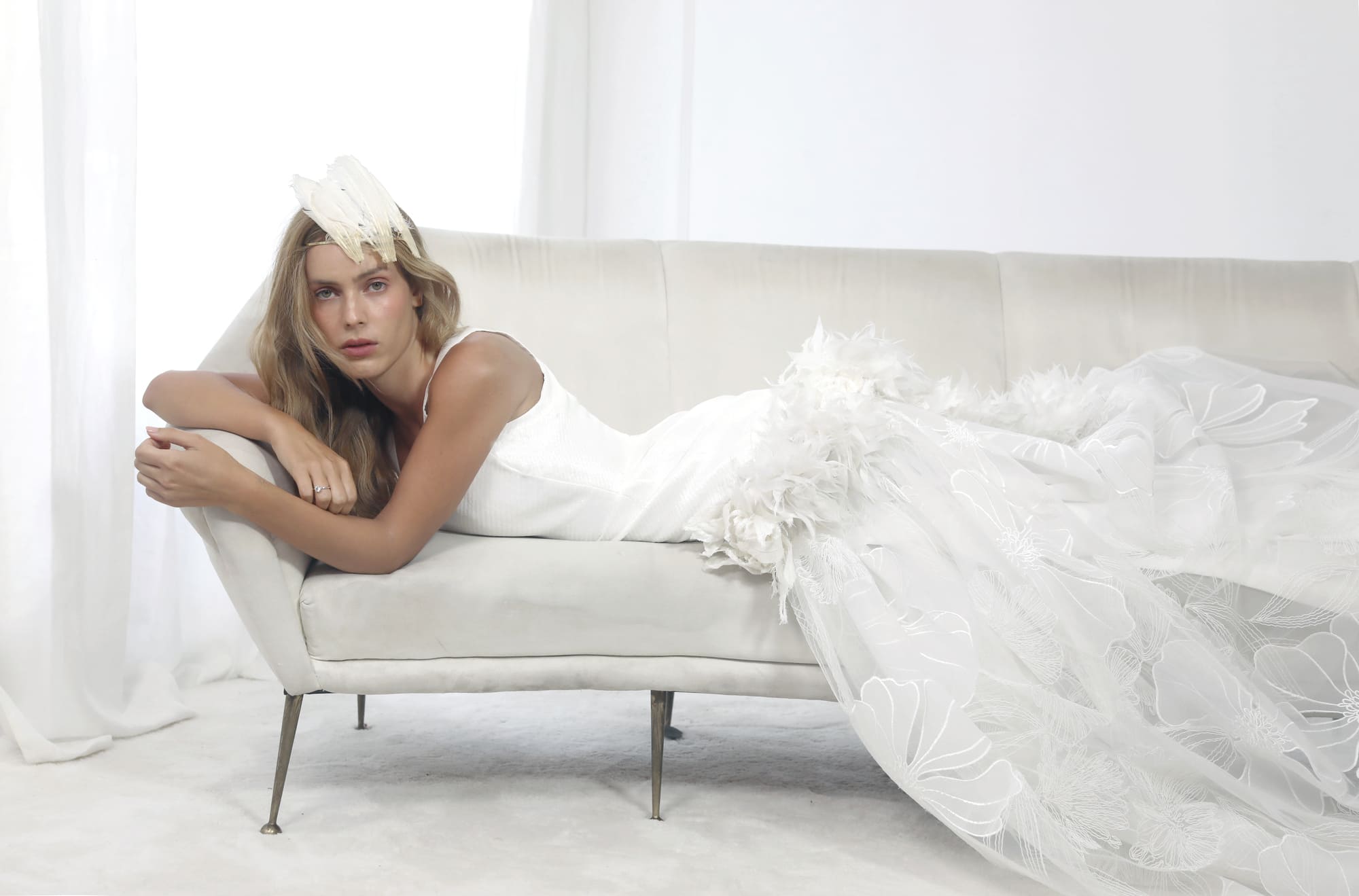
The wedding dress is usually white. And to say “white” is to say too little: there are infinite targets. Choosing the right shade for a particular skin tone requires skill, eye and experience. There is no universal answer; there is a white that brightens and a white that dulls. And that choice, which seems small, can completely change the memory of an image.
We work with haute couture fabrics. And holding a couture fabric in your hands requires the same as holding an exceptional ingredient in the kitchen: you need technique, sensitivity and precision.
Even more so when the dress is white, because white is doubly delicate: it reveals any tension, any mark, any construction error.
That's why they appear, naturally, high-level gestures in wedding dresses that the public sometimes doesn't see, but the bride feels:
- Flowers handmade.
- Embroidery and applications that make sense in the garment.
- Buttons lined.
- Corsets interiors that model without rigidity.
- Veils and lace worked with criteria of proportion.
- Dyed subtle to find the exact target the bride is looking for.
It is a delicate machinery: if any element fails, the result ceases to be a dress and becomes a disguise.
The holistic view: clothing does not exist in isolation
A wedding dress does not live alone. It lives in a place, in a light, on a scale. A small church is not the same as an open beach. A monumental estate with a towering nave is not the same as an intimate ceremony in a vegetal, almost wild space. The atmosphere changes, the gesture changes, the way in which a silhouette is understood changes.
That is why we accompany with a holistic vision: shoes, hairstyle, balance of the ensemble, family codes, scenery. Not to direct a life, but to refine a presence.
Where “yes” really begins
When the big day comes, the dress has already lived with you. It has passed through the mirror, through movement, through nervous laughter, through the certainty that is built test by test. The prelude to the “yes, I do” is not a technical secret: it is an emotional construction sustained by craft, by the gaze and by time.
And that is precisely what makes a bride not only dressed up: go for sure.