"The real luxury is to be able to go slowly when everything around you is running".
In contemporary luxury, scarcity is the natural consequence of an artisanal process. The real exclusivity in the sustainable fashion arises when a garment can only exist in a few units because it simply requires too many human hours to be repeated endlessly.
In the ateliers that understand fashion as art, every stitch has a reason and every design decision responds to an authorial gaze. The biography of the garment -Who drew it, who cut it, who designed it - is part of its value. It is not just metres of fabric; it is a chain of gestures, knowledge and sensibilities that are concentrated in an object that is worn on the skin.
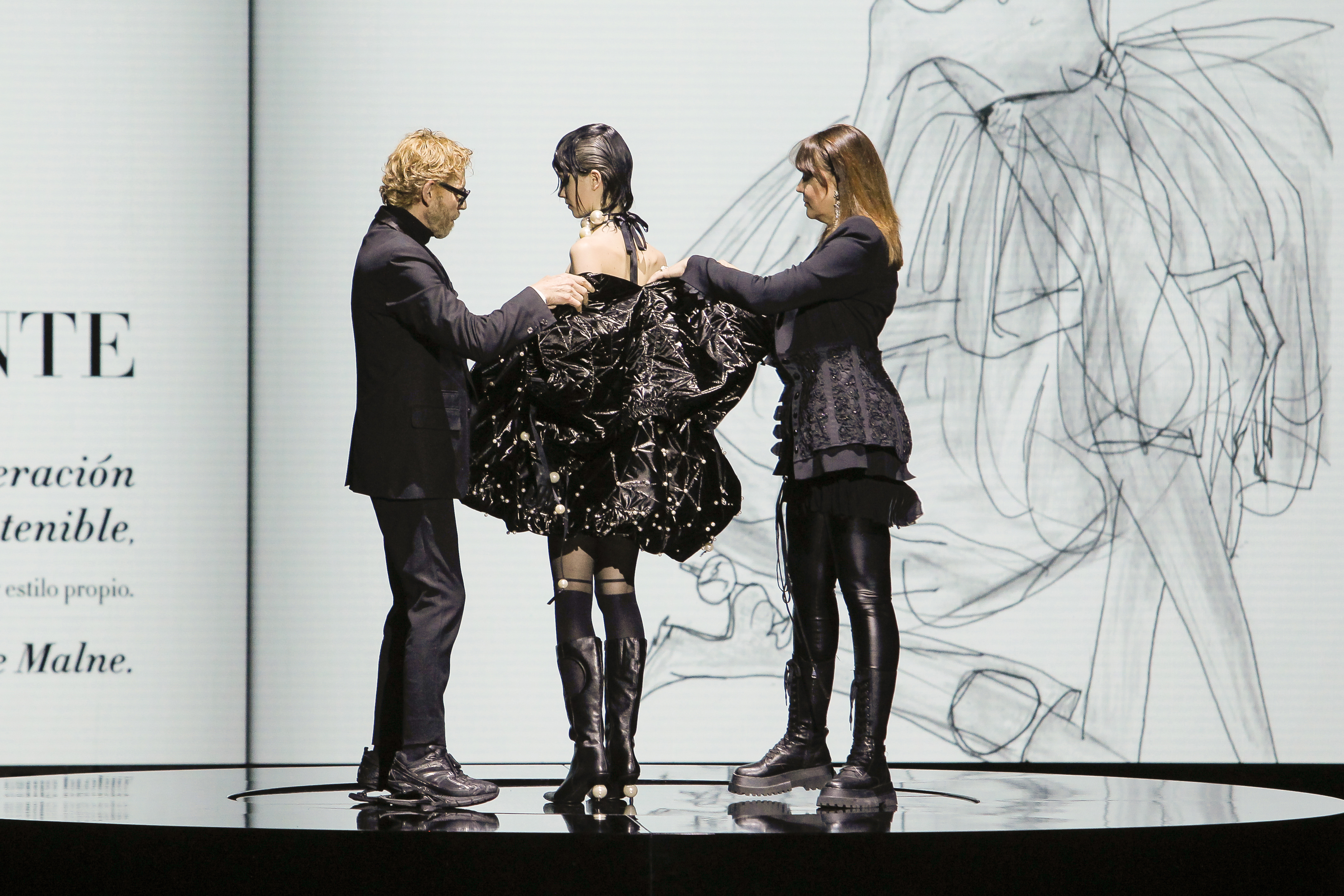
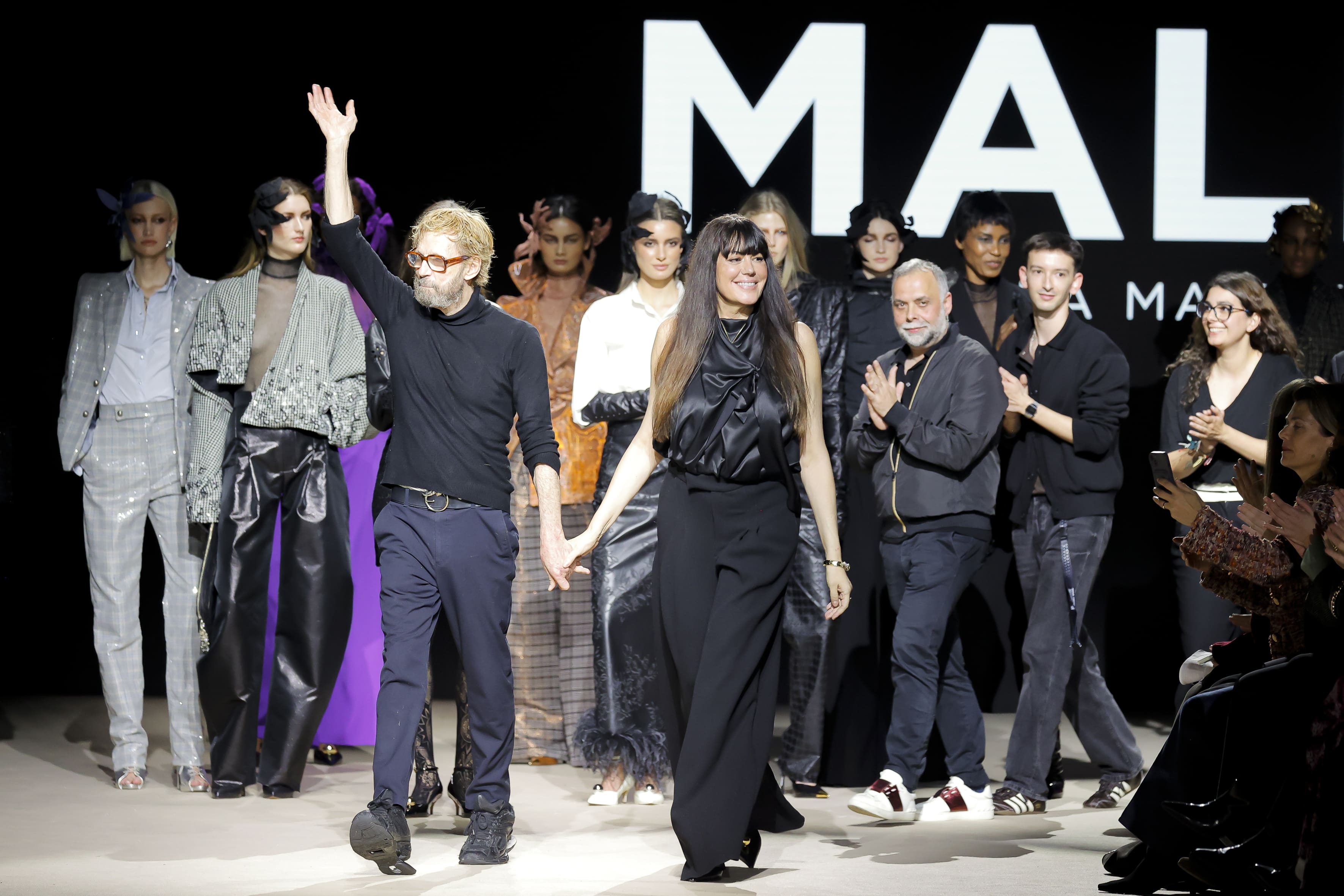
In houses such as MalneThis idea of scarcity is intrinsic to the model: collections created with their own signature, patterns drawn freehand, small productions, no surplus, and unique pieces that are conceived only once for a single woman. The exclusivity in fashion is then understood as authenticity: no repetition of an exclusive pattern, no industrialisation of a finish, no dilution of the character of a design to turn it into a multitude.
Exclusive sustainable fashion: proximity, ethics and territory
Luxury that chooses to go slowly also seeks to get geographically closer to its own roots. The production of proximity is one of the main pillars of the slow fashion in haute couturelocal workshops, craftsmen who know each other by name, textile suppliers who share the same map and, in many cases, the same textile history.
In this context, the exclusivity in sustainable fashion is based on several principles:
- Real proximityThe garment is born and made in the same country - often in the same city - where it is to be sold.
- Craft preservedembroiderers, pattern makers, cutters, specialised dressmakers who keep alive a know-how that cannot be learnt on an automated line.
- Ethical traceabilityThe luxury is not built on invisibility: we know who has worked on each phase, under what conditions and with what materials. Luxury is not built on invisibility.
- Cultural identityThe details, the volumes and even the way of understanding femininity are in dialogue with a local tradition, and this makes each collection an aesthetic and geographical manifesto.
In an atelier in Madrid as Malnesustainability and proximity coexist with high fashion: it is produced nearby, no massive stocks are generated and we choose to work with national artisans, because luxury is also responsibility with the immediate environment.
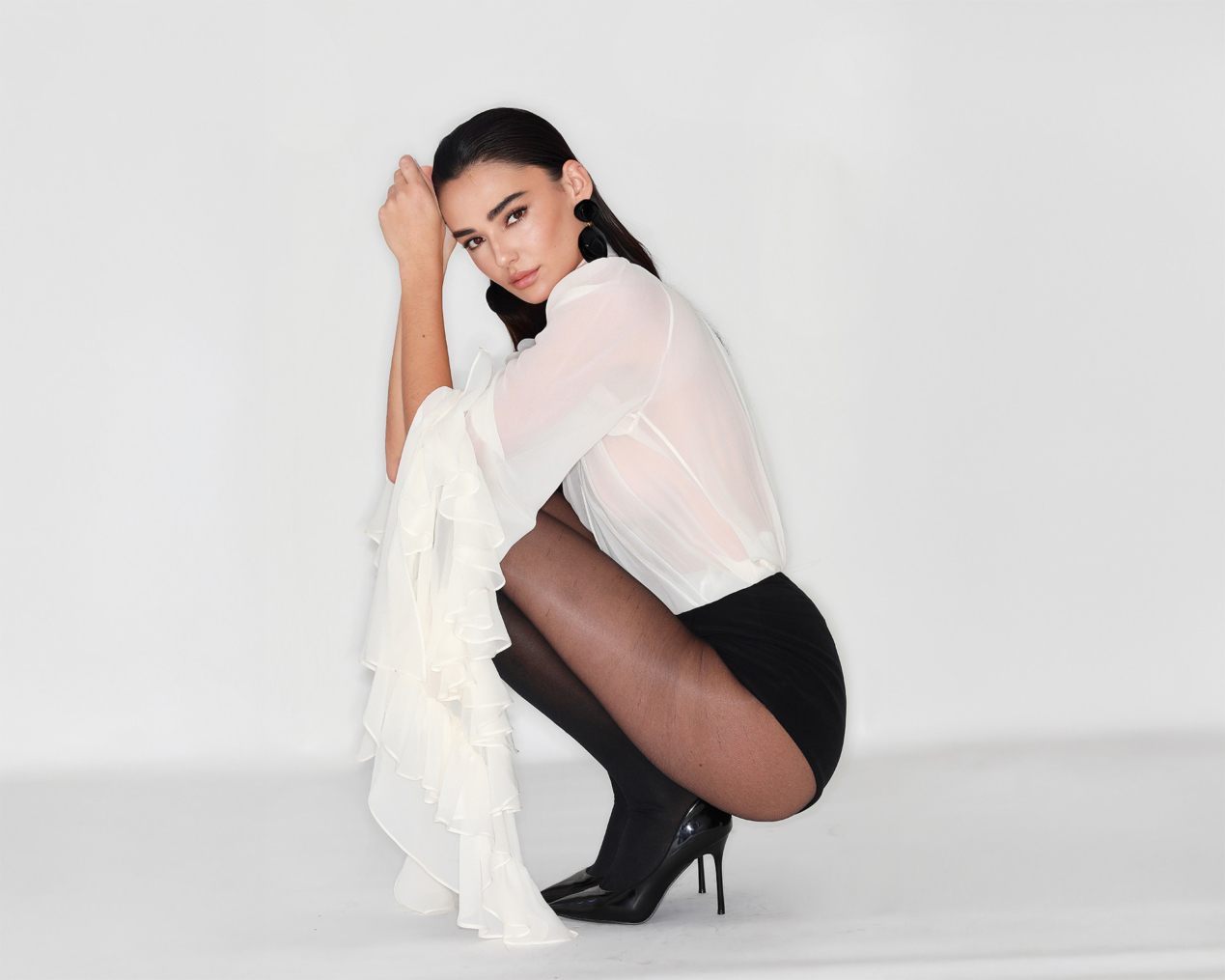
Slow fashion designer clothes: the garment with a biography
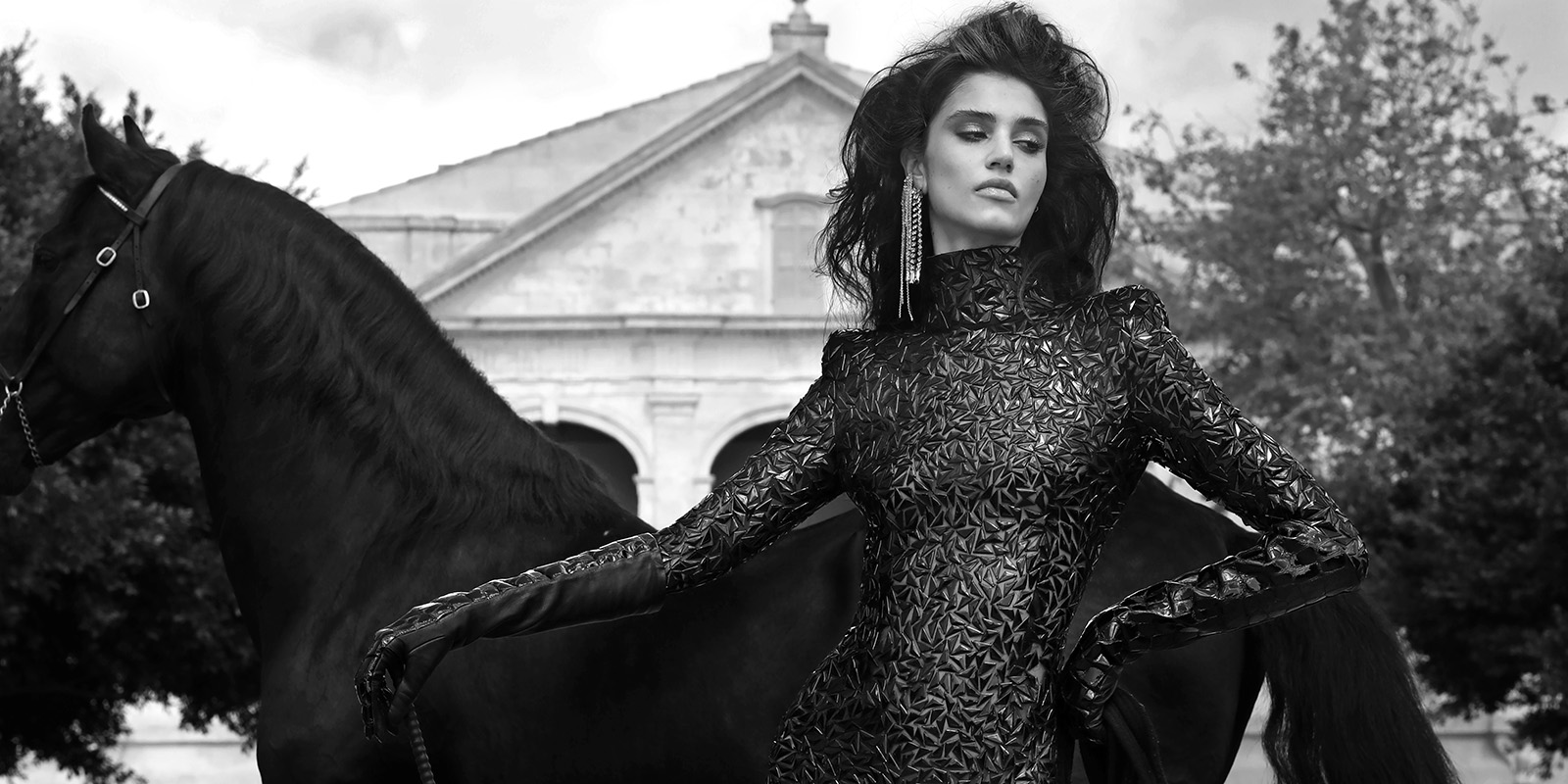
The slow fashion designer clothes has something that the trained eye recognises instantly: a personal gesture. Sometimes it is a pagoda-shaped shoulder pad, sometimes an unexpected proportion in the skirt, or a very particular way of working the volume at the waist or shoulders. This author's "accent" turns each piece into a chapter of a larger work.
This biography is written in several layers:
- Signature designEach collection is a statement of intent, not a catalogue of trends copied wholesale.
- Limited editionsSome garments are born with the vocation of being a minority, others are conceived as absolutely unique, unrepeatable pieces.
- Intimate relationship with the clientIn an atelier, the customer doesn't just buy a size; she participates in the process. She tries it on, adjusts it, talks to her.
In an environment saturated with images, true exclusivity is recognised by the depth of the link: the garment that is remembered many years later, the dress that is associated with a moment in life, the suit that always raises a question when it appears in a room. This is the natural territory of the luxury slow fashion.
A luxury that lasts: design, repair and second life
Slow luxury is not afraid of the passage of time; it incorporates it into its proposal. Forever" ceases to be an advertising exaggeration when it is accompanied by concrete commitments: repair services, subsequent adjustments, updating a garment for a new moment in life.
The wardrobe built by women who are committed to the exclusivity of sustainable fashion is not renewed every month; it is fine-tuned calmly:
- A high fashion dress that is adapted years later to a new occasion by a change of length, a new embroidery or a different lining.
- An iconic coat that passes from mother to daughter, with just a few stitches to update it.
- A party dress that is broken down into pieces - jacket, skirt, top - to multiply their lives.
This philosophy increasingly coexists with practices such as resale and rental of luxury pieces, especially among younger generations who value experience as much as ownership. The result is an ecosystem where the object is not exhausted in a single season, and where durability becomes the most refined attribute of conscious luxury.
Towards slow-breathing luxury
"Le vrai luxe, c'est la rareté du geste". True luxury is the rarity of the gesture: the decision to go slowly, to produce little, to take care of every centimetre of fabric and every minute of attention dedicated to the person sitting in the fitting room.
The slow fashion luxury is not just another market category; it is a way of understanding the world. The slow fashion designer clothes becomes a manifesto: it speaks of respect for the craft, of commitment to the environment.
From our atelier in Madrid, we continue to believe that authentic exclusivity is born where three words intersect: time, trade and proximity. There, at that silent crossroads, fashion ceases to be mere clothing and becomes what it always was in its highest expression: an art at the service of life.