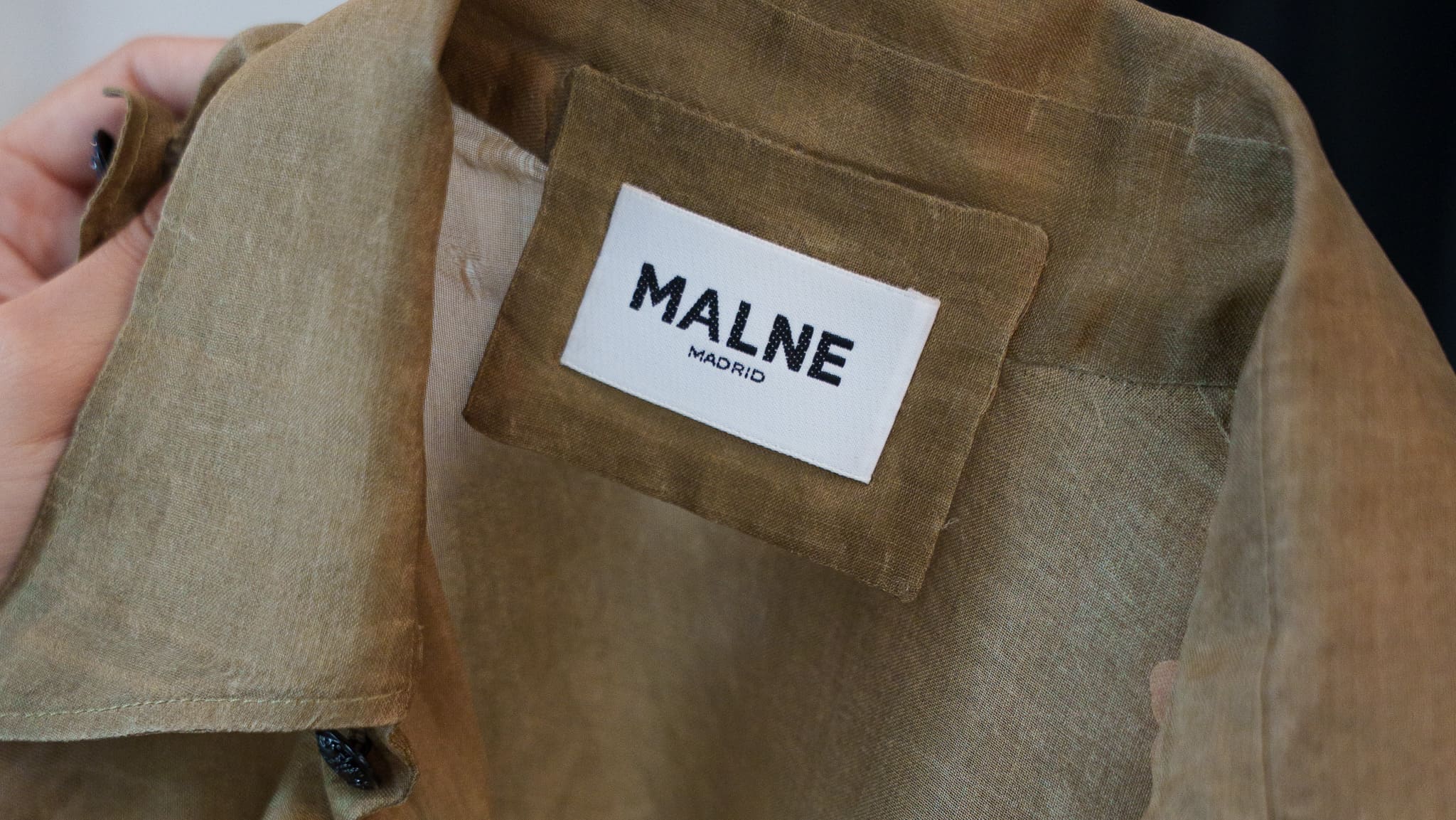
"The real difference is not seen from the outside. You discover it when you open the garment and see how it has been designed".
Two worlds coexisting in contemporary fashion
Talking about the difference between prêt-à-couture and prêt-à-porter means going to the very heart of the trade. It is not just a matter of commercial categories, but of different ways of understanding creationtime and the body.
The ready-to-wear fashion is born to dress many. Its logic responds to standardisation, to precise repetition, to an efficient production that allows an idea to reach a wide audience. It is the visible engine of the industry, the language that translates trends into everyday life.
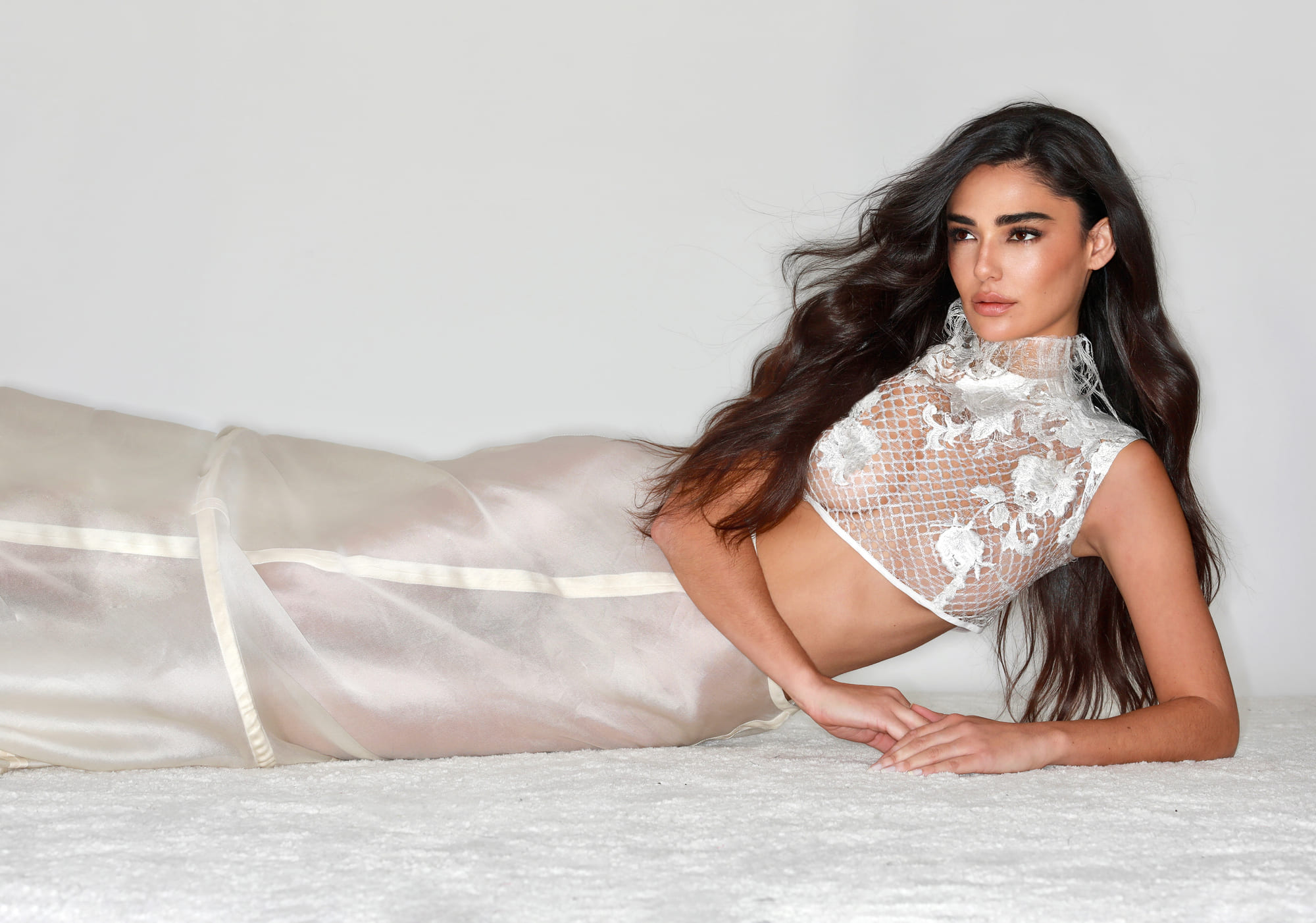
The ready-to-wear fashionon the other hand, inhabits a quieter territory. It functions as a bridge between haute couture and ready-to-wear, preserving the size structure, but introducing a new style. deep craftsmanship interventionwhere each garment is constructed with an attention close to the traditional sewing workshop.
Both worlds coexist. Both are necessary. But their difference is perceived when you look at the garment from the inside.
The starting point: how to think of a garment
For an artisan, the difference between haute couture vs. ready-to-wear does not start at the parade, but at the working table.
In ready-to-wear, design is conditioned by mass production. The pattern is created on the basis of average body statistics, seeking to make the same garment work on as many bodies as possible. It is a rational, efficient architecture, designed to be replicated without deviations.
In the prêt-à-coutureThe starting point is different. The design is born out of the awareness that will be intervened by human hand. The pattern is not conceived as a closed structure, but as a living basis that can be adapted, corrected and refined in contact with the real body.
Here, the pattern maker does not only work to "make it look good", but also to make the garment dialogue with the wearer.
Fit as a language: the pattern maker's and seamstress's viewpoint
Adjustment is one of the areas where adjustment is one of the most clearly perceived differences between haute couture and ready-to-wear.
In ready-to-wear fashion, post-fitting is limited to occasional corrections: a hem, a sleeve, a waist. These are necessary interventions, but they do not transform the internal structure of the garment.
In ready-to-wear, fitting is part of the creative process. The fittings - the essayage- allow the artisan to observe how the fabric falls, how the garment breathes, how it behaves as it moves. Each fitting refines the architecture of the dress, corrects invisible tensions and balances proportions.
It is not just a matter of fitting the garment to the body, but also of allow the body to finish designing it.
Time-consuming and knowledge-demanding materials
The choice of fabric marks another clear boundary between ready-to-wear fashion y ready-to-wear fashion.
In ready-to-wear, even in its most luxurious versions, materials must respond to industrial processes: they must be stable, scalable, compatible with machinery and tight timeframes.
In ready-to-wear, the fabric is not chosen for convenience, but rather for behaviour. Fine wools, natural silks, crepes, gazars or mikados are selected for their drape, memory, strength and ability to support a complex silhouette.
These materials require expert hands. They cannot be rushed. Every mistake is noticed. Every success is felt.
The durability of these pieces is no coincidence: it is the result of the combination of noble materials and conscientious workmanship.
The unseen: the invisible work of the atelier
Much of the value of ready-to-wear lies in what is never shown.
Elements of a garment's interior as proof of its soul:
- Provisional hand basting to stabilise delicate layers before final stitching
- Tight, clean internal seams, designed to last and protect the fabric
- Hem sewn with invisible pointby adjusting the thread tension to respect the natural fall of the thread
- Thorough preparation of embroidery, pleating or appliqué before integration
- Manual protection of ornamented areas to preserve their integrity during assembly
These gestures are not a response to external aesthetics, but to the ethics of the trade. These are decisions that take time and cannot be accelerated without losing quality.
The time factor as a real value
In the ready-to-wear fashiontime is optimised. In ready-to-wear, time is optimised. valora.
A prêt-à-couture garment can require weeks or months of work. Not because of unnecessary complexity, but because each phase demands attention, correction and pause. The final price reflects not only the material, but the accumulated knowledge and technical sovereignty of the craftsman over his creation.
This time invested turns the garment into something more than an object. It becomes a piece with its own identity, designed to accompany you for years, even decades.
Those who choose prêt-à-couture do not buy trends: invest in permanence.
The role of ready-to-wear in the fashion ecosystem
Prêt-à-couture occupies an essential place in the creative balance of the industry.
The ready-to-wear fashion translates, disseminates and democratises.
Prêt-à-couture researches, experiments and protects know-how.
Many of the technical solutions, proportions or textile treatments that we see industrialised today were first born in workshops where time and the human hand had priority.
Choosing prêt-à-couture also means supporting this ecosystem. It means allowing the craft to live on, the technique to be passed on and fashion to retain its cultural dimension.
Malne's gaze: when craftsmanship makes the difference
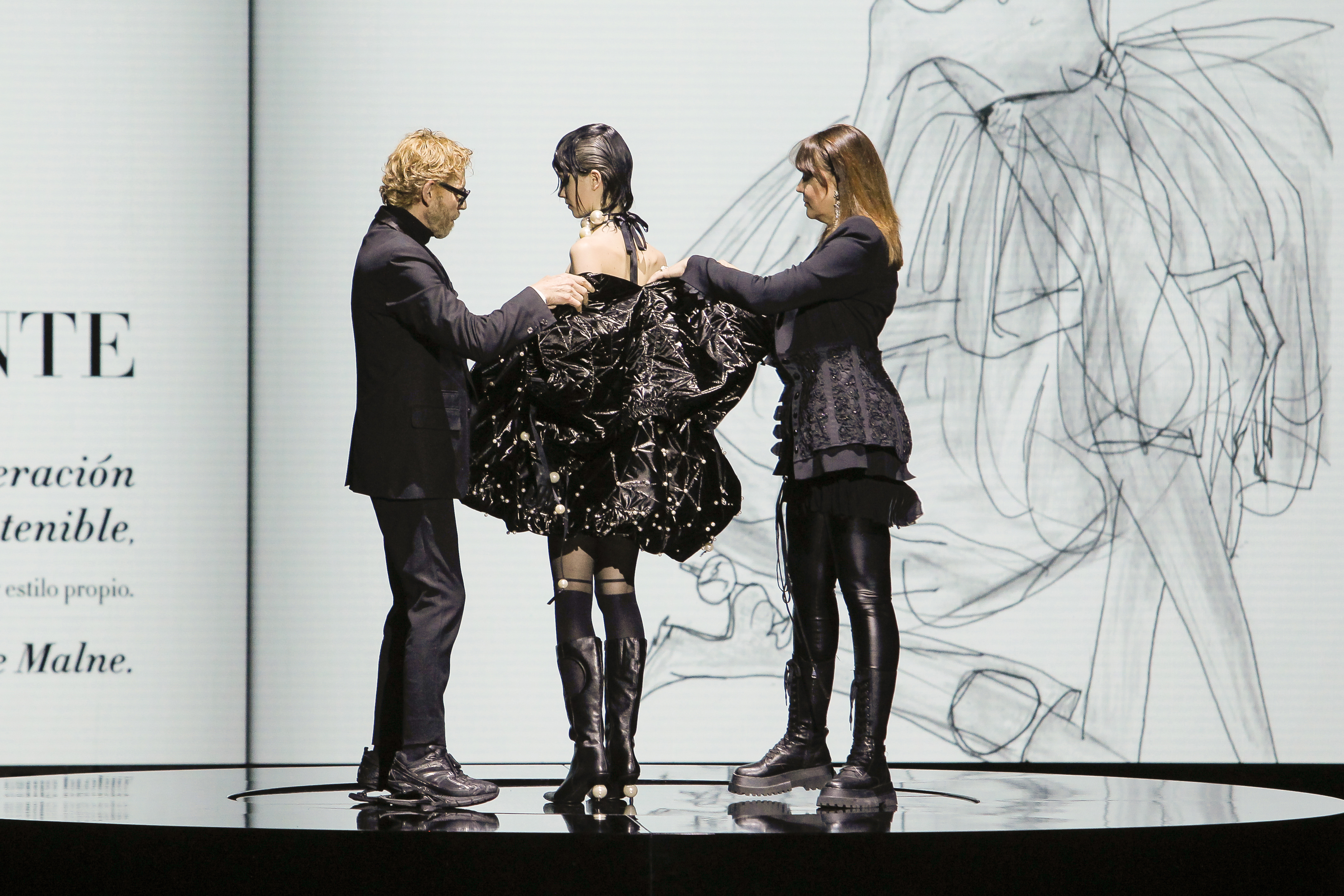
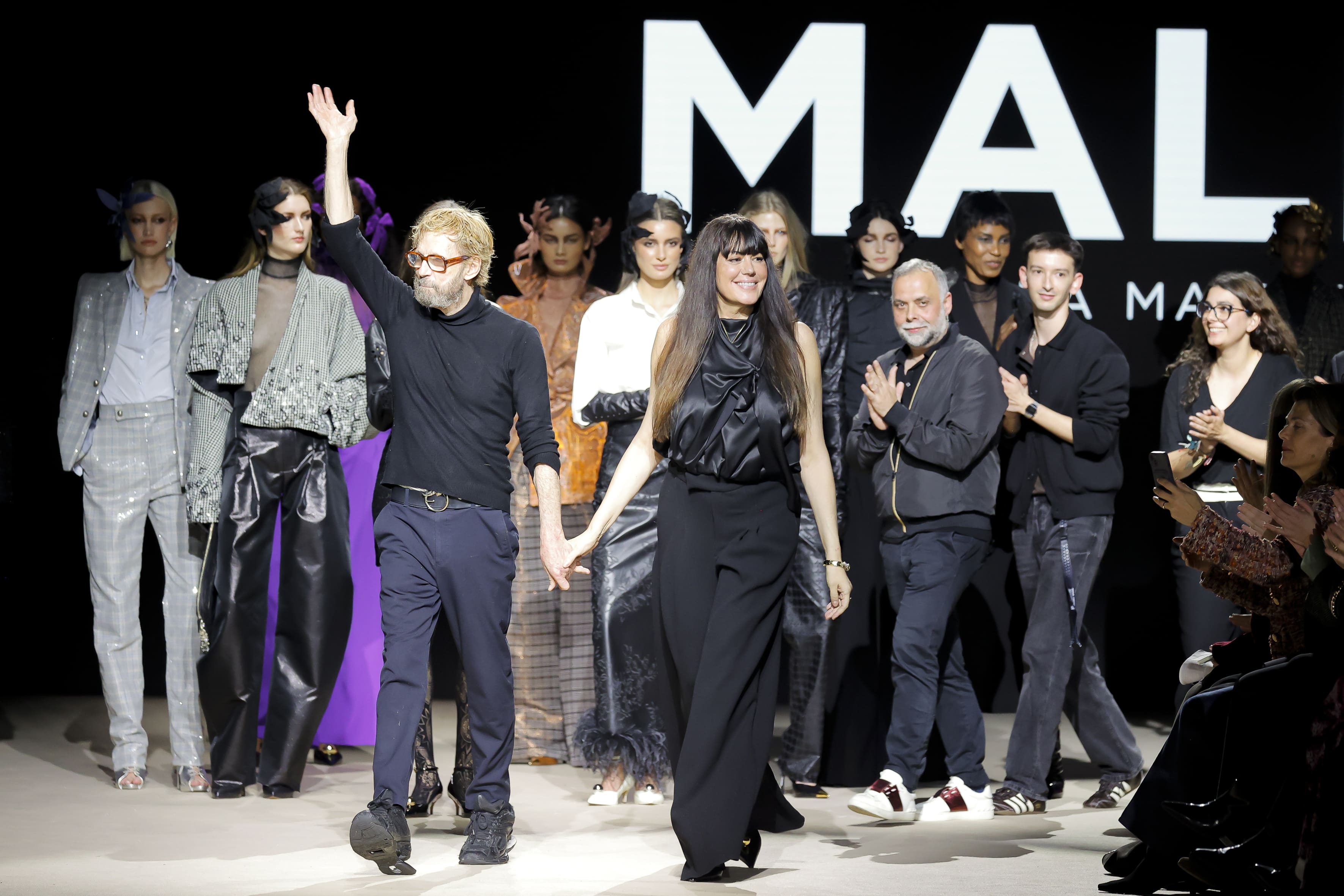
At Malne we understand the prêt-à-couture as an honest way of creating. We design with structure, but leave room for manual intervention. We work on defined patterns, but allow the body to finish writing the garment.
Our ateliers integrate precise pattern making, personalised adjustments, handmade embroidery and finishing touches down to the last detail. Each piece responds to a clear idea: luxury is not in what is visible, but in how it is made..
For us, the difference between prêt-à-couture and ready-to-wear is not hierarchical. It is a question of intention, time and respect for the profession.
When fashion is understood from within
Understanding these differences allows us to look at fashion through different eyes. Not from the label, but from the seam. Not from the shop window, but from inside the garment.
The prêt-à-couture does not seek to compete with speed. It seeks to preserve the essence of a know-how that is handed down from hand to hand. A know-how that turns each garment into a silent statement of quality, time and craftsmanship.
This is where fashion regains its depth.
And where the trade speaks again.