"Every era has modelled the female body according to its own ideal, but only the art of dressmaking has been able to liberate it with beauty".
The history of the female silhouette in fashion is, in fact, the history of the body and its cultural representation. Fashion historians would agree that "the silhouette is the aesthetic canon that embodies the spirit of an era, beyond colours, fabrics or embellishments". In the women's haute couture fashionThe silhouette acts as a living sculpture reflecting the ideals of beauty, social progress and the position of women in the world.
From the 1920s to the present day, the evolution of women's fashion has been marked by a dialogue between structure and freedom, between technique and emotion. It can be said, in the words of the exhibition "The invented body"It was four main lines - tubular, triangular, globular and anatomical - that have delineated a century of history, revealing how form has always been a visual manifesto of identity and emancipation.
Years of Emancipation: The Tubular Silhouette and the Liberation of the Body (1920-1930)
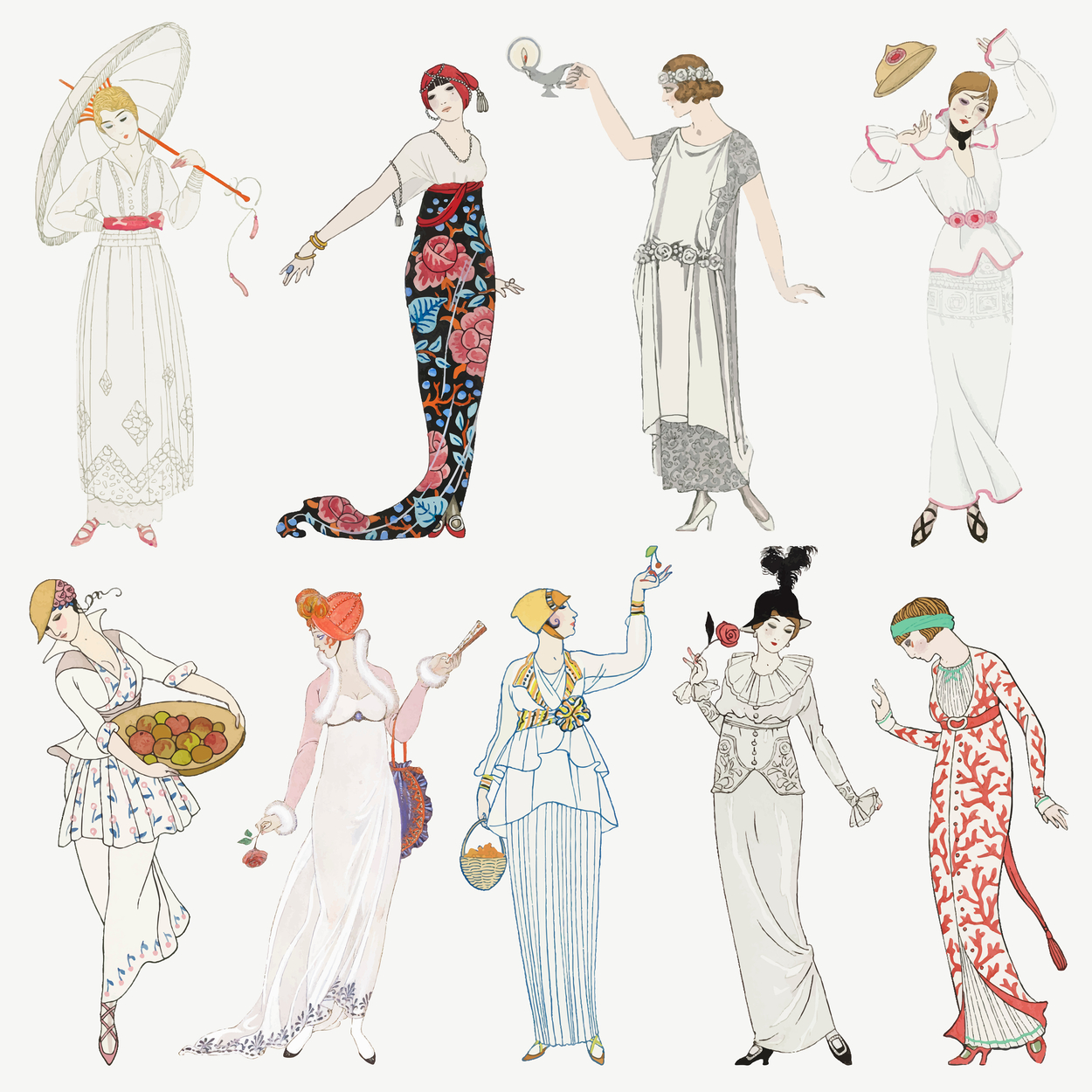
The 1920s marked a profound change in the perception of women's fashion. The dominant form was the tubular silhouettea line that simplified the body, freeing it from rigid and constricting structures such as the corset.
Designers such as Coco Chanel and Madeleine Vionnet concretised this new way: light fabrics, simple cuts, garments that drape over the body without emphasising the waist. Women's luxury fashion no longer followed a decorative ideal but embraced mobility, naturalness and active living.
The rebirth of femininity: Dior, Balenciaga and the triangular silhouette (1940-1950)
After the Second World War, the style changed direction with a new idea of elegance. The silhouette that dominated this period was the triangular -also called "X-shaped", characterised by a fitted waist, pronounced shoulders and a wide skirt. This shape was pioneered by Christian Dior in his iconic collection New Look 1947.
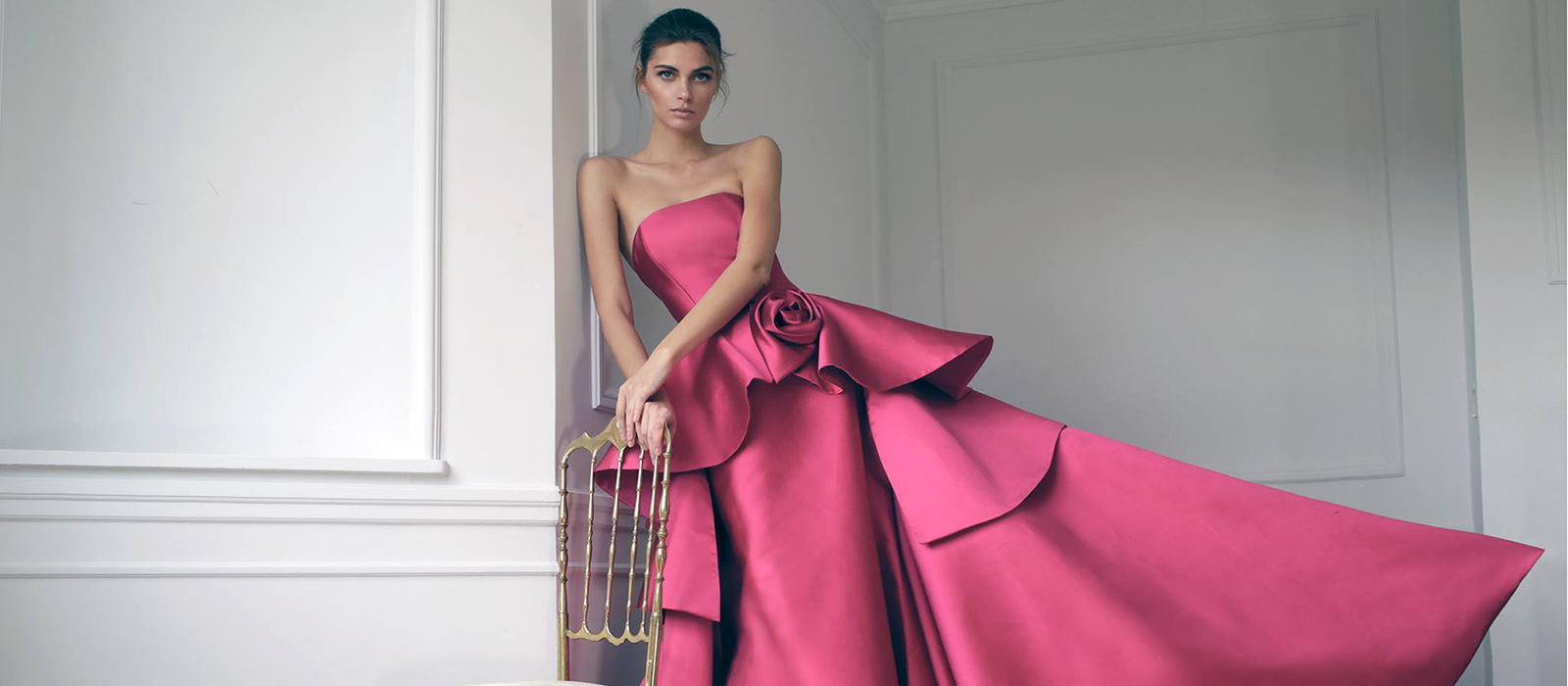
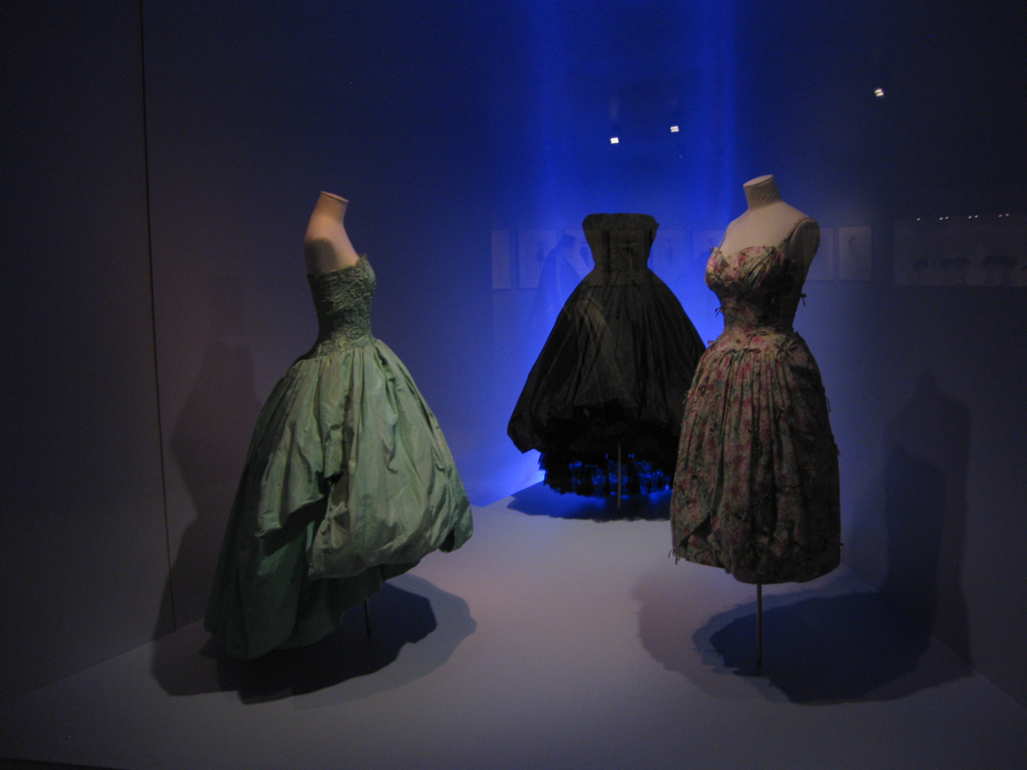
At the same time, the great master Cristóbal Balenciaga explored the form of the globular as an alternative route, with larger volumes and sculptural cuts that gained recognition in haute couture. Women's luxury fashion found in this period not only a form, but an ideal of femininity that combined structure, abundance and sophistication.
Voluminous Experimentation: the globular silhouette and large volumes (1950-1960)
During the 1950s and early 1960s, fashion continued to explore form boldly. The globular silhouetteassociated with Balenciaga and other creators who investigated pure volume, represented a form that enveloped and redefined the female body. The tubular, triangular, globular or anatomical silhouettes were able to coexist over time.
In this period, luxury women's haute couture played with metres of fabric, pleats and shapes that transcended the simple garment to become body architecture.
Geometry, youth and body visibility: anatomical silhouettes and other paradigms (1960-today)
From the 1960s to the present day, the silhouette's journey has radically diversified. The body becomes visible, structures are questioned and women's fashion enters into a dialogue with culture, technology and identity. The last major form is the anatomicalThe one that reveals the real body, without corset, without artificial structure.
This period includes milestones such as the mini-skirt, the women's dinner jacket, the quest for minimalism and the fusion of fashion, technology and transparency. Modern designers interrogate the visible, the corporeal and the symbolic, and women's luxury fashion responds with silhouettes that celebrate both form and meaning.
A century of women's fashion can be read through its essential silhouettes:
- Tubular (1920-1930): symbol of emancipation and freedom; the body is freed from the corset.
- Triangular (1940-1950): exalted femininity of the New LookDior redefines the classic ideal.
- Globular (1950-1960): Balenciaga's sculptural avant-garde; the body is wrapped in architectural volume.
- Silhouette of Power (1980): shoulders and structure; the body is armed to conquer spaces of influence.
- Anatomical (1960-today): visibility of the real body; freedom, naturalness and technology at the service of form.
Each of these lines has been a visual metaphor of its time. They reflect the dreams, limits and advances of the modern woman: a body that, over the course of a hundred years, has learned to dress itself in history and in the future at the same time.
Malne: reinterpreting history from a modern perspective
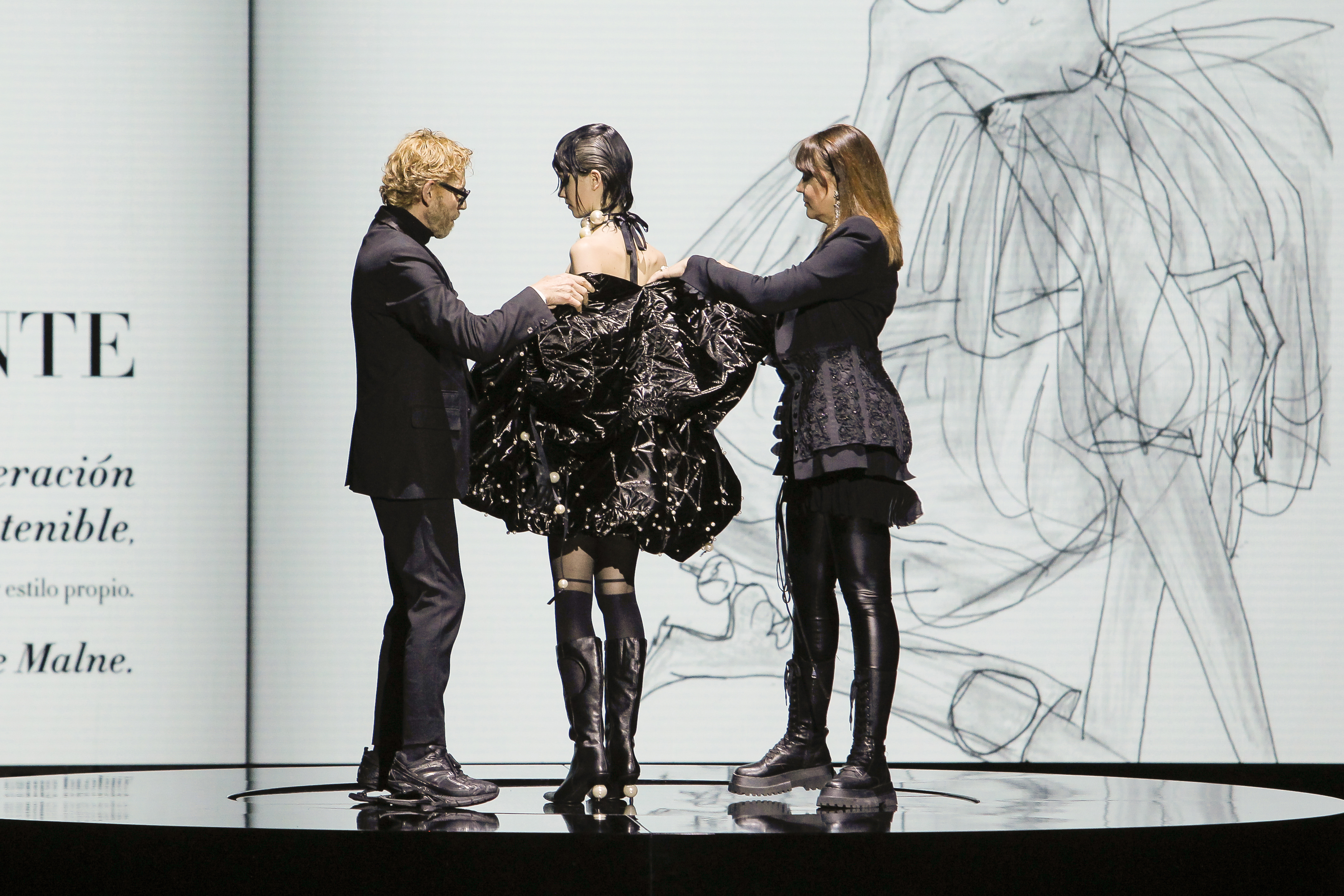
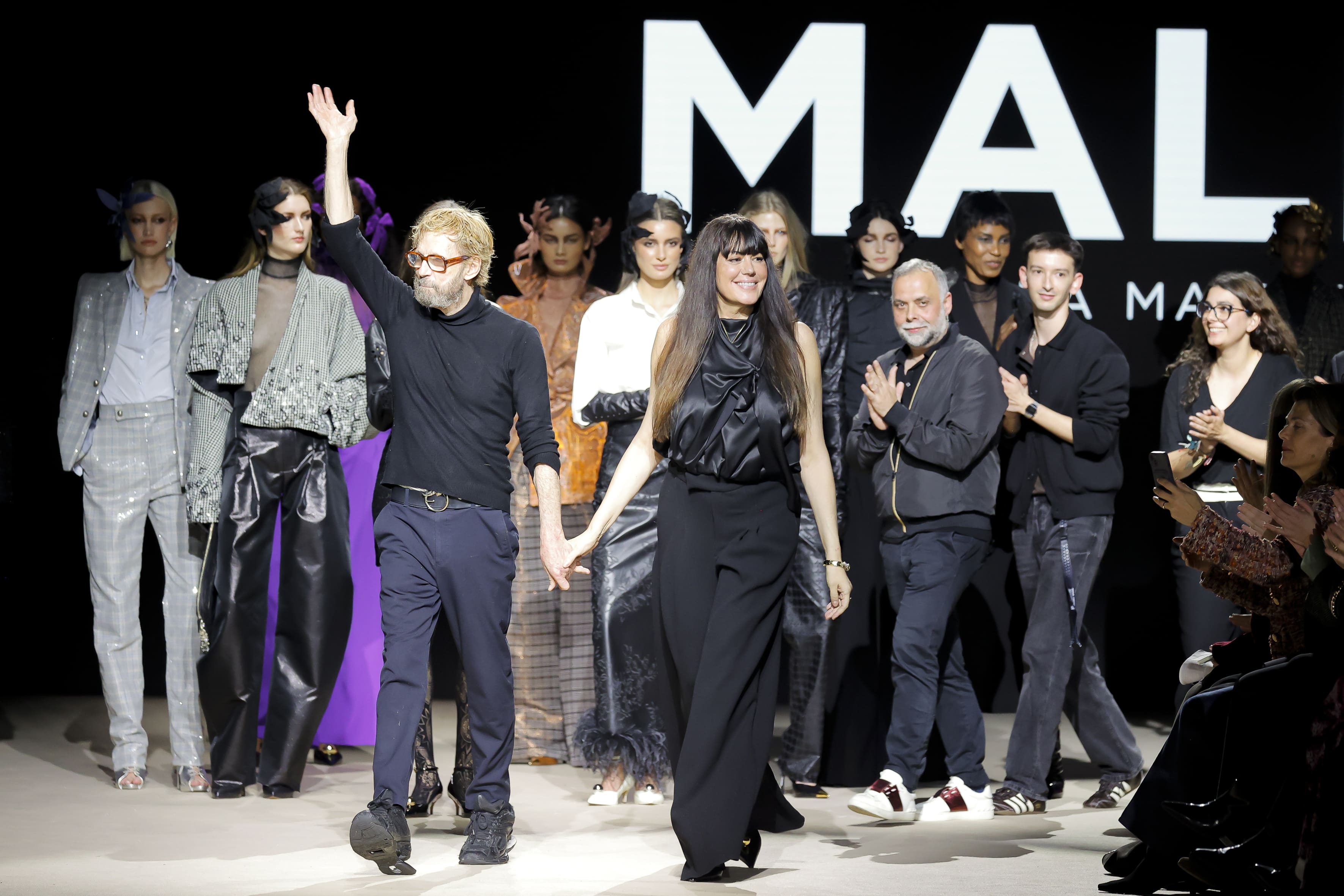
At Malnethe women's haute couture fashion is conceived as a constant dialogue with history. Each collection is based on research into the forms that, throughout the 20th century, have given identity to the female body, reinterpreting them from a contemporary perspective.
Iconic silhouettes -tubular, triangular, globular and anatomical- are not repeated: they are transformed. Malne's contribution to this evolution lies in the construction of a new architecture of the female bodydefined by pieces that balance power and fluidity.
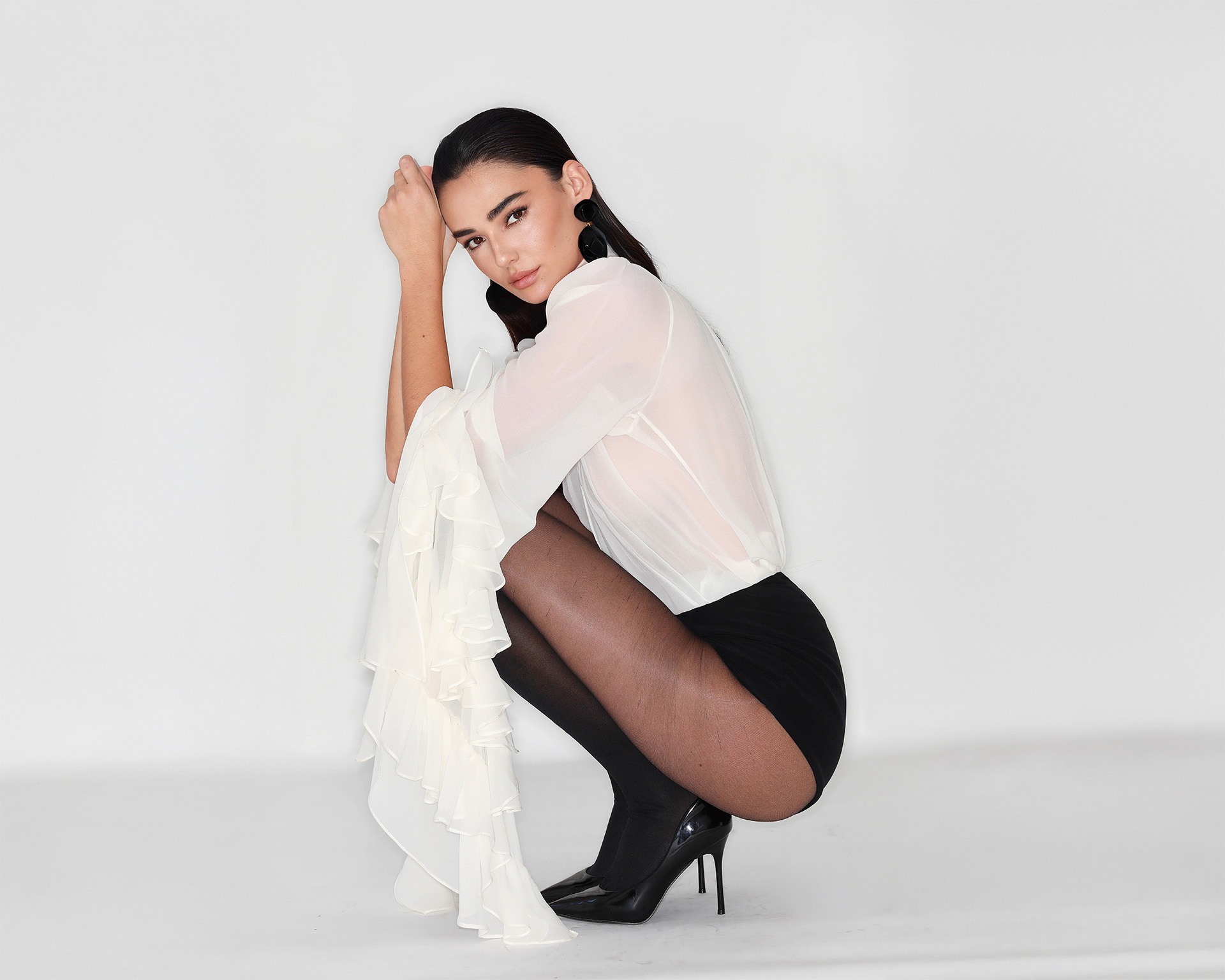
The super fit blazer -The millimetre-fit redefines the power silhouette with precise, bold femininity. The pagoda shoulder pads and the sleeves on the bias binding stylise the neck, arms and shoulders, creating lines that elongate the figure without stiffness.
The shirt dress and palazzo trousers piecesone of our best sellers, represent modern freedom: a shape that combines elegance and comfort, which accompanies the body without overpowering it.
At Malneluxury is not ostentation, but precision. Each garment is the result of a handcrafted process that combines freehand pattern making, textile handling y colour experimentation. Thus, the female silhouette in luxury fashion finds new life: respecting tradition, but challenging it with boldness, movement and truth.
The transformative legacy of form
The evolution of women's fashion proves that form is the true language of luxury. The silhouette not only dresses, it reveals the thinking of an era. From the 1920s to the present day, every transformation has been a reflection of a woman's place in the world.
At MalneWe see fashion as a living sculpture: a conversation between history and innovation, between matter and spirit. Because every silhouette - when born of art and craftsmanship - has the power to transform not only the body, but also the gaze of time.