"Sewing is not just cutting and sewing: it is a way of looking at the world".
At a time when wardrobes are renewed at the pace of algorithms and trends last less than a season, to talk about high fashion may seem like a nostalgic act. And yet, it is more necessary today than ever. Because if there is one thing we have learned at MALNE, it is that there is a substantial difference - profound, ethical and aesthetic - between dressing stylishly and dressing in a hurry.
Fashion is not just an industry: it is culture. And within it, there are levels, languages and trades. A garment born of an industrial process is not the same as one created in a workshop with expert hands, a trained eye and an artistic soul. This article seeks to do just that: to trace, from experience, the difference between high fashion and ready-to-wearand why that nuance changes everything.
High fashion: when the dress is a work of art
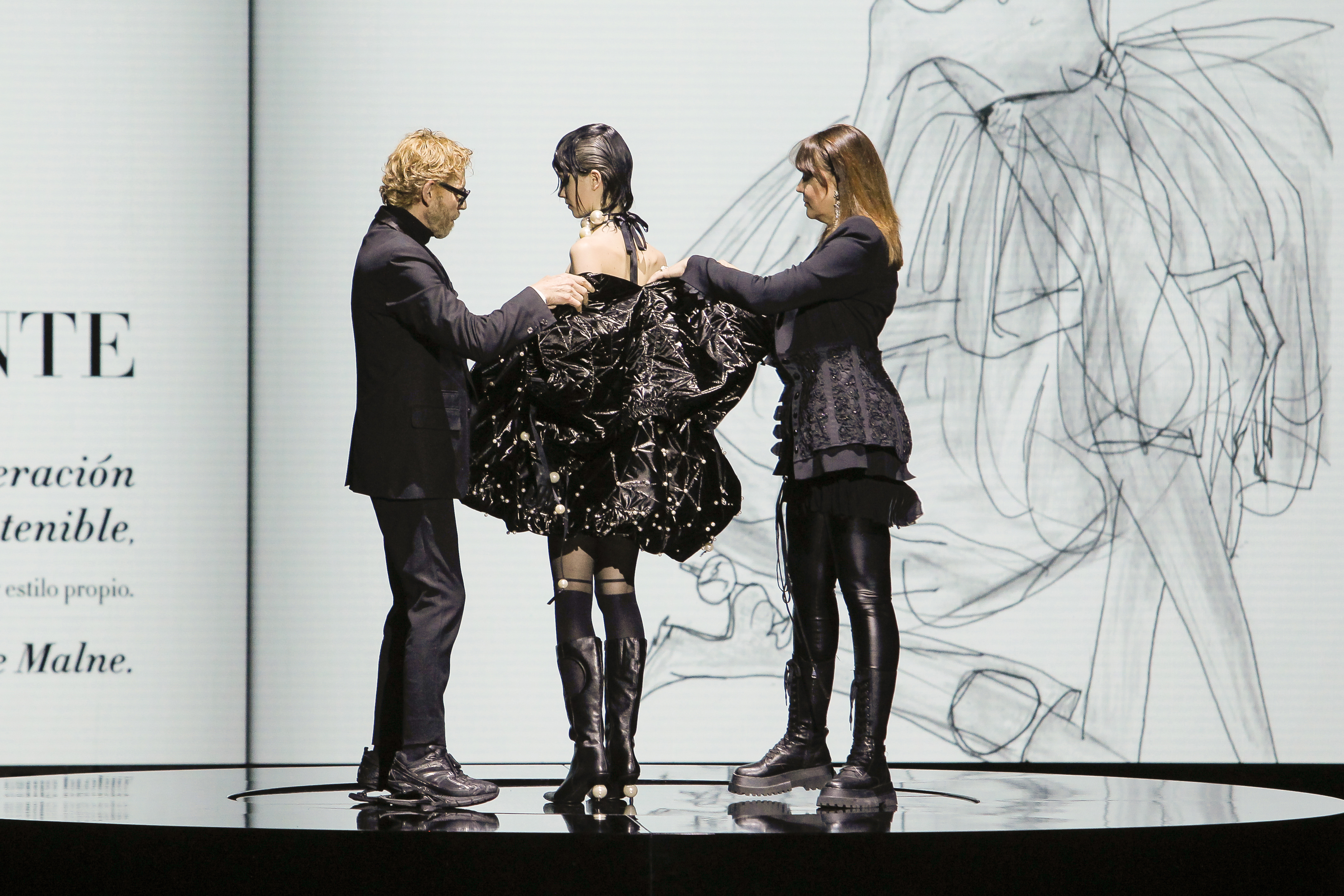
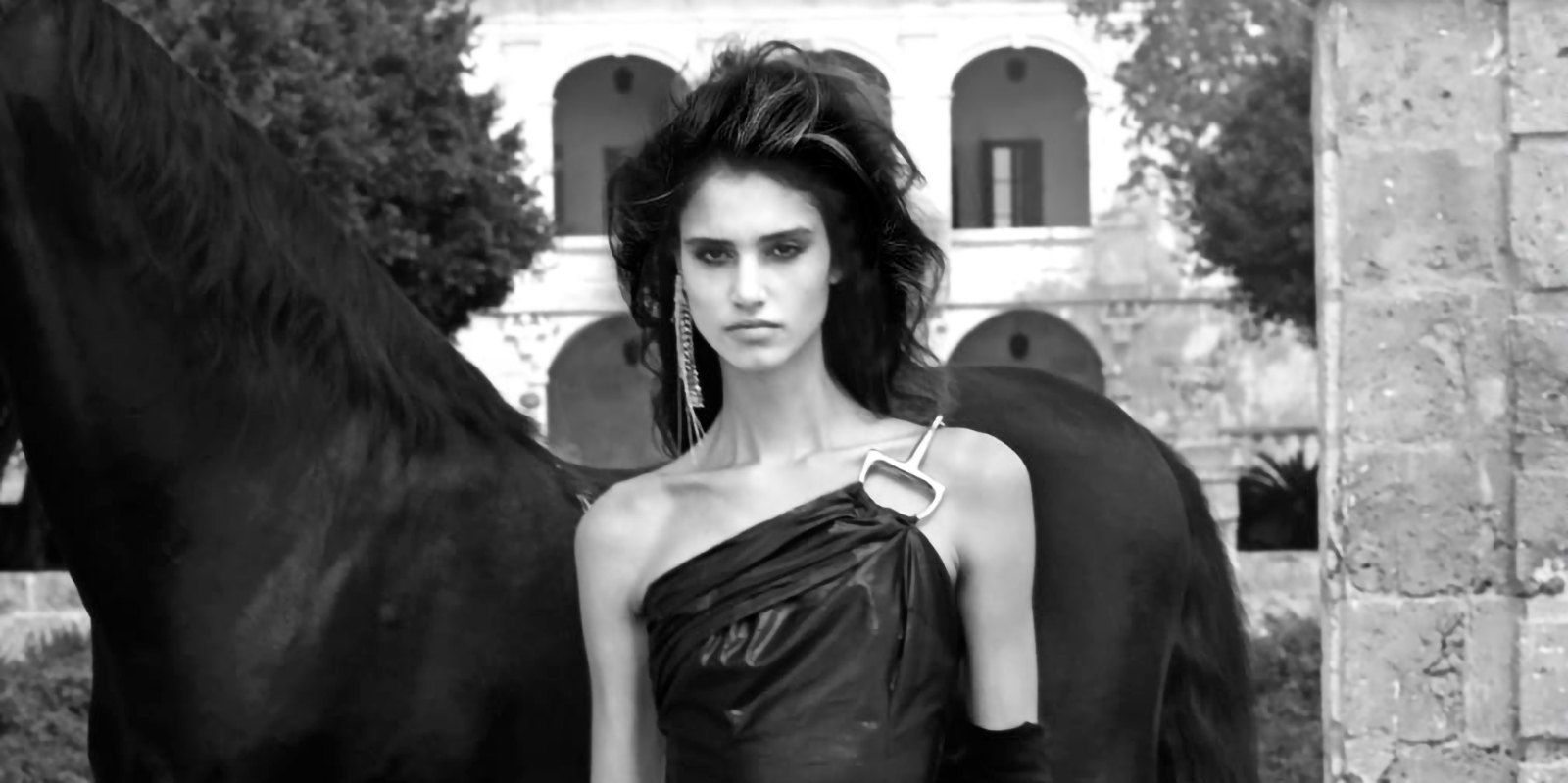
Talking about haute couture fashion is to refer to the highest echelon of dress. It is not a commercial category, but an artistic territory. Each garment is unique, made to measure, and is the result of a dialogue between the client, the designer and a team of craftsmen. Hours of embroidery, fitting, almost musical tuning of the pattern. There is no standard size: there is body and personality. There is no hurry: there is craft.
In France, in fact, the term haute couture has a meaning protected by law. The "haute couturein its strictest sense, may only be used by those houses approved by the Syndicale Chamber of Haute Couture in Paris. These ateliers must meet certain requirements: they must produce by hand, be based in Paris, present two collections a year and have a minimum number of qualified workers.
But beyond the French regulation, the haute couture meaning transcends borders: it represents the art of dressing taken to its highest expression. It is not a garment: it is an experience. A piece that is not repeated, that keeps memory, that accompanies the wearer like a second emotional skin.
Definition of ready-to-wear: fashion for the marketplace
At the other extreme, we have the ready-to-wearor "ready to wear". These are collections designed for mass production, made in different sizes and intended for direct sale in-store or on digital platforms. Although many luxury brands are presenting ready-to-wear The fact is that their logic is different: volume, rotation, immediate availability.
This does not mean that it lacks creative value. There are collections of ready-to-wear brilliant, conceptual and technically impeccable. But its approach is adapted to market requirements: standardised sizes, tighter costs, shorter delivery times. Fashion is more accessible, more agile, but also more ephemeral.
In short, the ready-to-wear definition is not pejorative. It is simply different. It is the fashion that accompanies everyday life. The haute coutureInstead, it is the fashion that turns a day into an unforgettable one.
The difference between haute couture and ready-to-wear: more than just technique
This is where a frequent confusion arises: confusing industrial fashion with signature fashion. There are garments that belong neither to haute couture nor to prêt-à-porter, but are produced according to industrial standards, without creativity, without experimentation, without soul. It is the tailoring in its most mechanical form: producing for the sake of producing.
The difference between high fashion and ready-to-wear is not limited to the number of units or the price. It is a question of intention. High fashion is born to create beauty, not to respond to demand. It does not submit to haste or repetition. It does not standardise the body, but listens to it.
A ready-to-wear garment follows a universal pattern. A high-fashion one, an individual gesture. One is sewn in a chain. The other, silently.
Malne: back to the origin, to the atelier, to the body
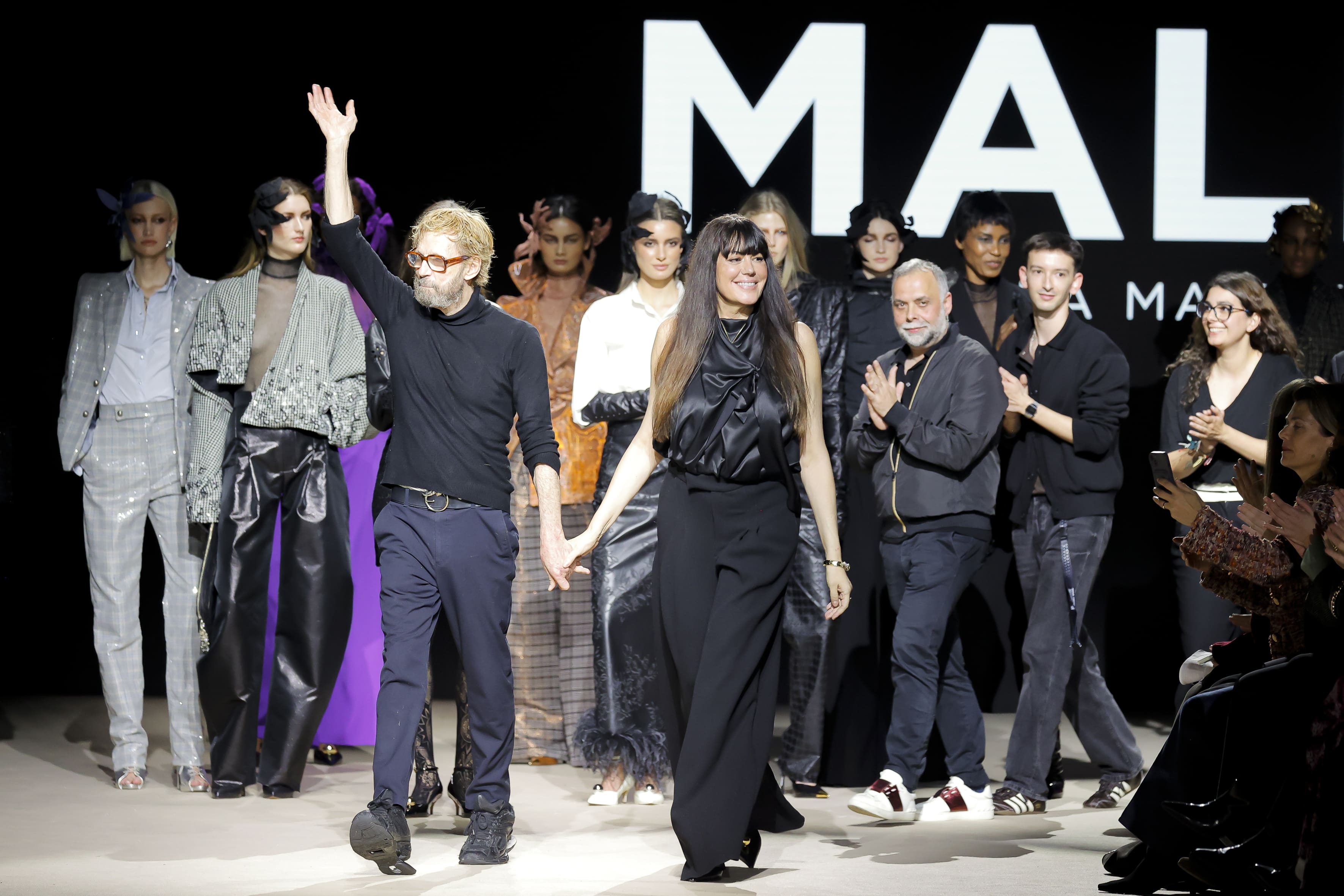
At MALNE, we decided from the outset to move away from the logic of the industrial clothing and fast fashion. Not out of nostalgia, but out of fidelity. We believe, as the great masters of the 20th century believed, that fashion should be art, form, language. And that this art should be at the service of the female body, its power, its uniqueness, its elegance.
That is why every piece that leaves our atelier has been designed, adjusted, touched and finished by expert hands. We are committed to proximity: we design and manufacture in Madrid, in our workshop, with national artisans. We do not generate polluting surplus stock. We do not produce by volume. We do not follow trends. We create discourse, we create style.
The real high fashionas we understand it, is not a more expensive garment. It is a more honest garment. More committed to those who wear it and to the environment in which it is produced. That is why MALNE leaves behind fast fashion and tailoring to return to the origin: talent and artistic creativity at the service of style and the female body in a luxurious atelier.
The luxury of the present: beauty without artifice
Today, more than ever, high fashion is an act of resistance. In the face of repetition, difference. In the face of immediacy, waiting. In the face of the logo, the true signature. We are not talking about elitist fashion, but about meaningful fashion. From clothes that tell a storythat are remembered, that accompany time instead of wearing away with it.
The woman who wears high fashion does not seek to stand out. She seeks to remain. She does not want to possess more. She wants to choose better.
In a world that accelerates everything, haute couture invites us to slow down. To observe, to touch, to feel. To understand that there is beauty that cannot be mass-produced. That there is a gesture - a drape, a fold, an embroidery - that can only be made with time, with skill and with love for what is well done.
Conclusion: sewing as a living art
Understand the difference between high fashion and clothing is, in fact, to understand the difference between creating and producing. Between dressing and simply covering oneself. Sewing is not only made of fabrics, but also of looks, gestures and vision.
And although the market evolves and technologies advance, there will always be a place for what cannot be replaced: a garment that is born from the encounter between art and body. That place, that intimate and silent space, is the one we inhabit at MALNE.
Because dressing can still be an act of beauty. And beauty, when it is true, always finds its time.